
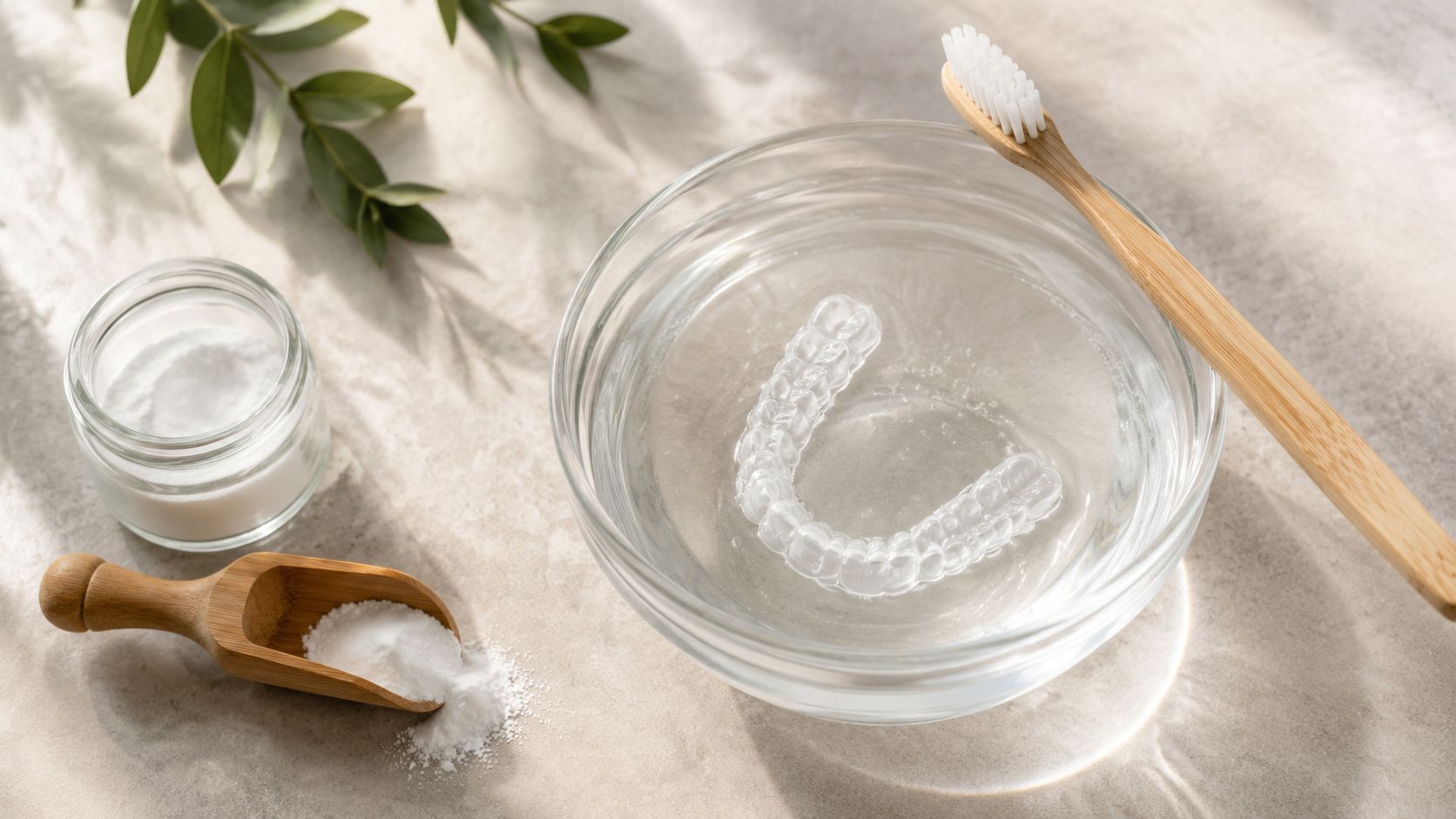
A night guard often becomes part of the nightly routine so quickly that it's easy to forget it still needs care every day. Then one morning, it feels cloudy, smells off, or seems a little tacky in the hand, and the search begins for a safe way to clean it without damaging the fit.
For adults on the Upper East Side, that question usually isn't just about freshness. A night guard protects teeth from grinding and clenching, which can contribute to wear, chips, jaw tension, and strain on dental work. Cleaning it properly helps preserve both the appliance and the mouth it's meant to protect. Patients looking for a dentist near me or a dentist in New York, NY often start with simple home-care questions like this one, then realize they also need guidance on fit, comfort, and whether the appliance is still doing its job.
Table of Contents
- Your Guide to Night Guard Care on the Upper East Side
- Simple Daily and Weekly Natural Cleaning Routines
- Common Mistakes That Can Damage Your Appliance
- When to Replace Your Night Guard for Optimal Protection
- Prosthodontic Care at Prosth & Co on the Upper East Side
- Schedule Your Consultation with Our Upper East Side Dentists
Your Guide to Night Guard Care on the Upper East Side
A common Upper East Side scenario goes like this. Someone wakes up, removes the night guard, notices a stale smell, and wonders whether a stronger cleaner is needed. Another patient sees a film on the plastic and assumes toothpaste or very hot water will solve it faster.
That's usually where trouble starts. A night guard isn't just a piece of plastic. It's an oral appliance that sits against teeth and soft tissue for hours at a time, and its shape matters. Once the fit changes, protection changes too.
A clean night guard should feel neutral, smooth, and easy to put away. If home care leaves it looking or smelling questionable day after day, the routine usually needs adjustment, not harsher cleaning.
In a prosthodontic setting, these questions come up often because many adults who grind their teeth also have restorations, cosmetic work, or bite concerns that need added protection. A poorly maintained guard can become less comfortable, less hygienic, and less reliable over time. That matters whether someone is visiting for preventive dental care, a new patient exam, restorative dentistry, or help with worn teeth.
Why natural care appeals to patients
Most patients asking how to clean night guard naturally want two things. They want a routine that feels safe for something that goes in the mouth, and they don't want to ruin an appliance they depend on every night.
Natural cleaning can work well when it stays simple and consistent. The goal isn't to sterilize the guard with aggressive products. The goal is to remove saliva film and visible buildup before it hardens, reduce odor, and protect the material.
Why local professional guidance still matters
Patients searching for an emergency dentist, cosmetic dentist near me, or even dental implants near me don't always expect a night guard question to connect back to broader care. But grinding often overlaps with cracked teeth, worn enamel, sensitive restorations, jaw discomfort, and bite imbalance. In Manhattan, where many adults already juggle stress, long workdays, and existing dental treatment, a night guard deserves the same thoughtful maintenance as any other custom appliance.
Simple Daily and Weekly Natural Cleaning Routines
The safest natural routine is the one a patient will consistently repeat. It should be quick in the morning, gentle on the material, and thorough enough to keep odor and visible buildup from lingering.
What to do every morning
According to guidance on natural night guard cleaning, the recommended workflow is to rinse immediately, gently brush with a soft toothbrush, and use cool or lukewarm water only, followed by a weekly deep clean using either a 1:3 white-vinegar-to-water soak or a 3% hydrogen-peroxide soak for about 15–30 minutes, then a thorough rinse and complete air-drying.

That daily routine is straightforward:
- Rinse it right after removal. Cool water helps wash away saliva and loose debris before they dry onto the surface.
- Brush gently. Use a soft toothbrush with mild soap or a non-abrasive cleanser. Some patients also use a baking soda paste for a gentle clean.
- Let it air-dry fully. Don't close it into a case while it's still damp.
The reason this routine works is simple. Biofilm is easier to remove when it's fresh. Once it sits on the appliance, it becomes harder to clean and more likely to contribute to odor and visible residue.
Practical rule: If a step feels aggressive, it probably is. Night guards respond better to consistency than force.
How to deep clean without harsh chemicals
For a deeper natural clean, household solutions can be useful when used carefully. A vinegar soak and a hydrogen peroxide soak are both commonly recommended because they're accessible and easy to repeat at home.
A simple comparison helps:
| Method | How to use it | Why patients choose it |
|---|---|---|
| White vinegar soak | Soak in a 1:3 white-vinegar-to-water solution for 15–30 minutes, then rinse thoroughly | Helps loosen visible buildup and reduce odor |
| Hydrogen peroxide soak | Soak in equal parts 3% hydrogen peroxide and water for up to 30 minutes, then rinse thoroughly | Often used when the guard feels less fresh and needs a deeper clean |
After either soak, rinse the appliance well and leave it out to dry completely before storage. If a patient prefers to learn more about disinfectant chemistry before choosing products around the home, this overview of understanding HOCl disinfectant offers useful background.
A few details matter more than patients expect:
- Use cool or lukewarm water. Heat can change the shape.
- Keep brushing gentle. Scrubbing harder doesn't clean better.
- Stay on a schedule. Natural methods work best when done routinely, not only when odor appears.
The answer to how to clean night guard naturally isn't complicated. It's a repeatable mix of prompt rinsing, gentle brushing, occasional soaking, and complete drying.
Common Mistakes That Can Damage Your Appliance
Patients often damage a night guard while trying to clean it well. The appliance doesn't usually fail because someone ignored it completely. It fails because a small shortcut gets repeated until the material changes shape, roughens, or starts holding onto odor.

Why damage happens so easily
A night guard has to fit closely to work properly. Heat, harsh chemicals, and abrasive surfaces can all interfere with that fit. Based on night guard care guidance from Hello Orthodontics, a daily gentle scrub is recommended, but hot water, bleach, alcohol-based cleaners, and dishwashers can warp or damage the appliance. The same guidance notes that the guard should air-dry completely, which typically takes 15–30 minutes, because damp storage can promote bacterial growth.
That explains why some common habits cause big problems. Hot water may seem cleaner. Stronger chemicals may seem more effective. A closed case may seem neater. In practice, each of those choices can work against the appliance.
Habits worth stopping now
The most frequent mistakes include these:
- Using hot water: Heat can distort the guard enough to change how it seats on the teeth.
- Reaching for bleach or alcohol-based cleaners: These can damage the material instead of preserving it.
- Putting it away wet: A closed, damp case encourages the stale smell patients are trying to avoid.
- Brushing too aggressively or with abrasive products: A roughened surface is harder to keep clean.
Some patients also keep wearing a guard that no longer feels right because they assume the issue is just cleaning. In reality, a fit problem may come from wear, clenching force, or underlying bite changes. Patients dealing with repeated grinding symptoms can learn more about how to stop grinding teeth when home care alone isn't enough.
A night guard should never need “rescuing” with extreme cleaning. If that's happening, the problem may be the routine, the fit, or the condition of the appliance itself.
When to Replace Your Night Guard for Optimal Protection
Cleaning can maintain a night guard, but it can't restore a guard that has worn down, warped, or lost its fit. At that point, the question changes from hygiene to function.

Signs you can see
A visual check often gives the first clue. Patients should pay attention to:
- Cracks or splits: Even small structural defects can make the guard less stable.
- Permanent discoloration: If regular care no longer improves the appearance, the material may be retaining buildup beneath the surface.
- Cloudiness with surface wear: That can suggest the appliance has been scratched or worn down over time.
These changes matter because the guard's job is mechanical, not just hygienic. It needs to hold shape and distribute pressure the way it was intended to.
Signs you can feel
Physical changes are often even more important than visible ones. A guard may need replacement if it feels:
| Change | What it can mean |
|---|---|
| Looser than before | The material or the fit may have changed |
| Uncomfortable on insertion | The edges or contours may no longer match the teeth well |
| Less protective at night | Grinding forces may be overwhelming a worn appliance |
| Persistently unpleasant despite proper care | The guard may no longer be responding to home maintenance |
A guard that smells bad once doesn't necessarily need replacement. A guard that remains unpleasant after consistent care is different. The same is true when a patient wakes with renewed jaw tension, notices the guard shifting, or starts avoiding it because it no longer feels right.
When those patterns show up, cleaning isn't the solution anymore. Evaluation is.
Prosthodontic Care at Prosth & Co on the Upper East Side
Night guard care makes more sense when patients see the appliance as one part of a bigger dental picture. Teeth grinding can affect natural enamel, veneers, crowns, implant restorations, and overall bite comfort. That's why maintenance at home and professional evaluation in the office need to work together.

Why custom evaluation matters
Modern guidance, as summarized by Aperture Dental on night guard care, emphasizes daily brushing and a deep clean at least once per week for night guards, reflecting a broader shift toward proactive biofilm control in dental hygiene.
That broader shift matters in prosthodontics because patients often aren't just protecting teeth. They're protecting previous dental work, managing heavy bite force, or preventing further wear. A custom appliance should be evaluated in the context of the person's occlusion, restorations, symptoms, and long-term goals.
One practice on the Upper East Side, Prosth & Co night guards for teeth clenching, offers custom-fabricated night guards as part of a larger prosthodontic and restorative approach. That kind of care can matter when a patient also needs monitoring for worn teeth, fractured restorations, bite changes, or jaw strain.
How night guards fit into broader dental care
A patient may begin by searching for how to clean night guard naturally and end up realizing there are other concerns underneath. Common examples include morning headaches, flattened teeth, chips at the edges, sensitivity, or cosmetic changes from wear.
In that setting, the right next step may include:
- A new patient exam: to identify whether grinding is affecting teeth, muscles, or existing dental work
- Cleaning and exams: to monitor oral health and appliance hygiene together
- Restorative dentistry: when worn or damaged teeth need crowns, onlays, bridgework, or implant-related care
- Cosmetic dentistry: when grinding has changed the look of the smile
- Emergency dental care: if clenching contributes to a crack, fracture, or sudden pain
- Tooth extraction or dental implants: in more advanced cases where damage and structural issues overlap
For many Manhattan patients, especially those looking for a dentist in New York, NY with experience beyond routine care, that connection is important. Night guards are preventive, but they also sit inside a much larger treatment plan when the bite is under stress.
Schedule Your Consultation with Our Upper East Side Dentists
A clean night guard supports comfort, hygiene, and durability. It also helps patients notice sooner when the appliance is no longer fitting well or protecting the teeth the way it should.
For adults on the Upper East Side and throughout Manhattan, a professional evaluation can answer the questions home care can't. Is the guard still fitting correctly? Is grinding causing wear? Are restorations, jaw joints, or muscles being affected? Those answers matter whether someone is looking for routine dental care, restorative dentistry, cosmetic dentistry, an emergency dentist, or a trusted dentist near me for a more complete exam.
Patients don't need to wait until a guard cracks or becomes unusable. If it's difficult to keep clean, feels different, or no longer seems effective, that's reason enough to have it checked.
If a night guard feels worn, smells persistently off, or no longer fits as expected, the next step is a professional assessment. Prosth & Co. provides Upper East Side patients with custom night guard evaluation, preventive care, restorative treatment, and complete exams in a patient-centered setting designed for busy New Yorkers.
Related topic: Learn more about Bruxism And Night Guards.

Founder and lead prosthodontist of Prosth & Co. on Manhattan's Upper East Side. DDS, Columbia University; Prosthodontics certificate and MMSc in Oral Biology, Harvard School of Dental Medicine; Implantology fellowship, Columbia University.
Meet Victoria →