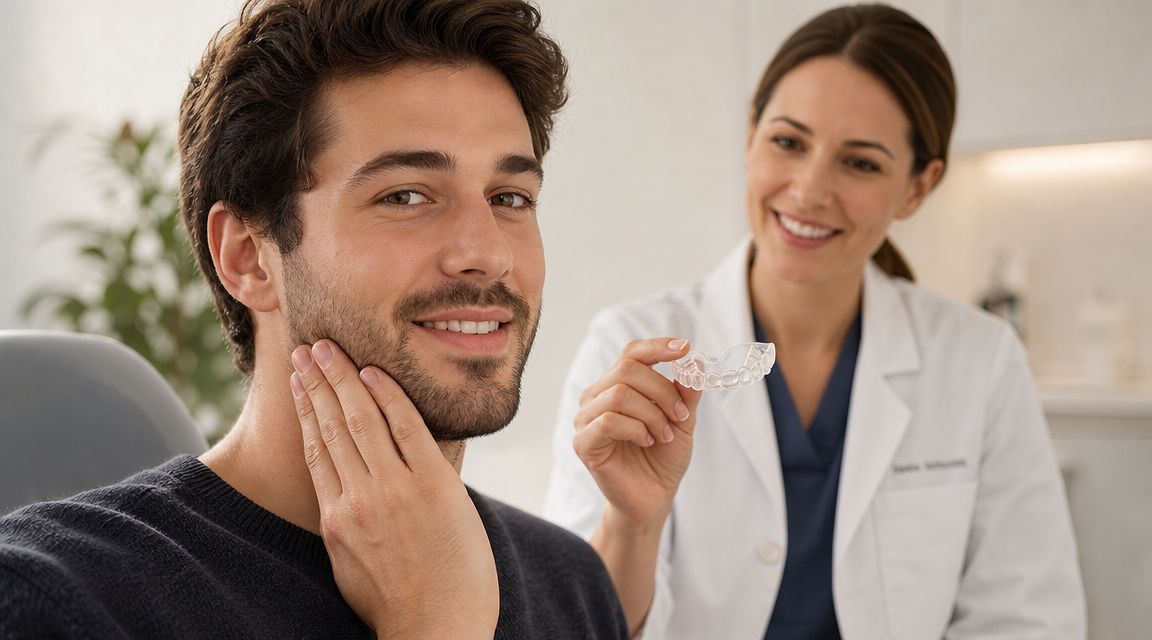
A lot of people looking up how to stop grinding teeth are doing it at the same time of day. It's usually early morning, after waking with a tight jaw, a dull headache near the temples, or teeth that suddenly feel sore when coffee hits them. Sometimes a partner heard grinding overnight. Sometimes no one heard anything, but the mirror shows flattened edges, a small chip, or a tooth that never used to feel sensitive.
That pattern matters because bruxism often starts subtly. Patients in Manhattan often assume it's “just stress” until the jaw starts clicking, a filling breaks, or clenching during work hours becomes impossible to ignore. The good news is that there are useful steps to take at home, and there's also a clear path to professional care when grinding starts affecting comfort, sleep, or the condition of the teeth.
Table of Contents
- Stop Grinding Your Teeth with a Dentist Near You in Manhattan
- Understanding Bruxism and Why It Happens
- Immediate Steps You Can Take at Home to Reduce Grinding
- How Your Upper East Side Dentist Stops Damage from Teeth Grinding
- Your First Visit for Bruxism at Prosth & Co.
- Schedule Your Consultation for Jaw Pain and Teeth Grinding Relief
Stop Grinding Your Teeth with a Dentist Near You in Manhattan
A common Upper East Side scenario goes like this. Someone wakes up feeling as if they chewed gum all night. By lunchtime, the jaw feels tired. A few weeks later, a corner of a tooth chips while eating something soft, and that's when the search for a dentist near you in New York, NY begins.
Teeth grinding rarely feels dramatic at first. It usually shows up as a collection of small annoyances. Morning tension, temple headaches, tooth sensitivity, neck tightness, or a feeling that the bite is “off.” The problem is that those small signs can add up to real wear on enamel, strain on the jaw joints, and damage to dental work.
For adults in Manhattan, the challenge is often practical as much as clinical. Work stress, long screen-heavy days, poor sleep, and constant rushing make it easy to miss the habit until the teeth begin to show it.
When patients finally seek care
Many patients don't come in because they heard themselves grind. They come in because of consequences.
- A front tooth looks shorter than it used to.
- A crown or filling feels different when biting down.
- The jaw clicks or locks briefly during breakfast or speaking.
- Chewing feels tiring even without sharp pain.
Practical rule: If the jaw is sore in the morning and the teeth are showing wear, it's worth getting evaluated before a crack or fracture turns it into an urgent problem.
A prosthodontic approach is especially useful when grinding has moved beyond simple clenching and started to affect the shape, function, or long-term stability of the teeth. In Manhattan, that often means balancing two goals at the same time. First, protect what's still healthy. Second, repair what has already been worn, chipped, or strained.
Relief usually doesn't come from one dramatic trick. It comes from identifying the pattern, reducing triggers, protecting the teeth, and choosing treatment that fits the bite rather than forcing the bite to adapt.
Understanding Bruxism and Why It Happens
Bruxism means clenching or grinding the teeth. Some people do it while asleep. Others do it while awake, usually during concentration, stress, or physical tension.
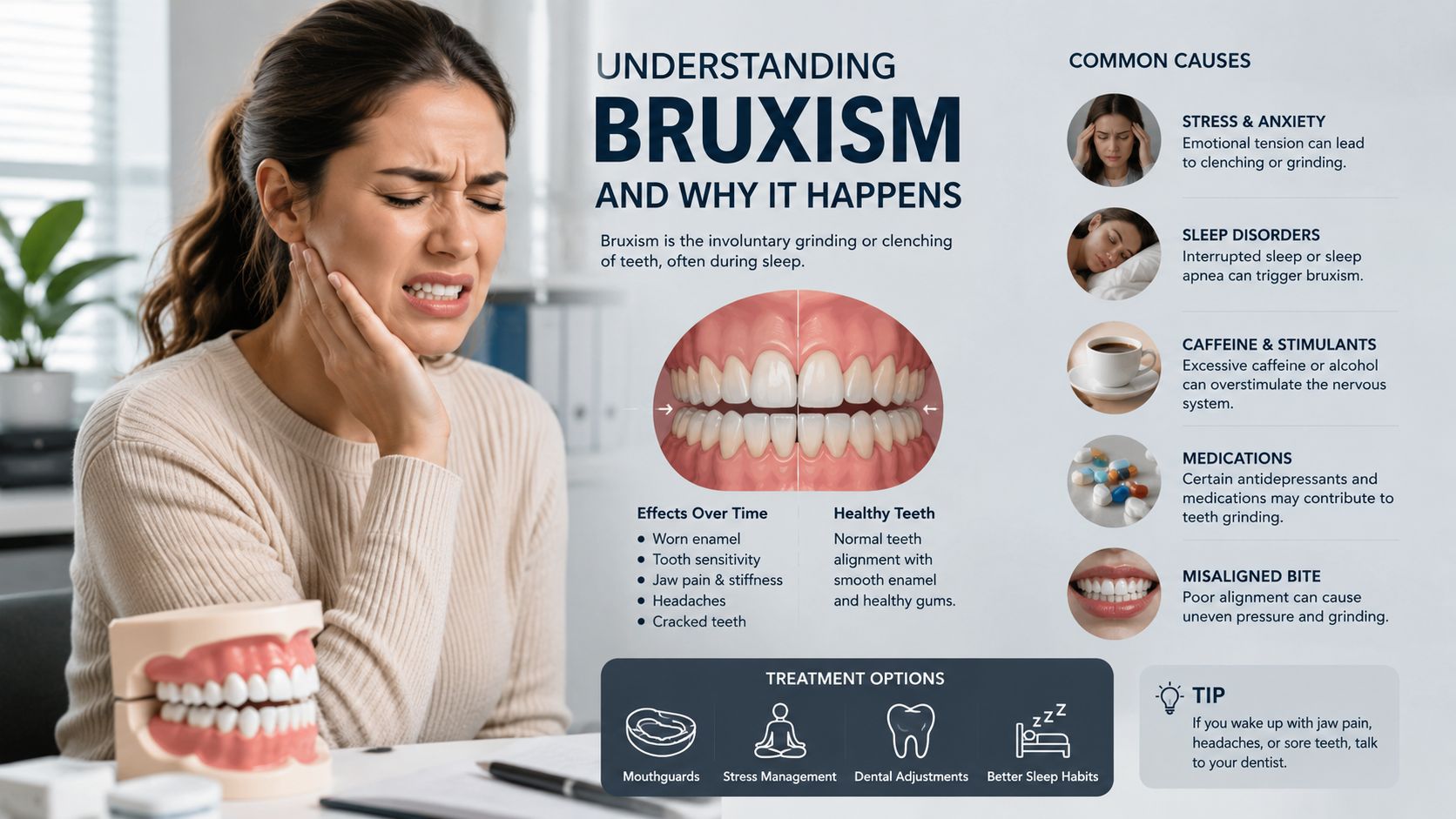
What makes bruxism frustrating is that many people don't notice it in real time. Sleep bruxism happens when awareness is low. Awake bruxism can happen during email, commuting, exercise, or mentally demanding work. The teeth come together, the jaw muscles stay switched on, and the body repeats the pattern until it becomes automatic.
Two common patterns
Sleep bruxism usually gets noticed after the fact. People wake with stiffness, facial fatigue, or a headache. A partner may hear grinding. The teeth may start showing flattened biting edges or small chips.
Awake bruxism is often more of a clench than a loud grind. Patients may catch themselves pressing their back teeth together during deadlines, traffic, or intense focus. This form can create just as much muscle tension, even when the teeth aren't sliding against each other.
What can trigger it
Bruxism doesn't have one single cause. It often sits at the intersection of stress, sleep disruption, muscle habits, and bite-related factors. In some people, the main issue is daytime jaw tension. In others, the bite, existing dental wear, or another sleep-related issue may be contributing.
Common contributors include:
- Stress and anxiety that keep the jaw muscles activated
- Sleep disturbance that leads to restless, non-restorative sleep
- Bite imbalance that makes certain teeth take more force
- Existing dental damage that changes the way the teeth meet
Untreated grinding can wear down enamel, chip teeth, strain restorations, and leave the jaw joints and chewing muscles overworked. When that continues, patients may notice sensitivity, limited opening, facial soreness, or pain near the ears.
A brief overview can help patients connect the symptoms to the habit:
Grinding doesn't always sound dramatic. Very often, the first sign is simply that the teeth and jaw feel overused.
Immediate Steps You Can Take at Home to Reduce Grinding
At-home care won't rebuild worn enamel or correct every cause of bruxism, but it can reduce the load on the teeth and jaw. For many patients, these changes are the right place to start while arranging an exam.
Calm the muscles before bed
A tense jaw at bedtime often stays tense overnight. The goal is to reduce muscle activity before sleep instead of going to bed already clenched.
Useful habits include:
- Use heat for a short wind-down by placing a warm compress over the jaw muscles before bed.
- Keep the lips together and teeth apart while relaxing. That's a healthier resting position than letting the back teeth stay in contact.
- Try slow breathing for a few minutes to lower overall tension in the face, neck, and shoulders.
- Choose soft jaw movement such as gentle opening and closing without force. The motion should feel easy, not like a stretch competition.
Catch daytime clenching earlier
Awake bruxism responds best when patients learn to notice it sooner. Patients typically don't need more forceful exercises. They need more awareness.
A simple reset works well during the day:
- Unclench the teeth.
- Let the tongue rest lightly on the roof of the mouth.
- Relax the shoulders.
- Exhale slowly.
- Check again in a few minutes.
Phone reminders, sticky notes, or tying the habit check to common moments such as opening a laptop can help. If the jaw keeps tightening during work, it usually means the body is treating concentration like stress.
Change the bedtime setup
Nighttime grinding often gets worse when sleep is poor or the nervous system stays stimulated too late.
A better evening routine usually includes:
| Habit | Why it helps |
|---|---|
| Reducing late caffeine | It lowers the chance of carrying tension into the night |
| Limiting alcohol near bedtime | It can make sleep less settled for some patients |
| Stopping hard chewing | Gum, ice, and chewy snacks can leave jaw muscles overworked |
| Creating a repeatable wind-down | Consistency helps the body shift out of alert mode |
None of these steps is a magic fix. They are pressure-reduction tools.
A good home plan should make the jaw feel less busy. If it doesn't, the next step is a professional exam to find out what the teeth, muscles, and bite are doing.
Patients should also avoid the common mistake of testing sore teeth by clenching them together repeatedly. That usually confirms the jaw is irritated, but it also keeps the cycle going.
How Your Upper East Side Dentist Stops Damage from Teeth Grinding
Once teeth grinding starts changing tooth shape, causing fractures, or overloading the jaw, home care alone usually isn't enough. Dental treatment then offers protection and precision.
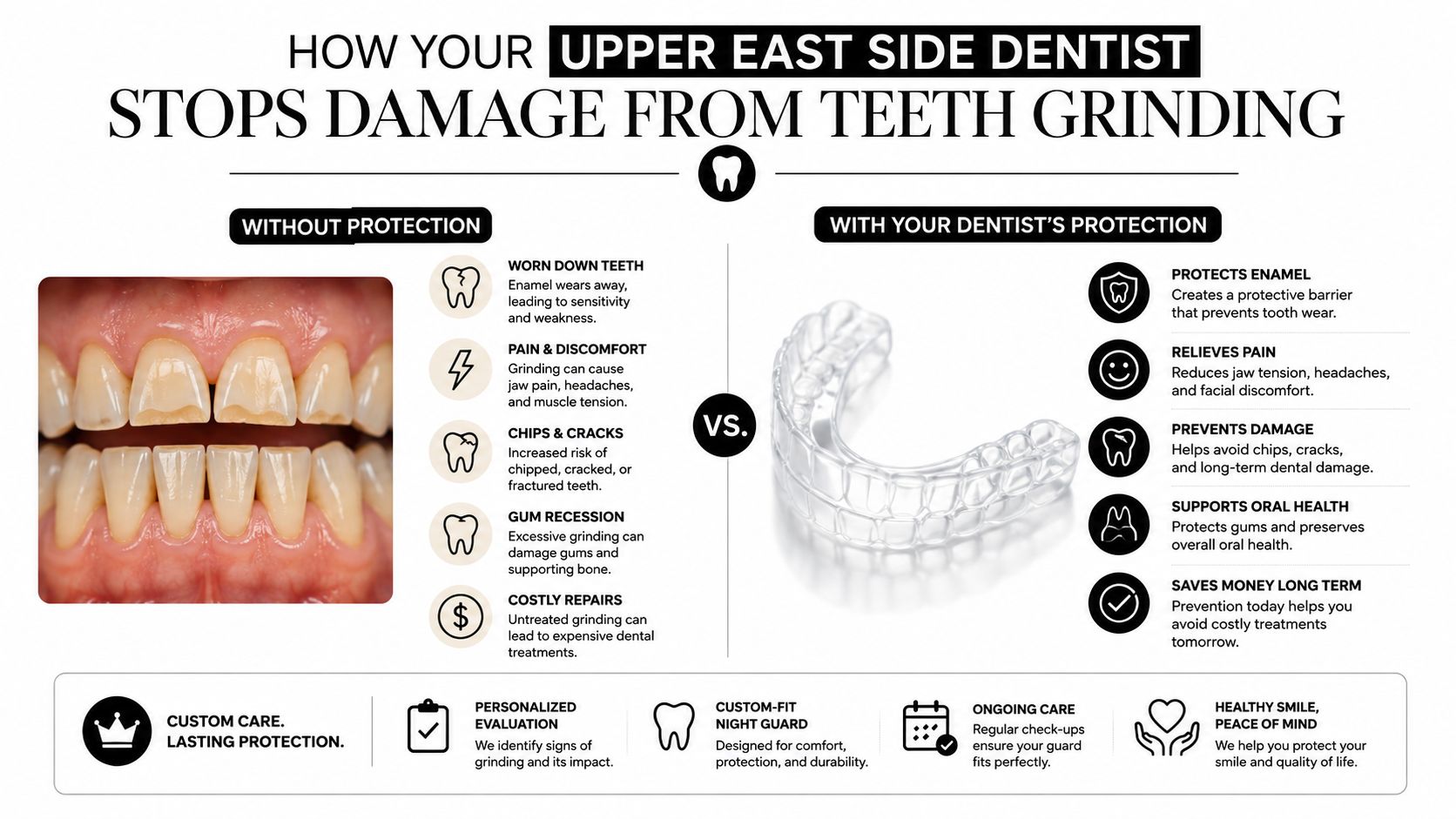
What a custom night guard actually does
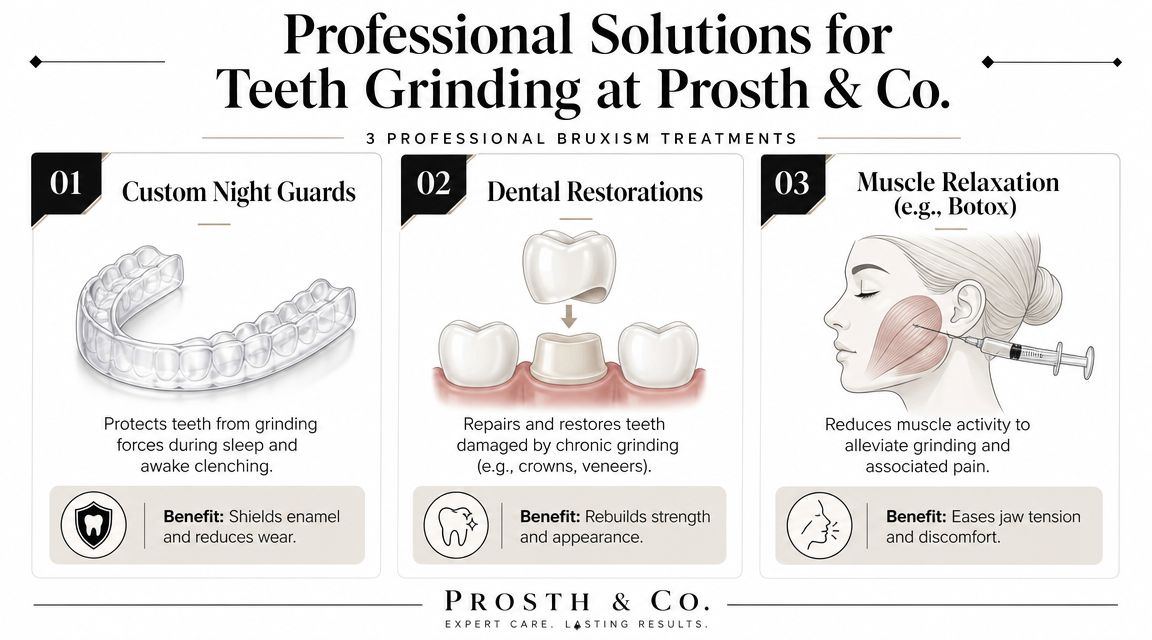
A custom night guard is one of the most common tools used to protect teeth from grinding forces. According to Mayo Clinic guidance on bruxism treatment, mouth guards and splints separate the upper and lower teeth during sleep to reduce damage and absorb force. That same guidance also makes an important point. Night guards protect teeth, but they don't cure the grinding habit itself.
That's the trade-off patients should understand from the beginning. A guard is excellent for harm reduction. It is not a complete answer when stress, muscle habits, or bite issues are still driving the pattern.
A professionally made guard is also different from a store-bought version. The fit is based on the patient's bite, tooth position, and force pattern. That usually means better comfort, more even contact, and better protection for natural teeth and restorations. Patients looking into custom night guards in New York are usually doing so because they want something made for their actual bite instead of a generic shape.
When the teeth already show wear
Bruxism treatment often involves more than one type of care. If grinding has already damaged the teeth, a prosthodontist may recommend restoring areas that have chipped, shortened, or become structurally weak.
That can include:
- Bonding or crowns for teeth that need reinforcement
- Veneers in selected cases where appearance and edge support both matter
- Bite refinement when certain contacts are carrying too much force
- Replacement options such as dental implants if a tooth has already been lost and function needs to be rebuilt
Some patients also benefit from muscle-relaxation treatment when jaw muscles are overactive and painful. Others may need orthodontic guidance, such as clear aligners, when the way the teeth meet is part of the problem. At Prosth & Co., those decisions are made based on the condition of the bite, the amount of wear, and what needs to be preserved long term.
Professional care works best when it is layered
The strongest plan usually combines protection with cause control.
Clinical reality: The teeth need protection right away, but the jaw and nervous system also need the habit cycle interrupted.
That's why the most effective care often looks like this:
- Protect the teeth with a custom appliance
- Reduce triggers through sleep and stress changes
- Repair damage where structure has already been lost
- Monitor regularly so new wear patterns don't go unnoticed
Major dental guidance also emphasizes regular exams so clinicians can catch wear early, before fractures, loss of tooth structure, or jaw pain become more established. For patients wondering how to stop grinding teeth, that combination is usually much more realistic than chasing a single cure.
Your First Visit for Bruxism at Prosth & Co.
Many patients put off a visit because they expect the appointment to be uncomfortable, rushed, or full of jargon. A bruxism exam should feel much simpler than that. It should answer a few practical questions. Are the teeth wearing down? Are the muscles overworking? Is the bite contributing? What needs protection now?
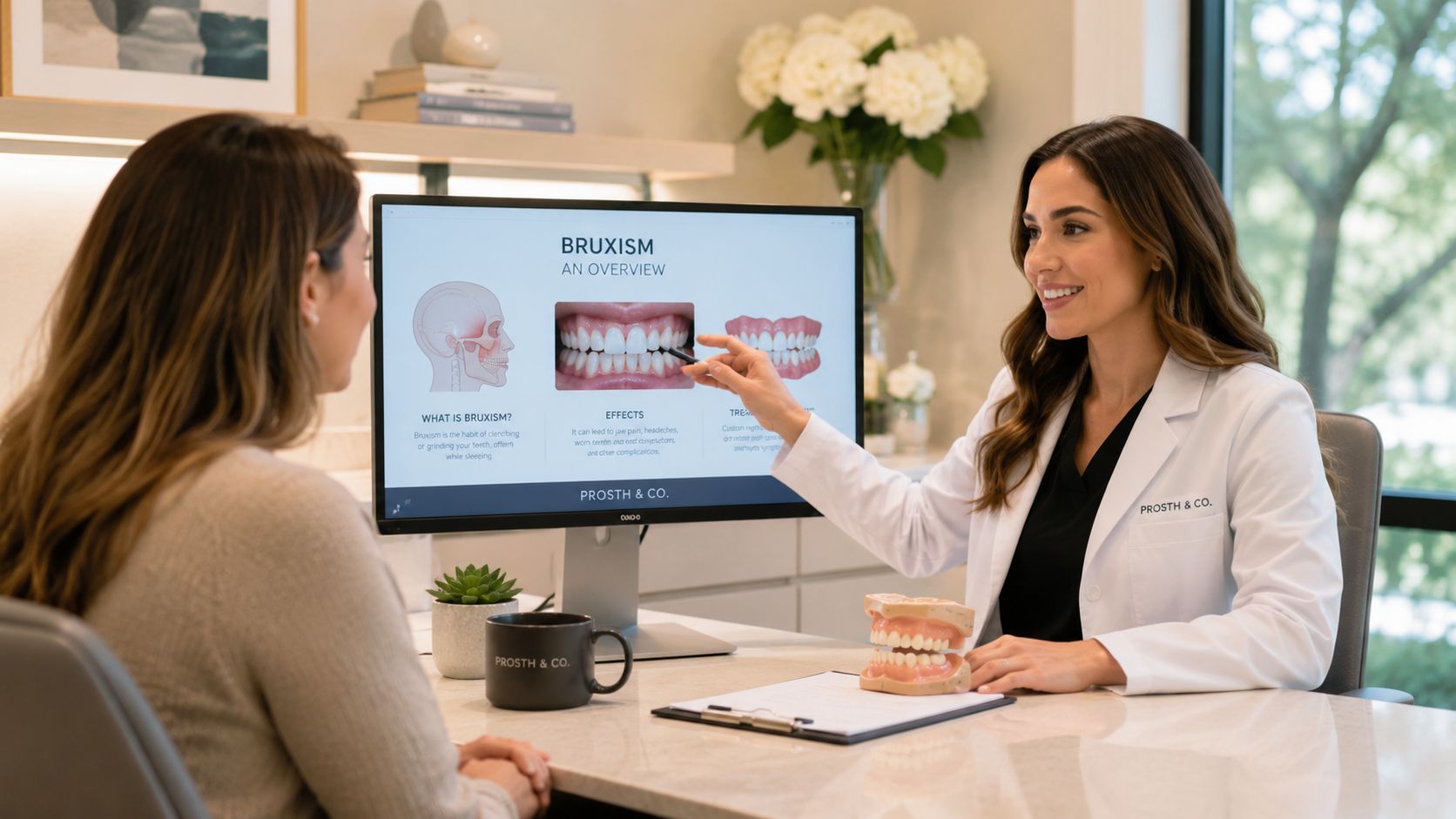
What happens at the appointment
At the first visit, Dr. Victoria Park typically starts with what the patient is feeling day to day. Morning headaches, cheek biting, jaw fatigue, broken fillings, sensitivity, or a recent chipped tooth all help show the pattern.
The clinical exam then looks for visible and functional signs of grinding, including worn edges, tiny fractures, tenderness in the chewing muscles, bite marks on the tongue or cheeks, and strain in the jaw joints. Dental x-rays and intraoral photos can also help show what isn't obvious in a quick mirror check.
That visual piece matters. When patients can see the flattened enamel, the crack lines, or the way certain teeth are taking more contact, the condition becomes easier to understand and easier to treat.
What patients usually leave with
Most patients don't leave with a vague suggestion to “try relaxing more.” They leave with a working plan.
That may include:
- A diagnosis of the likely pattern such as sleep grinding, daytime clenching, or a combination
- Guidance on immediate protection if the teeth are at risk
- Recommendations for restorative care if wear or breakage needs repair
- A follow-up path for ongoing monitoring, impressions, or additional treatment
Patients tend to feel less anxious once they know whether the main issue is muscle tension, tooth wear, bite overload, or a mix of all three.
The office setting also makes a difference. For busy adults on the Upper East Side, convenience matters. A location at 47 E 77th St, Suite 207 in New York, clear communication, and a calm environment help turn “I should get this checked” into an actual appointment. That's especially important when grinding has already led to a cracked tooth, a loose restoration, or pain that feels urgent enough to search for an emergency dentist.
Schedule Your Consultation for Jaw Pain and Teeth Grinding Relief
Teeth grinding is common, but it shouldn't be treated like a harmless habit. If the jaw hurts, the teeth are chipping, or old dental work keeps breaking, the mouth is already asking for help.
The practical approach is straightforward. Reduce the triggers that keep the jaw active. Protect the teeth from further wear. Restore damage before it spreads. Then keep monitoring the bite so small problems don't become larger restorative ones.
For Manhattan patients, that matters whether the concern is a sore jaw, worn front teeth, sensitivity, cosmetic changes, or a sudden fracture that needs prompt care. Grinding can overlap with restorative dentistry, cosmetic dentistry, tooth extraction decisions, dental implants planning, and emergency dental treatment when damage is advanced.
If the symptoms are ongoing, it's time for a professional evaluation. The sooner the pattern is identified, the easier it is to protect tooth structure and reduce strain on the jaw.
If jaw pain, chipped teeth, or morning clenching have become part of daily life, schedule a consultation with Prosth & Co.. Dr. Park and the team provide bruxism evaluation, custom protection, restorative treatment, and clear next steps for patients in Manhattan who want relief and a healthier bite.

Founder and lead prosthodontist of Prosth & Co. on Manhattan's Upper East Side. DDS, Columbia University; Prosthodontics certificate and MMSc in Oral Biology, Harvard School of Dental Medicine; Implantology fellowship, Columbia University.
Meet Victoria →