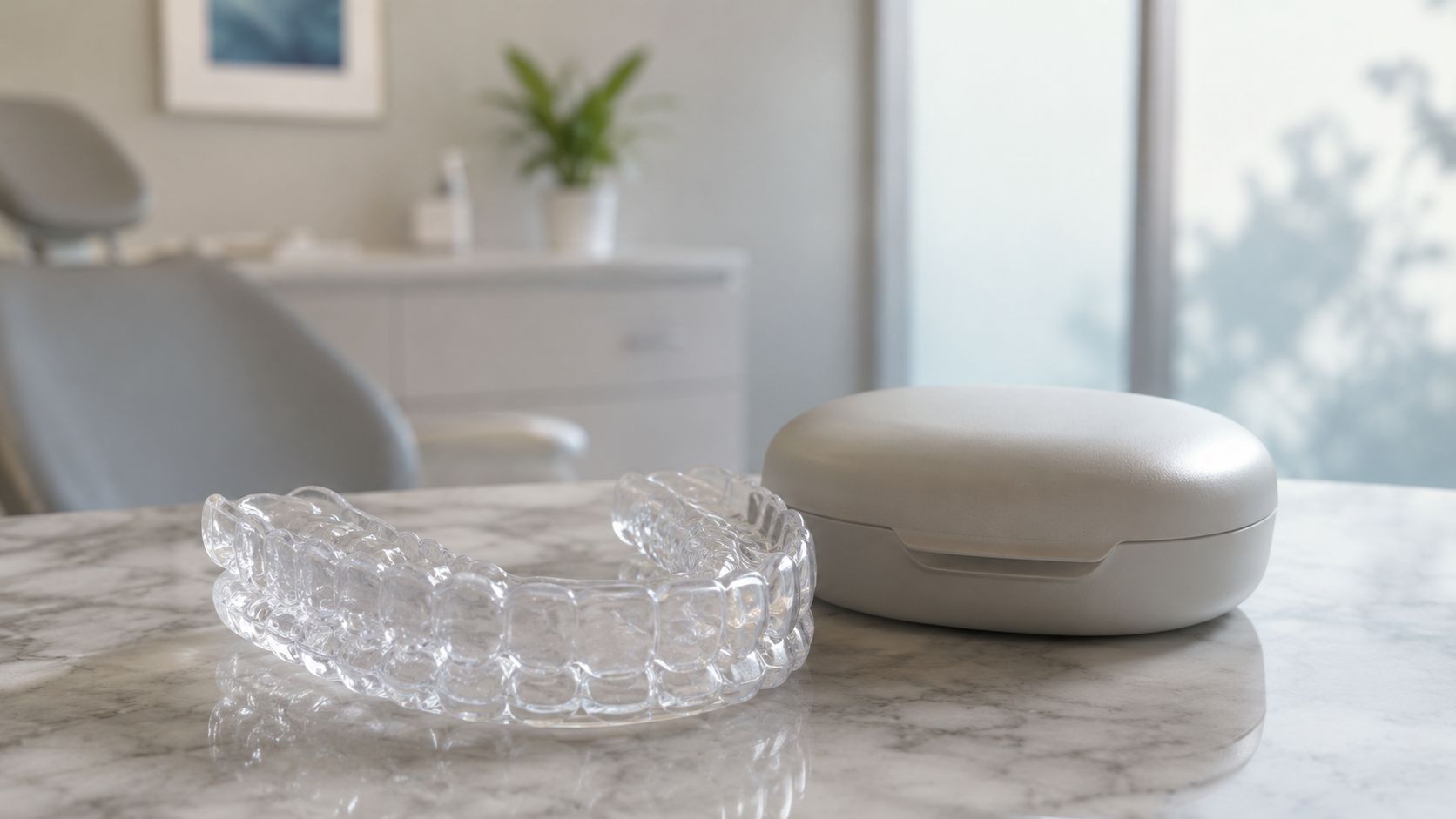
A lot of adults on the Upper East Side are dealing with the same quiet pattern. They wake up with a tight jaw, a temple headache, or a tooth that suddenly feels sensitive when nothing obvious happened the day before. By the time they look for a dentist near them in Manhattan, they're often wondering whether they've cracked a tooth, damaged a crown, or started a bigger bite problem without realizing it.
Teeth clenching at night is easy to miss because it happens during sleep. The symptoms show up later, often as soreness, worn edges, chipped enamel, facial tension, or dental work that no longer feels quite right. For patients who already have crowns, veneers, bridges, implants, or a history of restorative dentistry, the stakes are even higher. The right night guard can protect that work. The wrong one can create new pressure points and make matters worse.
Table of Contents
- Your Upper East Side Dentist for Jaw Pain and Teeth Grinding Relief
- Understanding Bruxism Signs and Long-Term Effects
- How a Custom Night Guard Protects Your Smile
- Comparing Night Guard Options OTC vs Custom-Fit
- The Prosth & Co. Custom Night Guard Process in NYC
- Caring for Your Night Guard and Exploring Alternatives
- Schedule Your Consultation on the Upper East Side Today
Your Upper East Side Dentist for Jaw Pain and Teeth Grinding Relief
A common patient story starts the same way. The jaw feels sore in the morning, coffee triggers tooth sensitivity, and a partner mentions hearing grinding during the night. Sometimes the first clue isn't pain at all. It's a chipped edge on a front tooth, a crown that feels tender when biting, or a dull ache near the ear that doesn't seem dental until an exam shows heavy clenching.
This isn't unusual. Sleep bruxism affects about 10% to 16% of adults globally, and in 2021 more than 70% of dentists reported noticing signs of teeth grinding and clenching in their patients, up by nearly 10% from the previous year, according to data on bruxism prevalence and dental recognition. For many adults in Manhattan, especially busy professionals managing stress, long workdays, and interrupted sleep, those signs show up gradually.
Why patients often wait too long
People often assume jaw tension will pass on its own. They may switch pillows, blame sinus pressure, or try a pharmacy guard without knowing whether the bite is being supported correctly.
That delay matters because clenching can affect more than teeth. It can strain the jaw joints and surrounding muscles. For readers who are also exploring physical therapy support for jaw discomfort, this overview of Boston TMJ treatment offers a useful look at how musculoskeletal care may fit into a broader plan.
Practical rule: Morning symptoms that repeat several times a week usually deserve a dental evaluation, especially if teeth, restorations, or jaw joints already feel different.
On the Upper East Side, patients looking for a dentist in New York often want more than a quick appliance. They want to know whether clenching is already changing their bite, stressing older dental work, or contributing to headaches and facial fatigue.
A prosthodontist-led evaluation is especially helpful when teeth have existing restorations or significant wear. That's where night guards for teeth clenching need to be more than generic. They need to fit the existing bite.
Understanding Bruxism Signs and Long-Term Effects
Bruxism is the clinical term for involuntary grinding or clenching. Some patients grind with noticeable tooth-to-tooth movement. Others mainly clench, which can still place heavy force on enamel, muscles, and dental restorations even without loud grinding sounds.
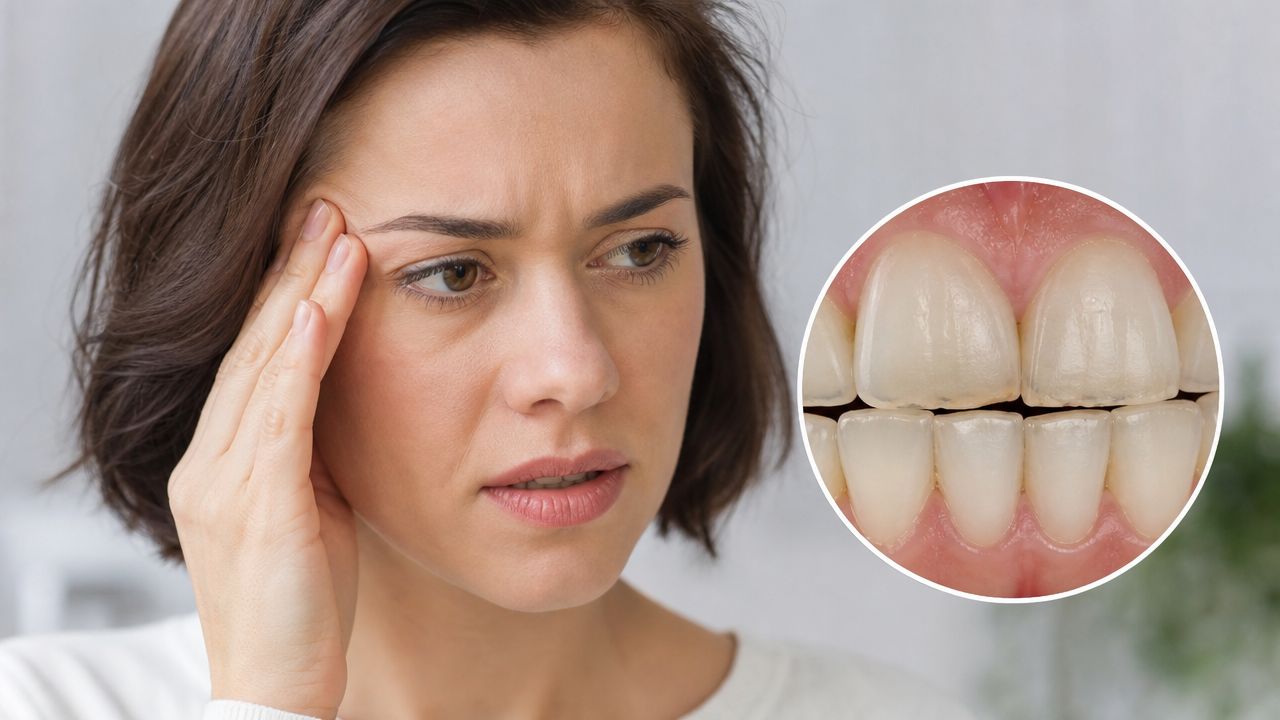
Common signs patients notice first
The earliest symptoms aren't always dramatic. Many people come in because something feels “off,” not because they know they clench.
Some of the more common clues include:
- Morning jaw tightness that improves later in the day
- Temple headaches or facial soreness after sleep
- Tooth sensitivity without a new cavity
- Flattened or worn edges on front or back teeth
- Small chips or rough spots that catch on the tongue
- Tender chewing muscles or a tired feeling in the jaw
- Dental work that feels stressed, especially crowns, veneers, or implant restorations
Headaches and jaw clenching often overlap. Patients trying to connect those symptoms may find this explanation of TMJ and headache connections helpful when thinking through what they've been feeling.
For a deeper look at self-recognition signs and treatment paths, Prosth & Co. also provides guidance on how to stop grinding teeth.
What untreated clenching can do over time
The long-term problem isn't just discomfort. Repeated pressure can wear down enamel, create microfracture risk, and overload certain teeth more than others. That uneven stress is where bigger restorative issues start.
Patients may eventually face problems such as:
- Cracked teeth that need more involved restorative treatment
- Broken fillings or crowns
- Damage around veneers or bridges
- Stress on implant restorations
- Jaw joint irritation and bite changes
- Progressive wear that shortens teeth and alters appearance
Untreated clenching often stays invisible until a tooth chips, a crown loosens, or the bite starts feeling different.
This is one reason routine cleanings and exams matter even for patients who aren't in pain. A careful dental exam can catch wear patterns, stress lines, and bite imbalance earlier, before a patient ends up needing emergency dental care, tooth extraction, or larger reconstructive work.
How a Custom Night Guard Protects Your Smile
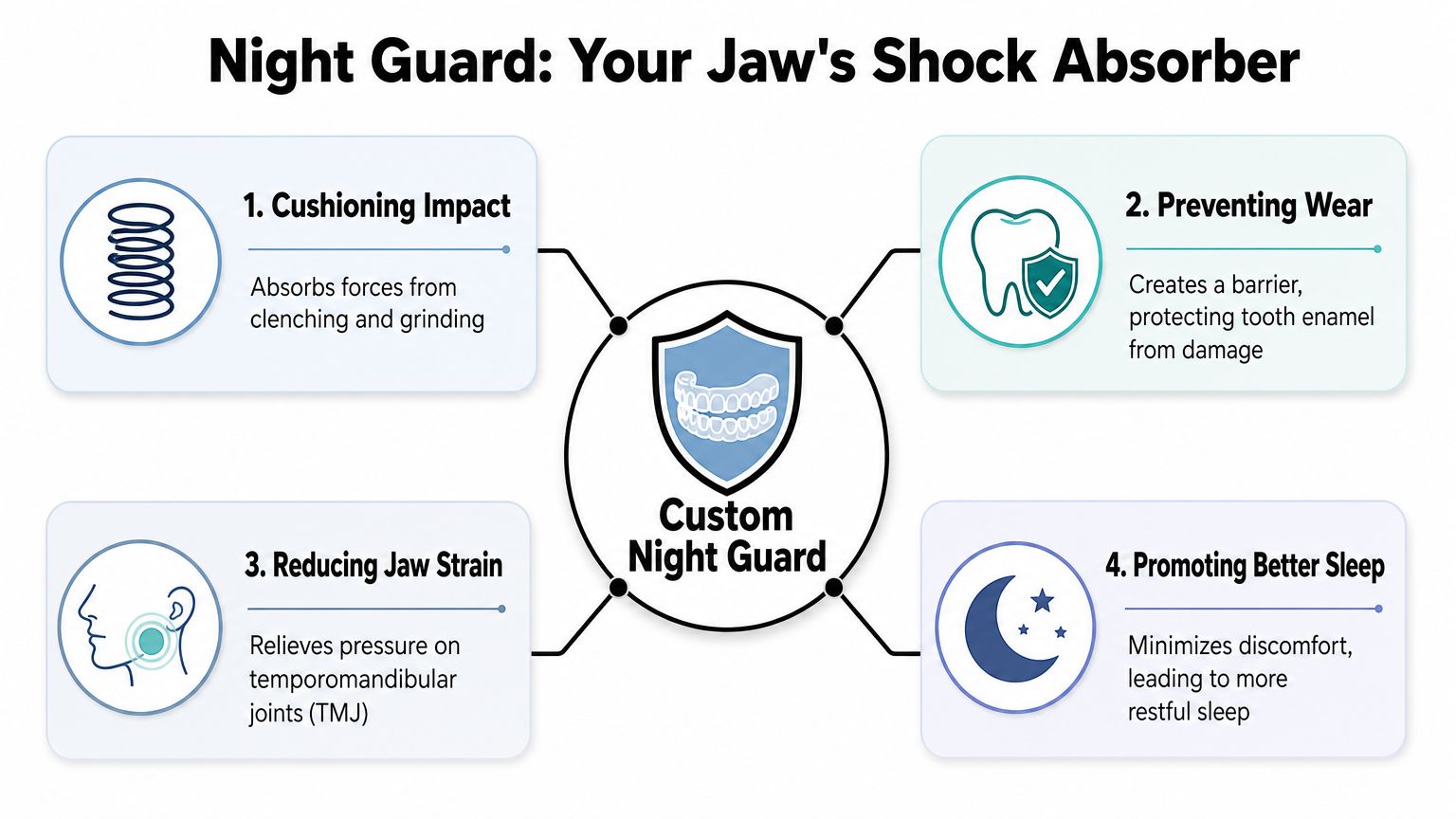
A custom night guard works like a shock absorber for the bite. It doesn't retrain the brain to stop clenching. It protects the teeth and restorations from the force generated when that clenching happens.
What the guard actually does
A custom-made occlusal night guard fits over the upper or lower teeth and works by creating a physical barrier while distributing bite forces more evenly across the arch. That reduces enamel wear and stress on restorations, but it does not stop the clenching reflex itself, as noted in this overview of how occlusal mouth guards function.
That distinction matters. Some patients expect a guard to “cure” grinding. It won't. What it can do is reduce the direct damage caused by repeated pressure, friction, and impact.
When a guard is designed correctly, it can help by:
- Separating the teeth so they aren't grinding directly against each other
- Spreading force more evenly instead of letting one tooth take the load
- Reducing concentrated pressure on vulnerable edges and cusps
- Buffering restorations that are expensive and difficult to replace
Why protection matters for restorative dentistry
Consequently, custom treatment becomes much more important than many online guides suggest. A patient with untouched natural teeth has one set of design needs. A patient with crowns, veneers, implant crowns, bridgework, or a history of full-mouth wear has another.
A night guard protects surfaces. It doesn't excuse a poor bite design, and it shouldn't create new interferences.
For restorative patients, a guard has to account for the bite as it exists now. A crown may have different contours than a natural tooth. An implant doesn't move the way a natural tooth does. Veneers can chip at edges if pressure is directed poorly. When those details are ignored, the guard may feel bulky, unstable, or irritating, and patients often stop wearing it.
That's why night guards for teeth clenching should be selected and adjusted with the same care as other restorative appliances. The appliance is simple in concept. The fit is where the dentistry is.
Comparing Night Guard Options OTC vs Custom-Fit
Many patients start with the same question. Is a drugstore guard good enough, or is a custom guard different in a meaningful way? The answer depends on the bite, the intensity of clenching, and whether there's existing dental work that needs protection.
How store options differ from a custom appliance
Over-the-counter options usually fall into two groups. One is a stock guard with a one-size shape. The other is a boil-and-bite tray that softens and molds at home. Both can seem appealing because they're easy to buy fast.
The trade-off is precision. Most custom guards fall in the 1 mm to 3 mm thickness range, which balances comfort with force absorption, and custom-fitted versions are noted to work best because they match the patient's bite and can protect crowns, bridges, and implants more effectively than store-bought options, according to this review of night guard thickness and fit considerations.
That doesn't mean every store-bought guard fails. Some people use them as a short-term placeholder. The issue is that they aren't designed around the exact contact points of one patient's teeth, restorations, and jaw movement.
Common drawbacks include:
- Loose or uneven fit that shifts during sleep
- Bulkiness that makes regular wear less likely
- Poor force distribution across the bite
- Extra pressure on select teeth instead of broad support
- Problems around crowns or implants where fit matters most
Night Guard Comparison OTC vs Custom-Fit
| Feature | OTC (Stock / Boil-and-Bite) | Custom-Fit (from Prosth & Co.) |
|---|---|---|
| Fit | Generic or home-molded fit | Made to the patient's exact bite |
| Comfort | Often bulky or unstable | Designed for more secure, consistent wear |
| Bite accuracy | Limited control over contact points | Bite can be evaluated and adjusted clinically |
| Protection for crowns, bridges, implants | Unpredictable | Better suited to existing restorative work |
| Jaw support | May feel uneven | Designed with bite balance in mind |
| Durability | Variable | Fabricated for repeated nightly use |
| Clinical oversight | None | Includes diagnosis, fit check, and adjustments |
Store guards can cover teeth. They can't diagnose why those teeth are under stress.
For patients with cosmetic dentistry, implant restorations, or a history of broken teeth, the custom route usually makes more sense because the goal isn't just to wear “something.” The goal is to protect the bite without introducing a new problem.
That same principle applies to other restorative decisions. A rushed fix may feel convenient, but precise dentistry usually saves more time, discomfort, and repair later.
The Prosth & Co. Custom Night Guard Process in NYC
A patient comes in with morning jaw soreness, a chipped veneer, and an implant crown that has started to feel “different” when biting. That is not a case for a generic guard. It calls for a careful prosthodontic evaluation, because the appliance has to protect natural teeth and existing dental work without changing the bite in a harmful way.
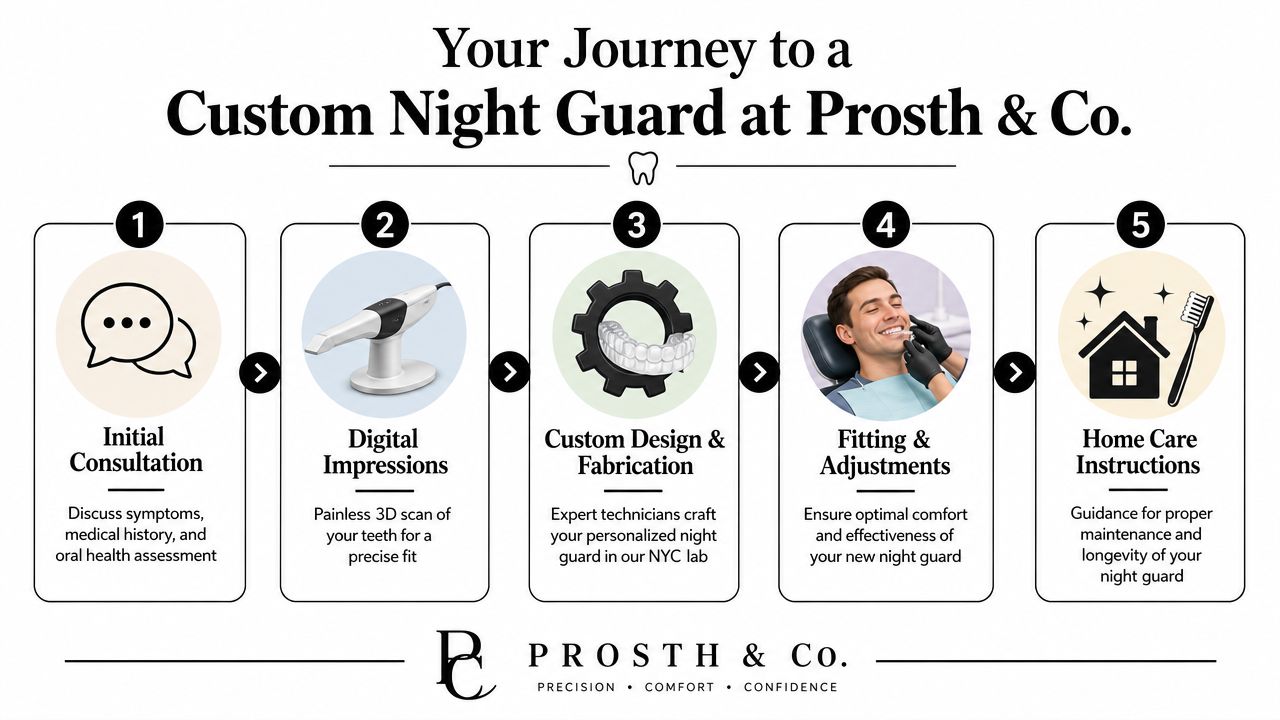
Step one a bite and wear evaluation
The process starts with the bite, not the guard. At the first visit, I look at wear patterns, cracks, mobility, muscle tenderness, joint symptoms, and how the teeth contact in function and at rest. I also check the condition of crowns, bridges, veneers, and implants, because those details change how a night guard should be designed.
Digital scanning is often the best next step. It captures the teeth accurately, helps us study the bite in detail, and avoids the distortion that can happen with an at-home impression.
For some patients, clenching is the main issue. For others, airway-related sleep problems may be part of the picture. If symptoms suggest that, we may also discuss whether a custom sleep apnea appliance in NYC should be considered as part of the plan.
Step two precise fabrication
Once the exam is complete, the guard is prescribed for the patient's bite and dental history. Material, thickness, coverage, and contact points all matter. A patient with mild enamel wear needs a different design than someone with multiple posterior crowns, implant restorations, or a history of fractured porcelain.
That is where prosthodontic oversight makes a real difference. Restored teeth do not respond to force the same way untouched enamel does. If a guard puts extra pressure on one crown or leaves an implant taking more load than it should, the appliance can create a new problem instead of preventing one.
One advantage of treatment at Prosth & Co. is that restorative planning and appliance design can be coordinated in the same office. That is especially helpful when the guard has to work around existing treatment rather than merely cover the teeth.
Step three delivery adjustment and follow-up
The delivery appointment is a clinical visit, not a handoff. The guard is checked for full seating, retention, edge comfort, and balanced contacts across the bite. Even a well-made appliance may need refinement before it feels stable and protective at night.
A proper delivery visit usually includes:
- Insertion check to confirm the guard seats fully
- Bite refinement so contact is balanced
- Comfort review around edges and speaking
- Wear instructions for nightly use and adaptation
- Follow-up guidance if soreness, looseness, or pressure develops
A custom guard is finished after it has been adjusted to the patient's bite and tested for comfortable, even function.
Follow-up matters because the mouth changes. A guard may show where clenching forces are concentrated, and those patterns can guide future adjustments or restorative decisions. For patients with crowns, implants, cosmetic work, or a history of broken teeth, that ongoing supervision is often what keeps a protective appliance from becoming another source of stress.
Caring for Your Night Guard and Exploring Alternatives
A night guard lasts longer and stays safer to wear when patients clean and store it consistently. Neglect shows up quickly as buildup, odor, surface wear, or a warped fit.
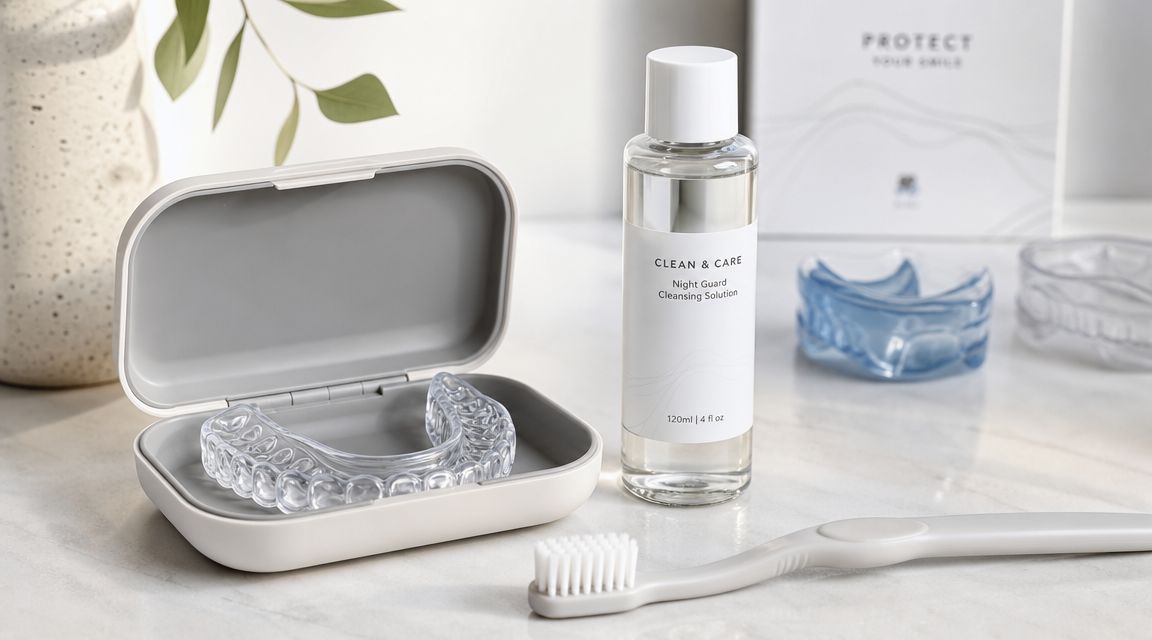
Simple habits that keep a guard in good shape
Most patients do well with a straightforward routine:
- Rinse it after use with cool or lukewarm water
- Brush it gently with a soft toothbrush
- Store it dry in its case instead of wrapping it in tissue
- Keep it away from heat so the shape doesn't change
- Bring it to dental visits so the fit and wear can be checked
If the appliance starts feeling different, looks cracked, or develops rough spots, it shouldn't be ignored. Small fit changes can reflect larger bite changes, heavy wear, or damage to the appliance itself.
If a night guard suddenly feels tight, loose, or uneven, the issue may be the guard, the bite, or both.
When a guard is only one part of the plan
A night guard protects teeth, but it isn't the only tool in care. Some patients also benefit from identifying daytime clenching habits, reducing muscle tension before bed, or adjusting other dental factors that contribute to overload.
In select cases, treatment may include:
- Bite adjustment when a specific high spot is aggravating force
- Orthodontic planning if tooth position is contributing to instability
- Restorative repair for worn or fractured teeth
- Airway-related evaluation when nighttime symptoms overlap with sleep concerns
For patients whose symptoms involve breathing and nighttime oral appliance care, this page on a sleep apnea appliance may be useful.
This short video gives patients a practical visual overview of appliance care and use:
Regular cleaning and exams still matter even when the guard feels fine. Small changes are easier to address before they turn into broken restorations, jaw pain, or emergency visits.
Schedule Your Consultation on the Upper East Side Today
A patient wakes up with a headache, notices a crown feels different when biting, and assumes it will pass. A few months later, the underlying issue is harder to ignore. The tooth is chipped, the jaw is sore, and the bite no longer feels stable.
That pattern is common with clenching. Patients often do not notice the force itself. They notice the results: cracked enamel, worn edges, tenderness in the jaw muscles, or pressure on crowns, bridges, veneers, and implants.
A consultation gives you a clear answer about what is happening and what needs protection now. In a prosthodontic exam, I look at the bite, existing dental work, wear patterns, and areas taking too much load at night. That matters if you have restorations already, because a poorly fitted appliance can shift pressure onto the wrong teeth and create new problems instead of preventing them.
The office is located at 47 E 77th St, Suite 207, New York, NY 10075, convenient for patients throughout the Upper East Side and Manhattan.
Prosth & Co. provides prosthodontic, restorative, preventive, and cosmetic dental care for patients on Manhattan's Upper East Side. To schedule a consultation, request an appointment with the office.
Related topic: Learn more about Bruxism And Night Guards.

Founder and lead prosthodontist of Prosth & Co. on Manhattan's Upper East Side. DDS, Columbia University; Prosthodontics certificate and MMSc in Oral Biology, Harvard School of Dental Medicine; Implantology fellowship, Columbia University.
Meet Victoria →