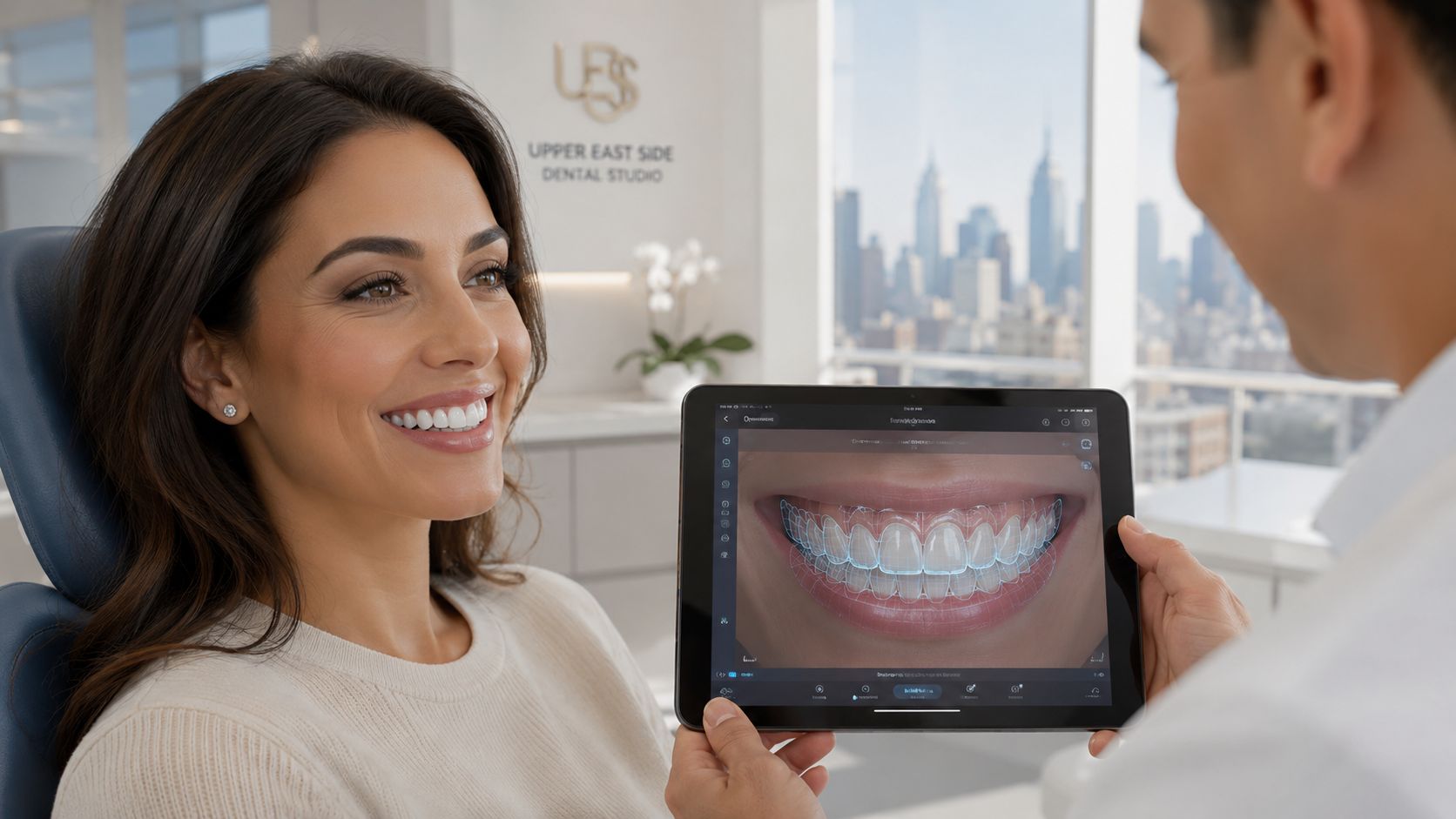
A lot of adults in Manhattan arrive at this point the same way. A smile that once felt easy now feels like something to manage. They angle their face in photos, avoid harder foods at dinner, or notice that one chipped, worn, dark, or missing tooth seems to affect everything around it. What looks like a cosmetic concern often turns out to involve bite balance, jaw comfort, and long-term tooth protection too.
That's where oral dental design becomes helpful. It isn't a single procedure. It's a careful way of planning a smile so that appearance, comfort, and durability work together. For patients on the Upper East Side searching for a dentist near me, a cosmetic dentist near me, or dental implants near me, that difference matters. A smile can look attractive on day one and still fail if the bite, materials, or tooth support weren't designed properly.
In Manhattan, patients often want results that are efficient, polished, and natural-looking. They also need care that fits real life. That may mean anything from cleaning and exams to implant dentistry, veneers, crowns, new patient exams, dental x-rays, emergency dentist visits, or full-mouth rehabilitation. The right plan starts by answering one basic question: is the goal to change how teeth look, or to rebuild how the mouth functions as a whole?
Table of Contents
- Your Trusted Dentist on the Upper East Side
- What Is Oral Dental Design
- Your Oral Design Journey at Prosth & Co
- Advanced Technology for Precise Results in NYC
- Oral Design Treatments for Your Smile Makeover
- Benefits of a Professionally Designed Smile
- Book Your Oral Design Consultation in Manhattan
Your Trusted Dentist on the Upper East Side
On the Upper East Side, many patients don't start by saying they need oral dental design. They say their front teeth look shorter than they used to. They say chewing on one side feels easier. They say a crown keeps breaking, a space from a missing tooth is bothering them, or they're tired of hiding their smile during meetings and dinners.
A common situation looks like this: a patient books what seems like a cosmetic consultation because the front teeth appear worn and uneven. During the conversation, the bigger picture comes into focus. The teeth may be flattening from grinding, the bite may be forcing too much pressure into a few areas, and the smile may no longer match the face the way it once did. What seemed like a simple esthetic fix turns into a discussion about stability, comfort, and preserving the teeth that remain.
Local care that fits real needs
For busy New Yorkers, trust often comes from clarity. Patients want to know what's wrong, what can be fixed, and what the process will feel like. They also want a dental office that can handle routine preventive care, cosmetic improvements, restorative dentistry, and more advanced treatment without making the process confusing.
That's why many people searching for a dentist in New York, NY, an emergency dentist, or help with tooth extraction, crowns, implants, or smile reconstruction look for a practice that sees the whole case, not just one tooth at a time.
A well-designed smile isn't only about appearance. It should let a patient chew comfortably, clean effectively, speak naturally, and smile without second-guessing.
For patients who like to learn how local businesses build trust before choosing a provider, this overview of Google review strategies for businesses offers useful context on what thoughtful reviews can reveal about communication, consistency, and patient experience.
What patients usually want
Patients aren't asking for “perfect” teeth. They're asking for a smile that feels like theirs again.
- They want comfort: food shouldn't require workarounds.
- They want confidence: smiling in close conversation shouldn't feel stressful.
- They want durability: treatment should be planned to last, not just photograph well.
- They want convenience: one office should be able to coordinate cleaning and exams, dental x-rays, restorative care, cosmetic dentistry, and implant-related treatment when needed.
That's the heart of oral dental design on the Upper East Side. It starts with what the patient is living with now, then builds toward a healthy, functional, and beautiful result.
What Is Oral Dental Design
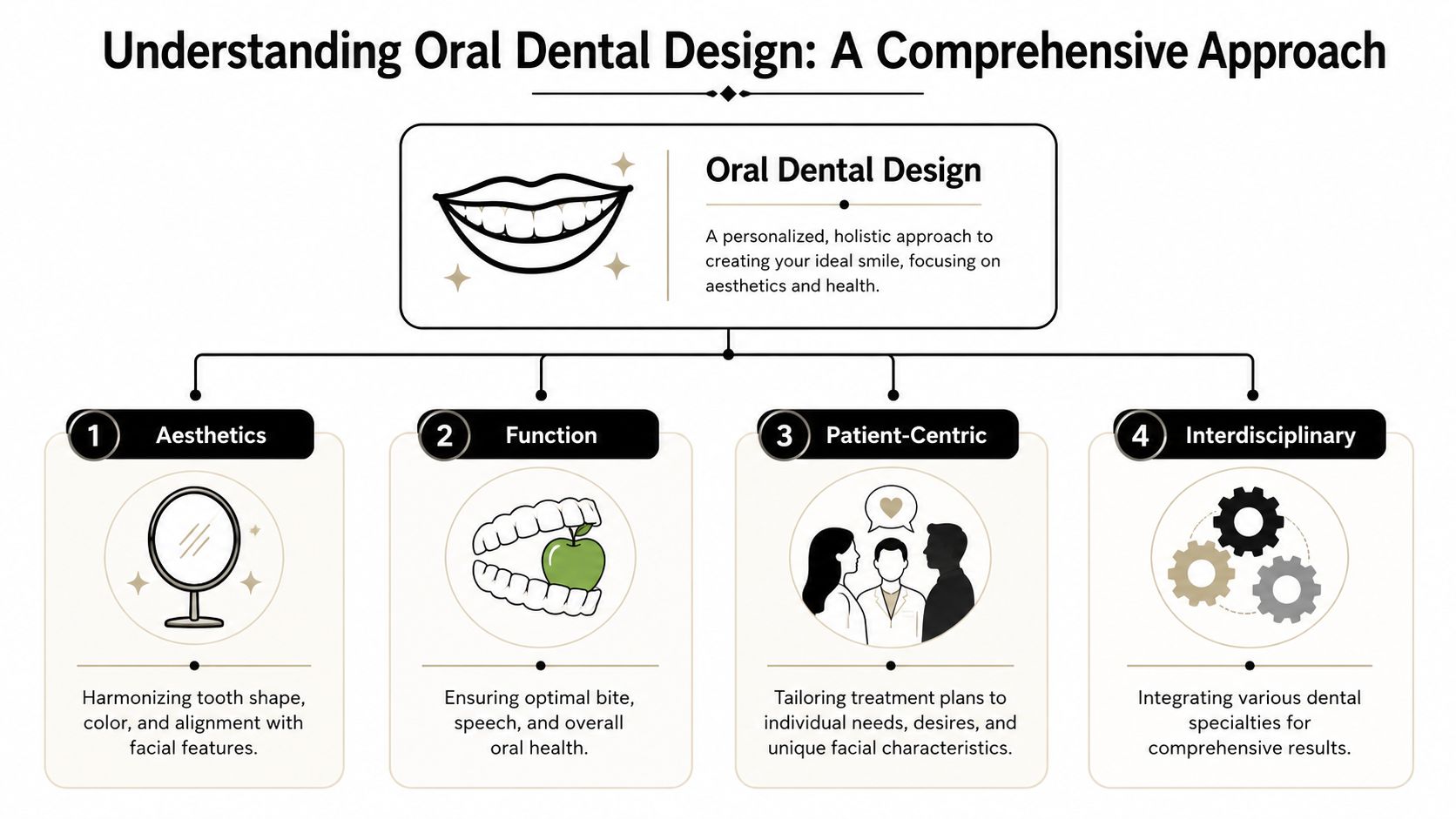
Oral dental design is the process of planning a smile as part of a full oral system. It considers how the teeth look, how they fit together, how the gums frame them, how the lips move, and how the jaw functions during daily use. In plain language, it's a blueprint before treatment begins.
Patients often confuse it with cosmetic dentistry alone. Cosmetic dentistry focuses on appearance, which is important. Oral dental design goes further. It asks whether the new smile will also support chewing, speech, comfort, hygiene, and long-term tooth protection.
More than cosmetic dentistry
A helpful comparison is architecture. Cosmetic changes are like choosing paint color and finishes. Oral dental design is the full plan that checks the structure first, then selects the visible details so everything works together.
That's why a patient with spacing, discoloration, and worn edges might not need the same solution as a patient with the same visible issues plus bite collapse or missing teeth. The outside can look similar. The underlying treatment plan may be very different.
The modern foundation for this kind of planning developed over centuries. The American Dental Association notes that Pierre Fauchard's 1728 book The Surgeon Dentist described a complete system for dentistry, and the ADA also dates restorative milestones such as the first patent for porcelain teeth to 1790, the porcelain jacket crown to 1903, and the first successful biocompatible dental implant metal to 1937 in its history of dental milestones. Those developments shaped today's focus on precision, biocompatibility, and long-term function.
Why patients often get confused
The confusion usually comes from before-and-after thinking. A patient sees a beautiful result online and assumes the visible surface is the whole treatment. It isn't. A stable result often depends on details the patient can't see at first:
- Bite relationship: whether the upper and lower teeth meet in a way that protects restorations.
- Tooth proportions: whether the new length and width fit the face naturally.
- Material choice: whether the restoration material matches the forces in that part of the mouth.
- Gum balance: whether the frame around the teeth supports the final appearance.
Practical rule: If a smile plan doesn't address both how teeth will look and how they will function, it isn't complete.
Some patients also hear terms like digital smile design and assume the computer decides everything. It doesn't. Digital tools help visualize shape, symmetry, and communication. They support judgment. They don't replace careful diagnosis.
For patients exploring appearance-focused options, cosmetic dentistry in Manhattan often fits within a larger oral design plan when beauty and function need to be coordinated from the start.
Your Oral Design Journey at Prosth & Co
A strong oral design process feels organized from the first conversation. Patients usually feel more at ease when they can see how each stage connects to the final result and why treatment isn't rushed before the diagnosis is complete.
The first visit and diagnostic phase
The process often begins with a conversation that is more detailed than patients expect. The goal isn't only to identify what looks off. It's to learn what the patient notices day to day. That may include sensitivity, clenching, old dental work, difficulty chewing, or changes in tooth shape over time.
A full evaluation may include photos, digital scans, dental x-rays, and close examination of the bite. These records help create a shared visual reference. Patients can often understand their condition much faster when they can see uneven wear, fractures, recession, or bite patterns instead of only hearing them described.
Clinical and laboratory coordination matters here. CRH Oral Design explains that restorations follow AACD guidelines and design specifications, and that the most predictable esthetic sequence moves from facially driven diagnosis to provisional restorations and then final ceramics in its discussion of oral design workflow and restorative fabrication.
A short video can help make the planning process easier to picture.
Testing the design before final treatment
This is one of the most reassuring parts of complete care. Instead of jumping directly to the final restorations, the dentist may create a trial version of the design through mock-ups or provisional restorations. Patients can preview length, contour, speech changes, and general feel before the definitive work is completed.
That step helps answer practical questions. Do the front teeth look natural when talking? Does the bite feel balanced? Is the edge position flattering but still comfortable? Small refinements at this stage can prevent bigger disappointments later.
Temporary restorations are not just placeholders. They can act like a real-world test drive for appearance and function.
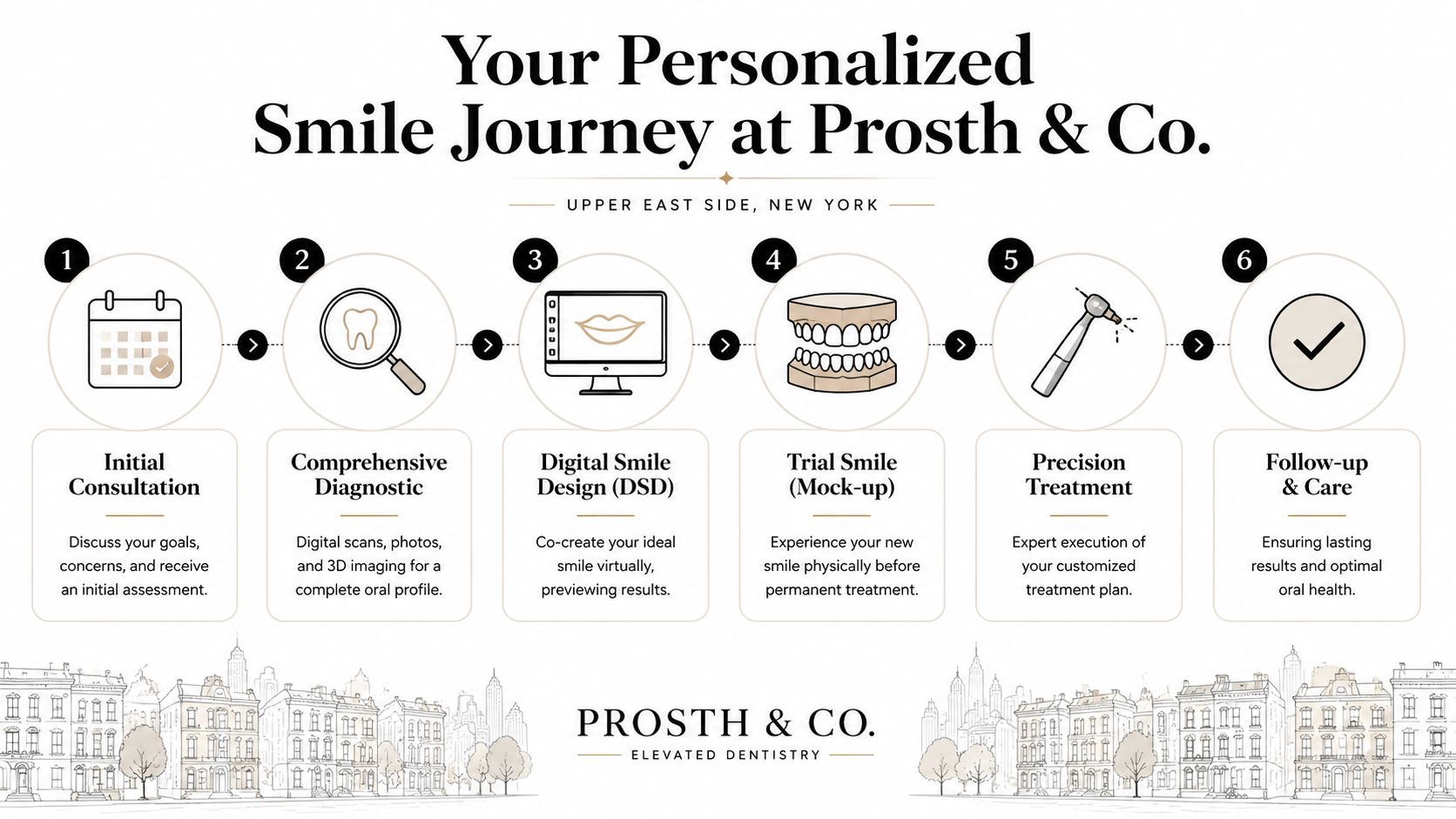
A typical journey often includes:
Consultation and goal setting
The patient explains concerns, priorities, and timeline.Complete records
Photos, scans, x-rays, and bite analysis create the clinical map.Smile planning
The design is evaluated in relation to face, lips, gums, and function.Trial smile phase
Mock-ups or provisional restorations allow adjustments before final treatment.Definitive care
Veneers, crowns, implant restorations, bridges, or other planned treatment is completed.Follow-up and maintenance
The bite, fit, hygiene, and long-term protection are monitored over time.
One practical example is a patient who comes in for a “smile makeover” and learns that the front teeth can't be designed in isolation because the back teeth no longer support the bite correctly. In that case, the sequence changes. Support is rebuilt first. Esthetics follows in a way that can last.
Advanced Technology for Precise Results in NYC
Technology is most useful when it reduces guesswork. In oral dental design, that means tools should help the team gather better information, communicate more clearly, and execute treatment with greater precision.
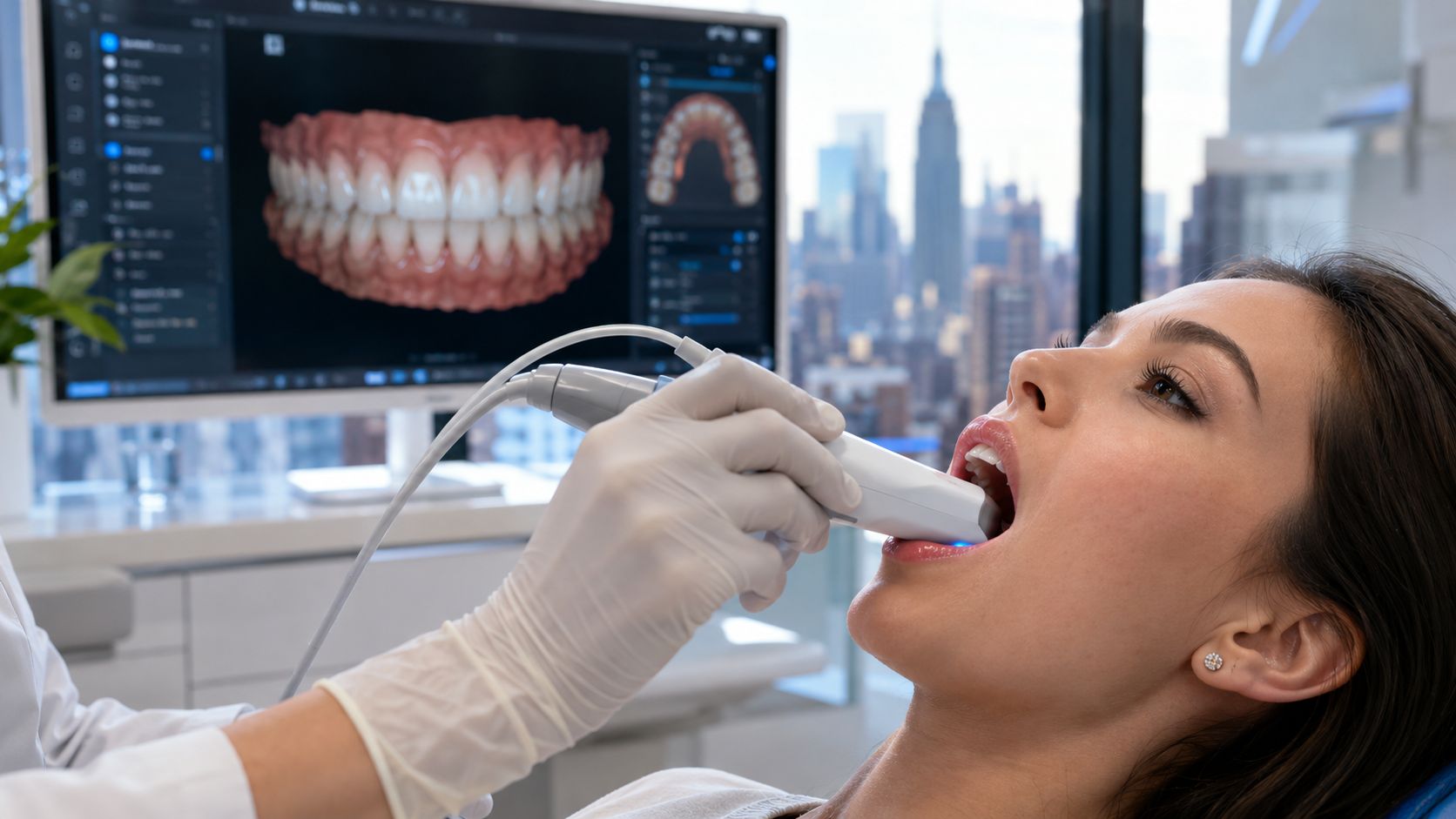
How technology changes the patient experience
For many patients, the most noticeable upgrade is the shift away from older, messy impression methods. Digital scanning can capture the shape of teeth and gums in a more comfortable way while giving the clinician a detailed model to study.
Imaging also supports better planning for restorative and implant treatment. When a case involves a missing tooth, limited space, worn enamel, or complex bite issues, detailed records matter because small errors in fit or alignment can create larger problems later.
A modern workflow may include tools such as:
- Digital scans: useful for evaluating tooth form, spacing, and restoration fit.
- Intraoral photography: helps patients understand what the clinician sees.
- Advanced imaging for planning: supports more precise implant and restorative decisions.
- Design software and lab communication: keeps shape, contour, and material goals aligned from planning to delivery.
Why operatory design matters too
Patients don't always think about the treatment room itself, but the physical setup affects efficiency and accuracy. According to a dental operatory planning guide, a modern operatory should be organized around side, rear, or over-the-patient delivery and integrate digital hardware such as monitors, USB ports for digital radiography, CPUs, 3D microscopes, and camera recorders into the delivery system, as outlined in this planning guide for dental workflow integration.
That matters because advanced care depends on smooth movement, clear visibility, and fewer interruptions. In a prosthodontic case, a delay caused by awkward equipment placement is more than an inconvenience. It can interrupt concentration during detailed work that demands precision.
A patient benefit is simple to understand: the better the information and the smoother the setup, the more controlled the treatment tends to feel. Comfort improves. Communication improves. Accuracy improves too.
Oral Design Treatments for Your Smile Makeover
The phrase oral dental design can sound abstract until it connects to the treatments patients already search for. In practice, it often includes the services people know by name, but planned in a way that protects both beauty and function.
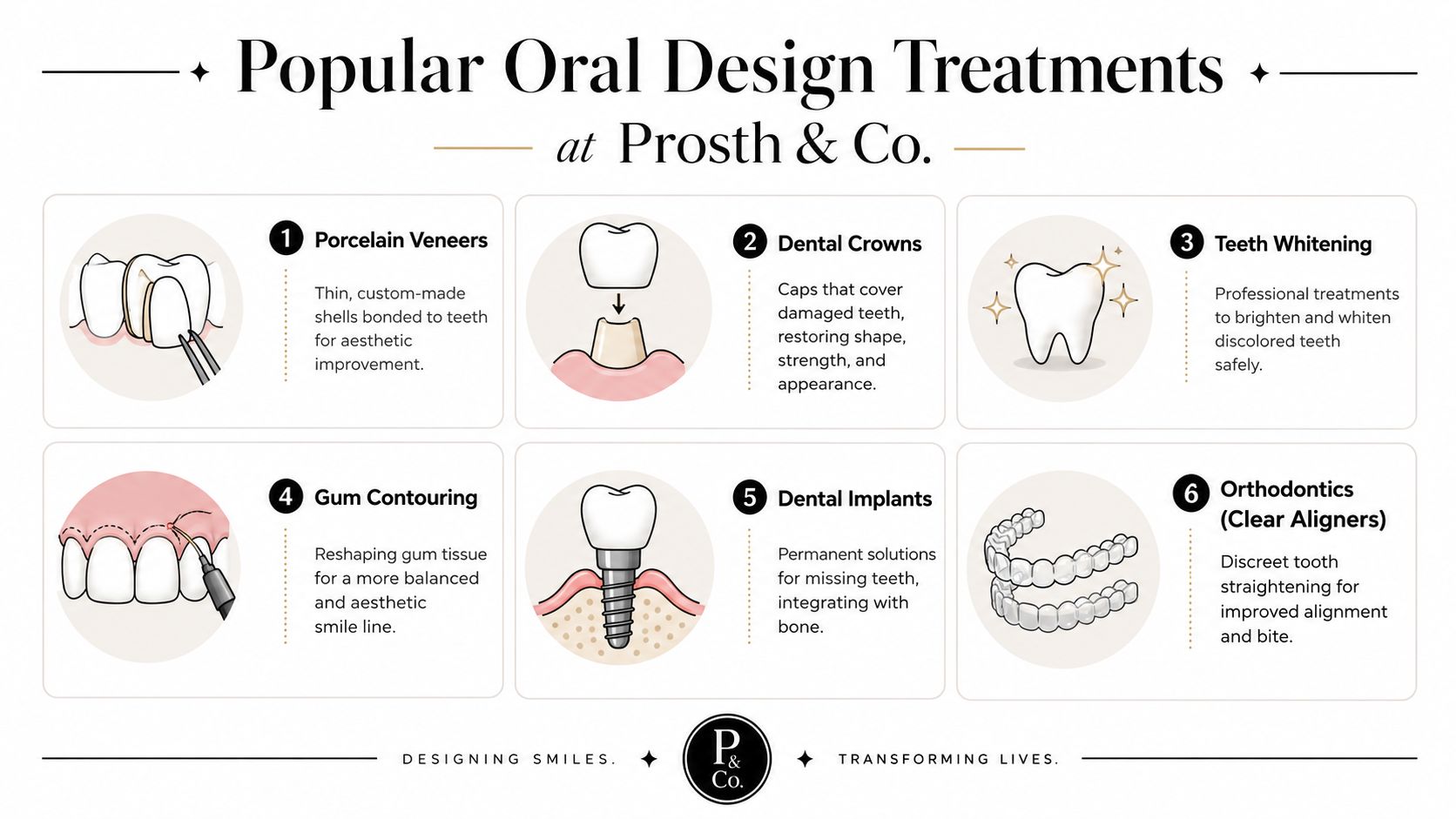
Solutions for visible cosmetic concerns
For a patient with teeth that are chipped, slightly uneven, or stained, porcelain veneers may be part of the answer. Veneers can refine shape, proportion, and color while preserving a natural look when they're designed in harmony with the lips, gums, and surrounding teeth.
Patients comparing aesthetic options often want to know when veneers make sense and when they don't. Veneers can be excellent for the right situation, but they aren't a substitute for rebuilding a bite that's unstable or overloaded. For patients interested in that treatment specifically, porcelain veneers in Manhattan are one option within a broader design approach.
Teeth whitening may also complement a smile plan when the main issue is generalized discoloration rather than structural damage. In some cases, whitening comes first so the final restorations can be matched more accurately to the desired tooth color.
Solutions for missing or damaged teeth
A different patient may have a cracked tooth, a failing old crown, or a missing tooth that changes both appearance and chewing. That patient often needs restorative treatment rather than cosmetic treatment alone.
Common examples include:
- Crowns for teeth that need strength and coverage after damage or heavy wear
- Bridges when a missing tooth must be replaced using neighboring support
- Inlays and onlays when part of the tooth can be preserved and reinforced
- Dental implants when a missing tooth or multiple missing teeth need replacement from the root level upward
For missing teeth, implants can be especially important in oral design because they affect spacing, support, and how the smile is built from the ground up. If the foundation is wrong, the visible result often feels compromised even when the teeth themselves look attractive.
When full-mouth rehabilitation makes more sense
Patients frequently require the clearest guidance. Some adults don't need a smile makeover in the cosmetic sense. They need a restorative plan because the teeth have worn down, shifted, fractured, or lost support over time.
A patient with significant grinding, multiple failing restorations, bite collapse, or several missing teeth may be better served by full-mouth rehabilitation. That kind of care rebuilds the chewing system first, then refines the final appearance within those stable boundaries.
A useful question is whether the patient is trying to improve a smile that already functions well, or rebuild a mouth that no longer functions comfortably. That distinction matters because, as discussed in an article on function-first planning in complex dental design, the most important issue in full-mouth reconstruction is protecting bite function, chewing, and long-term durability when esthetics and function might compete.
When a patient has major wear or bite problems, the final appearance depends on the functional plan underneath it.
In practical terms, that means a prosthodontic approach often feels more predictable for complex cases. The design is not limited to making teeth look brighter or straighter. It accounts for how they will carry force every day.
Benefits of a Professionally Designed Smile
The biggest benefit of a professionally designed smile is that it can remove the tradeoff many patients assume they have to accept. They think they can choose a smile that looks better or a mouth that functions better. A thoughtful plan aims for both.
Daily function gets easier
A balanced bite can make everyday habits feel normal again. Patients often notice that chewing feels more even, certain foods become less stressful, and sore spots from overloaded teeth begin to make more sense in hindsight.
There are health advantages too.
- Cleaning becomes more manageable: properly shaped restorations and better alignment can make daily home care easier.
- Teeth can be protected from excess force: a more stable bite may reduce concentrated pressure on vulnerable areas.
- Speech can improve: front tooth position and contour affect certain sounds more than many people realize.
- Jaw comfort may improve: when the bite is better organized, the muscles don't have to compensate in the same way.
Confidence often follows function
Cosmetic changes matter. Patients usually notice them first. But lasting confidence often comes from something deeper than a brighter or straighter appearance. It comes from feeling that the smile is reliable.
That can change a lot of ordinary moments. A patient may stop covering the mouth while laughing. Another may stop choosing soft foods by default. A professional may smile more naturally in conversation because the teeth no longer feel fragile or distracting.
A designed smile also supports preventive care. When teeth fit together more appropriately and restorations are easier to maintain, routine visits for dental care, cleaning and exams, and dental x-rays become part of preserving the result rather than constantly managing breakdown.
A healthy smile should feel quiet. It shouldn't ask for constant workarounds in eating, speaking, or social situations.
For many adults, that's the true value. The smile looks better, but just as important, daily life feels simpler.
Book Your Oral Design Consultation in Manhattan
For most patients, the hardest part is getting started. They may know something is off, but they aren't sure whether they need cosmetic dentistry, restorative dentistry, dental implants, a night guard, replacement of old dental work, or a more complete plan.
What happens at the consultation
A consultation in Manhattan should feel like a focused conversation, not pressure to commit on the spot. The visit usually includes a discussion of the patient's concerns, review of records or new imaging if needed, and an explanation of what the clinical findings mean in plain language.
Patients can expect the conversation to address questions such as:
| Question | Why it matters |
|---|---|
| What is the main problem? | It separates appearance concerns from structural or bite-related concerns. |
| What treatment options fit this case? | It helps the patient understand whether a conservative or comprehensive path makes more sense. |
| What sequence is safest? | It prevents treatment from starting in the wrong order. |
| What kind of maintenance will be needed? | It protects the final result over time. |
Cost and timing are usually part of the discussion too. There isn't one universal answer because treatment can range from a small cosmetic adjustment to a larger reconstruction. A custom plan is usually the most honest way to explain what's involved.
Common questions patients ask
How long does the oral design process take
It depends on the complexity of the case, the number of teeth involved, whether healing is needed, and whether treatment includes implants, orthodontic movement, or provisional phases. Simpler cosmetic cases may move more quickly. More complex restorative cases require additional planning and testing because predictability matters more than speed.
Is oral dental design covered by insurance
Some parts of treatment may be considered restorative and some may be considered elective. Coverage depends on the plan and the specific procedures recommended. A detailed review is usually needed after the diagnosis is complete.
What makes a prosthodontist different for smile design
A prosthodontist focuses on the restoration and replacement of teeth, especially in more complex cases involving crowns, bridges, dentures, implants, bite problems, and full-mouth rehabilitation. That training can be especially valuable when a patient's smile concerns involve wear, missing teeth, failing restorations, or changes in function, not only color or alignment.
Is digital always better
Not automatically. Public discussion often frames digital care as faster and therefore better, but that isn't always the deciding factor. A review discussing digital workflow limits notes that newer systems should still be judged by practical outcomes such as fit, repeat visits, and long-term service, and that slower analog-guided methods may be more predictable in some cases depending on complexity, materials, and bite risk, as described in this clinical discussion of digital versus analog predictability.
For Upper East Side patients searching for a dentist near me, a cosmetic dentist near me, or dental implants near me, the next best step is usually a consultation that clarifies the underlying problem before treatment begins. That one visit can turn uncertainty into a plan.
Patients looking for clear answers and carefully planned treatment can schedule a consultation with Prosth & Co.. The practice is located on the Upper East Side at 47 E 77th St, Suite 207, New York, NY 10075, and offers preventive, restorative, prosthodontic, cosmetic, implant, and full-mouth rehabilitation care for adults and families seeking a healthy, functional, and beautiful smile.
Related topic: Learn more about Full Mouth Rehabilitation.

Founder and lead prosthodontist of Prosth & Co. on Manhattan's Upper East Side. DDS, Columbia University; Prosthodontics certificate and MMSc in Oral Biology, Harvard School of Dental Medicine; Implantology fellowship, Columbia University.
Meet Victoria →