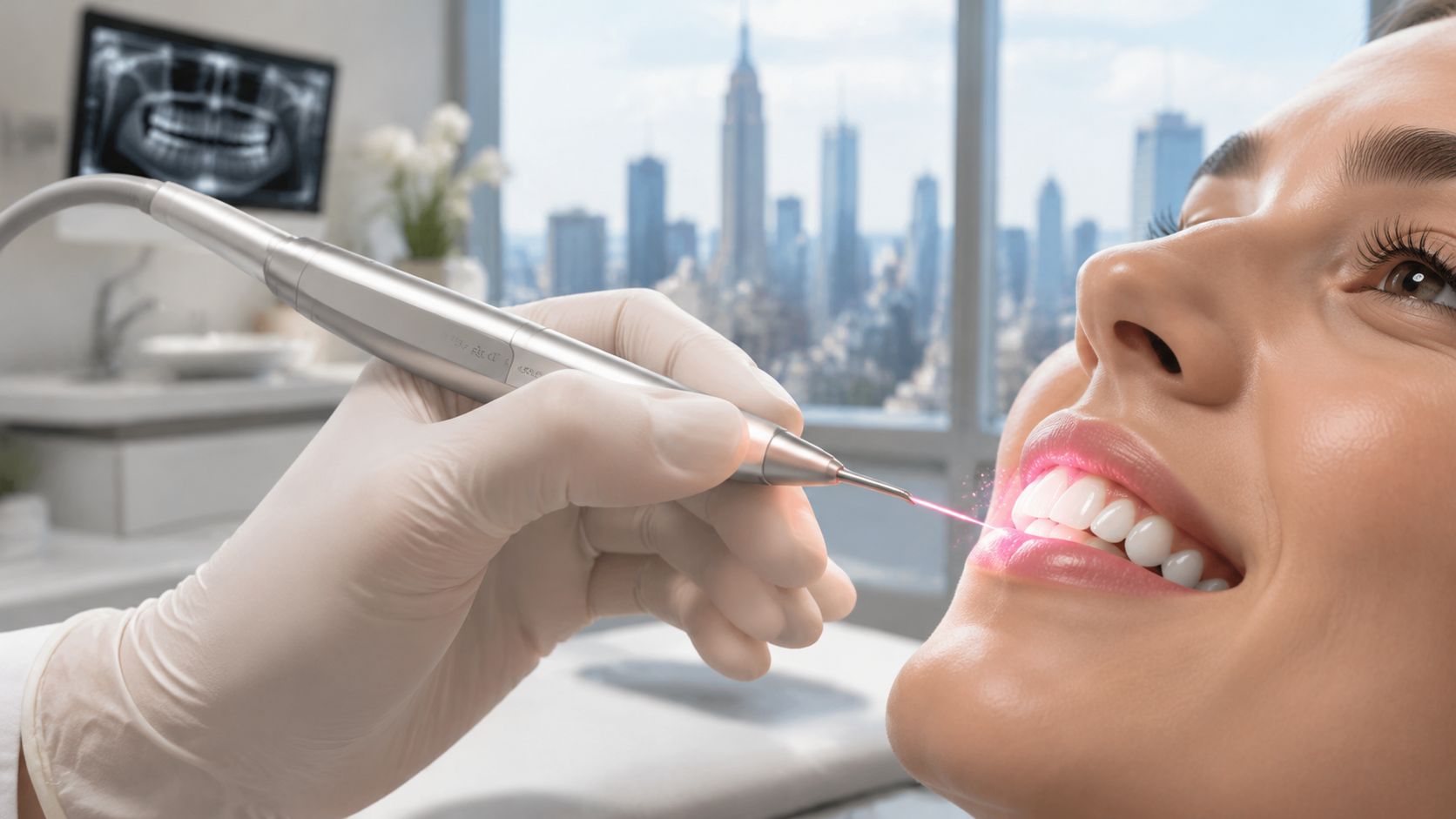
A lot of adults in Manhattan end up in the same spot. They brush, floss, keep up with cleanings, and still notice a little bleeding when they rinse, tenderness around a crown, or a vague worry that their gums don't feel as healthy as they should. That often leads to a late-night search for a dentist near me or a dentist in New York, NY who offers more than a routine cleaning.
That concern is reasonable. Gum irritation isn't always about poor hygiene. Sometimes bacteria settle deeper under the gumline, around existing dental work, or near areas being prepared for treatment like crowns, bridges, or dental implants near me searches often point patients toward. In a city where people expect precision and long-term value from their healthcare, laser bacterial reduction has become an important part of modern dental care.
Table of Contents
- Your Trusted Dentist on the Upper East Side for Advanced Care
- Understanding Oral Bacteria and Your Gum Health
- How Laser Bacterial Reduction Modernizes Your Dental Cleaning
- Your LBR Appointment at Our New York City Practice
- Key Benefits and Safety of Laser Dental Therapy
- Frequently Asked Questions About Laser Bacterial Reduction
Your Trusted Dentist on the Upper East Side for Advanced Care
Many patients looking for a dentist in New York, NY aren't starting with a dramatic dental emergency. They're starting with something subtle. A little puffiness near the gums. Bleeding during flossing. Sensitivity around an old bridge. A sense that a standard cleaning helps, but not enough.
On the Upper East Side, that's a common reason people begin looking for a practice that offers more advanced preventive and restorative care. Someone may be booking new patient exams after years of staying current elsewhere, because they want a clearer explanation of what's happening and a higher level of detail in treatment planning. Another patient may be preparing for veneers, implant crowns, or other restorative dentistry and wants the healthiest possible gum foundation before moving forward.
A common Manhattan patient story
A typical example is the busy professional who keeps a careful calendar, values wellness, and doesn't ignore warning signs. That person may search for a cosmetic dentist near me because a smile upgrade is on the horizon, but the underlying issue turns out to be gum inflammation that needs attention first. Another may search for dental implants near me after losing a tooth and discover that controlling bacteria around the gums is just as important as replacing the tooth itself.
That's where laser bacterial reduction often enters the conversation. It isn't a flashy add-on. It's a focused way to reduce harmful bacteria in areas that standard home care can't fully reach, especially below the gumline and around sites that matter for long-term restorative success.
Practical rule: Healthy gums aren't a cosmetic extra. They're the base that supports cleanings, crowns, bridges, veneers, and implants.
Why local patients ask for more than a standard cleaning
In a high-expectation neighborhood, patients often want to know not just what treatment is being recommended, but why. They want clarity on whether gum irritation is minor gingivitis, deeper periodontal disease, or inflammation around existing restorative work. They also want to know whether there's a more precise option than repeating the same cleaning and hoping for a different result.
That's why laser bacterial reduction has become relevant for people searching for dentist near me, cleaning and exams, restorative dentistry, or even emergency dentist care after sudden swelling or pain. It supports a cleaner, calmer environment in the mouth, and it can be especially useful when treatment needs to protect a long-term investment in oral health.
Understanding Oral Bacteria and Your Gum Health
The mouth is never bacteria-free, and it shouldn't be. A healthy mouth contains a mix of microorganisms that live in balance. Problems begin when that balance shifts and harmful bacteria start to dominate near the gums.
A simple way to think about the oral microbiome
A useful comparison is a garden. In a healthy garden, the soil supports good growth and keeps weeds under control. In the mouth, the oral microbiome works in a similar way. Helpful bacteria coexist with the body and help maintain balance. Harmful bacteria can also be present, but when they overgrow, the tissue around the teeth becomes irritated.
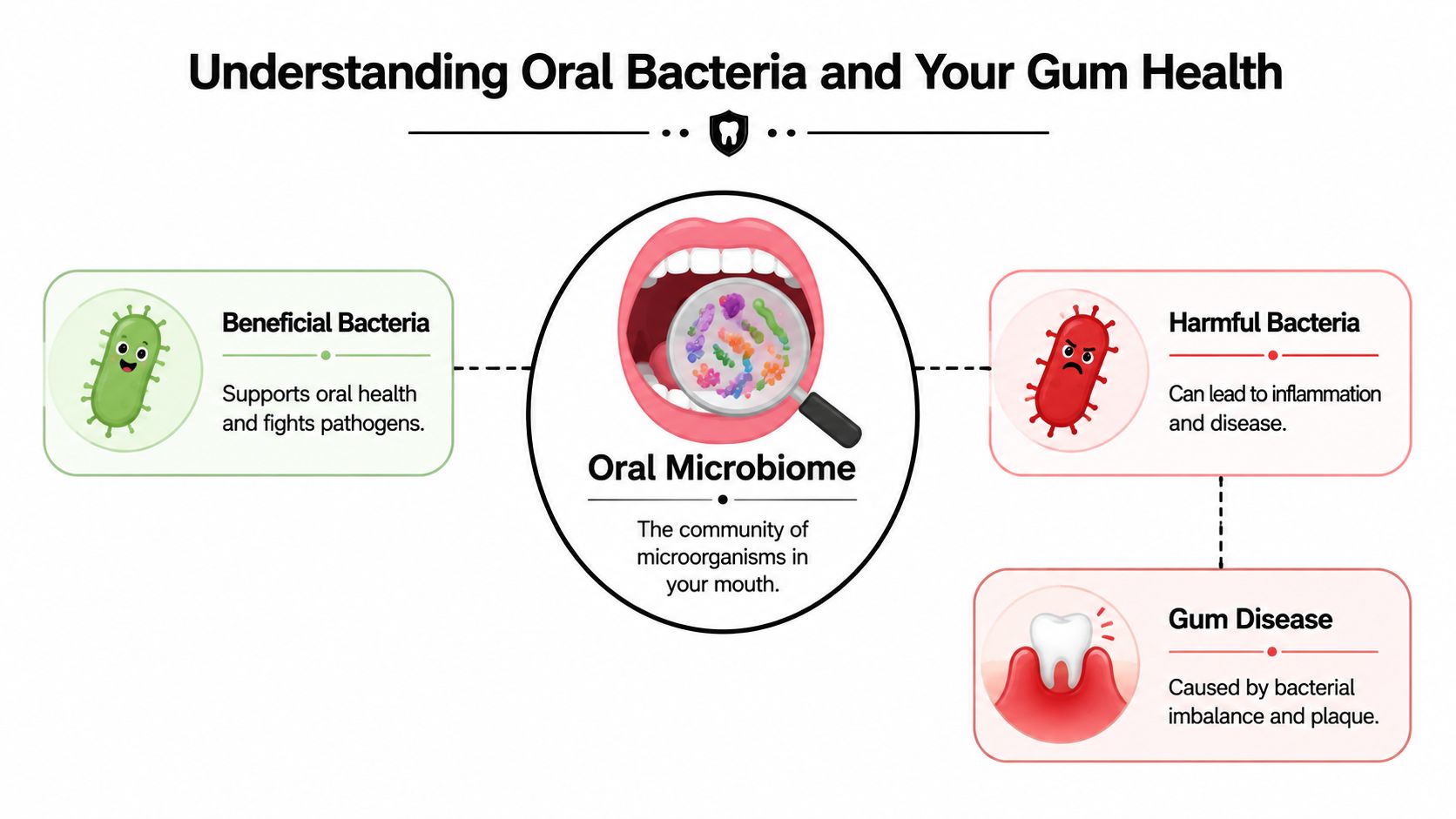
When those harmful bacteria collect along and below the gumline, the body reacts with inflammation. At first, that may look like gingivitis. Gums may seem redder, bleed during flossing, or feel tender when brushing. If the bacterial buildup stays in place, the inflammation can move deeper and begin affecting the supporting structures around the teeth. That's when periodontitis becomes a concern.
Why a regular brushing routine may not solve everything
Many patients get confused; they assume bleeding means they aren't brushing hard enough, or that a minty rinse should fix the problem. But bacteria don't just sit on the visible surfaces of the teeth. They can collect in pockets under the gums, around rough edges of tartar, and near the margins of crowns or bridges.
Stress, dry mouth, diet, clenching, and individual biology can all make that bacterial balance harder to maintain. Even someone who is careful with home care can develop areas that need more targeted professional treatment.
A change in breath can be another sign that bacteria are thriving where they shouldn't. For readers who want a simple overview of halitosis causes and fixes, that resource gives a helpful patient-friendly explanation of how oral bacteria often contribute.
A separate issue is tartar. Bacteria attach to plaque, and when plaque hardens, it creates a rough surface that makes future buildup easier. That's one reason questions about professional removal matter. Patients curious about whether hardened deposits can be managed should read this explanation of can tartar be removed.
Harmful oral bacteria don't need to cause major pain to create major inflammation. Quiet irritation over time is often how gum disease starts.
When patients understand that gum disease is driven by bacterial imbalance, laser bacterial reduction makes more sense. It isn't replacing brushing, flossing, or professional cleanings. It's targeting the bacterial burden that can hide below the surface and keep gums from settling down.
How Laser Bacterial Reduction Modernizes Your Dental Cleaning
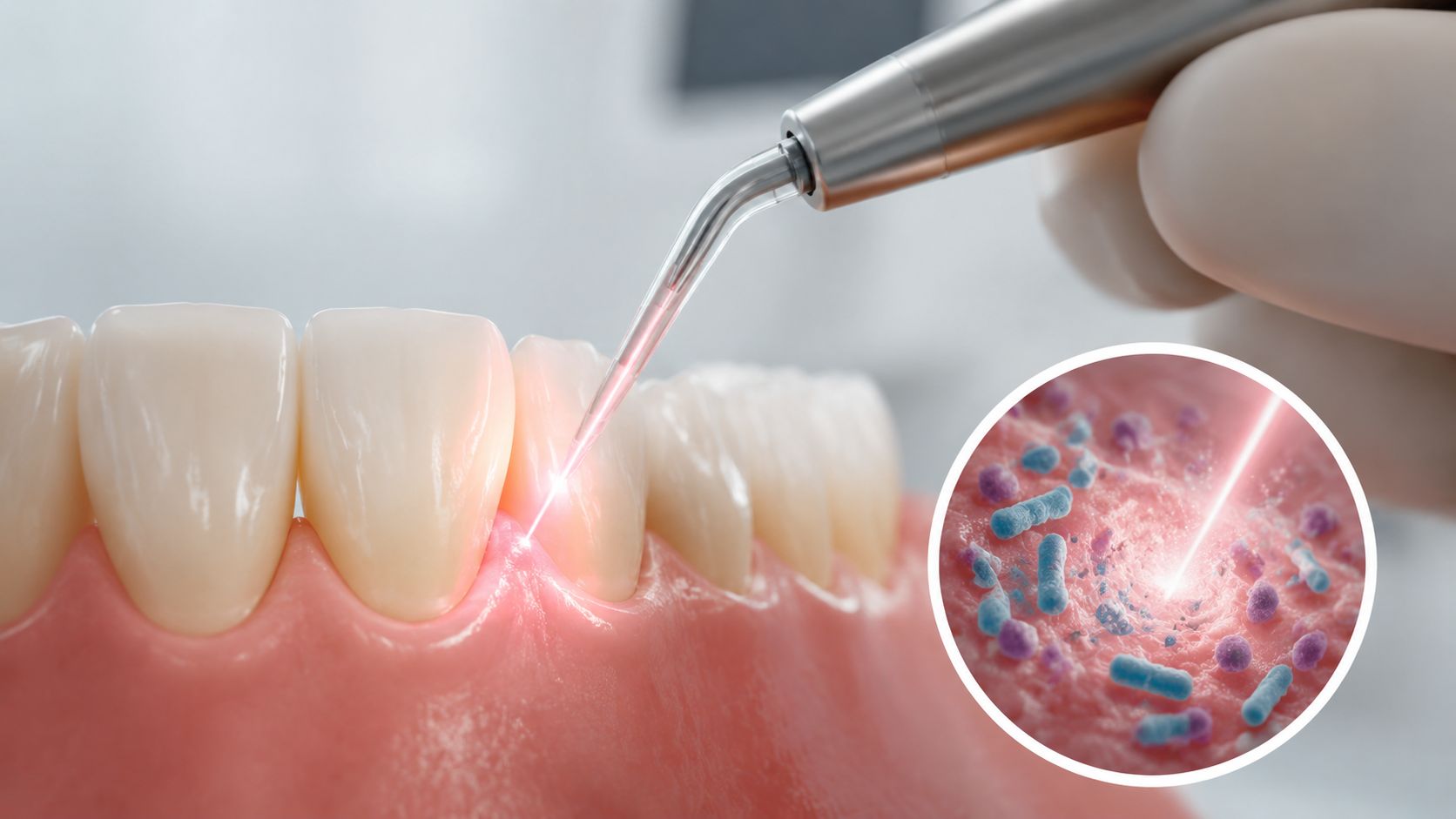
Laser bacterial reduction sounds high-tech, and that can make people nervous. In reality, the concept is straightforward. The treatment uses focused light energy to reduce harmful bacteria in the gum area, especially in places where inflammation tends to linger.
What the laser is actually doing
A diode laser is used as a precise adjunct to cleaning. It isn't scraping teeth, drilling enamel, or cutting healthy tissue in the way patients often imagine when they hear the word “laser.” Its purpose here is to help disinfect the area under the gums and improve the tissue environment.
One of the clearest ways to describe it comes from a clinical hygiene perspective. From a biologic and technical standpoint, diode-based LBR operates at the interface of microbial decontamination and soft-tissue biostimulation. This dual mechanism, microbial reduction plus tissue modulation, explains why clinicians report faster resolution of gingival inflammation and improved pocket depth following laser-assisted therapy compared with conventional scaling alone according to laser-assisted hygiene therapy guidance.
That dual action is why patients often hear two ideas at once. First, the laser helps reduce bacteria. Second, it supports a healing response in the soft tissue. Those are different goals, but they work together.
Here's a helpful visual overview of how laser bacterial reduction fits into modern gum care.
Why this matters before restorative treatment
This matters in routine hygiene, but it matters even more in restorative and prosthodontic care. A crown margin near the gumline, an implant site, or a bridge abutment all depend on stable tissue. If bacteria remain active around those areas, inflammation can make treatment less predictable.
That's why patients preparing for restorative care often benefit from a cleaner biologic starting point. A deep cleaning may remove deposits mechanically. Laser bacterial reduction can then help lower the bacterial burden within the soft tissue environment. For patients comparing treatment options, this discussion of deep cleaning before and after helps clarify how deeper periodontal care differs from a standard cleaning.
A simple comparison
| Approach | Main job | What patients usually notice |
|---|---|---|
| Standard cleaning | Removes plaque and surface buildup | Teeth feel cleaner and smoother |
| Deep cleaning | Reaches below the gumline to remove deposits | Pressure, cleaning under the gums, gradual gum improvement |
| Laser bacterial reduction | Reduces harmful bacteria and supports tissue response | A brief adjunct that aims to calm inflamed gum areas |
Laser bacterial reduction isn't a substitute for mechanical cleaning. It works best as part of a thorough plan.
Patients searching for dental care, cleaning and exams, restorative dentistry, or cosmetic dentistry often assume these are separate categories. In practice, they overlap. A healthier gum environment supports everything from routine maintenance to veneers, implant crowns, and larger smile rehabilitation.
Your LBR Appointment at Our New York City Practice
For many patients, the hardest part is not the treatment itself. It's not knowing what the appointment will feel like. When laser bacterial reduction is presented clearly, it tends to feel much less intimidating.
What the visit feels like from start to finish
A typical appointment begins with a close look at the gums and existing dental work. In a detailed New York City practice setting, that often includes photos inside the mouth so patients can see what the team sees. Instead of hearing vague phrases like “a little inflammation,” they can look directly at the tissue around a crown, implant area, or natural tooth and understand why that spot needs attention.

The next step is mechanical cleaning if it's needed. Plaque and tartar have to be addressed first. After that, the laser portion is performed in a targeted way around the gum tissue. Patients often expect something dramatic, but the experience is usually brief and straightforward. The goal is careful decontamination, not an aggressive or surgical sensation.
Some people receive this treatment during preventive care because they have recurring gum inflammation. Others receive it before restorative work because the gums need to be calmer and cleaner before final impressions, crown placement, or implant-related treatment proceeds.
How it fits into crowns bridges and implant care
Laser bacterial reduction distinguishes itself as more than a mere hygiene add-on. In prosthodontic care, the condition of the gums affects the fit, appearance, and long-term stability of treatment. Inflamed tissue can bleed, distort measurements, and create uncertainty at the very moment precision matters most.
Educational materials have pointed out that few existing materials clearly explain how Laser Bacterial Reduction interacts with or modifies traditional treatment planning in complex restorative and prosthodontic cases. This gap leaves patients and even some clinicians unsure whether LBR should occur before or after definitive prosthesis placement, and how it affects long-term peri-implant and marginal bone stability in multi-unit rehabilitations, as noted in prosthodontic laser planning handouts.
That uncertainty matters in real life. A patient getting a single crown may need healthier tissue around the margin so the restoration seats and cleans properly. A patient replacing missing teeth may need bacterial control before implant restorations are finalized. Someone with worn teeth from grinding may need the gums stabilized before a broader bite reconstruction moves ahead.
Common points where LBR may be used
- Before definitive restorative work: To reduce bacterial irritation around teeth being prepared for crowns, bridges, or veneers.
- Around implant-related care: To help create a cleaner peri-implant environment before or during maintenance phases.
- During periodontal maintenance: For patients whose gums flare up between regular hygiene visits.
- Near vulnerable areas: Especially where deep pockets, previous inflammation, or difficult-to-clean restorations are present.
A clean tooth surface matters. A healthy gum seal around that tooth matters just as much.
That's why this treatment fits naturally into high-level restorative dentistry. It supports the biology around the dentistry, which is often the difference between work that merely looks good and work that remains stable.
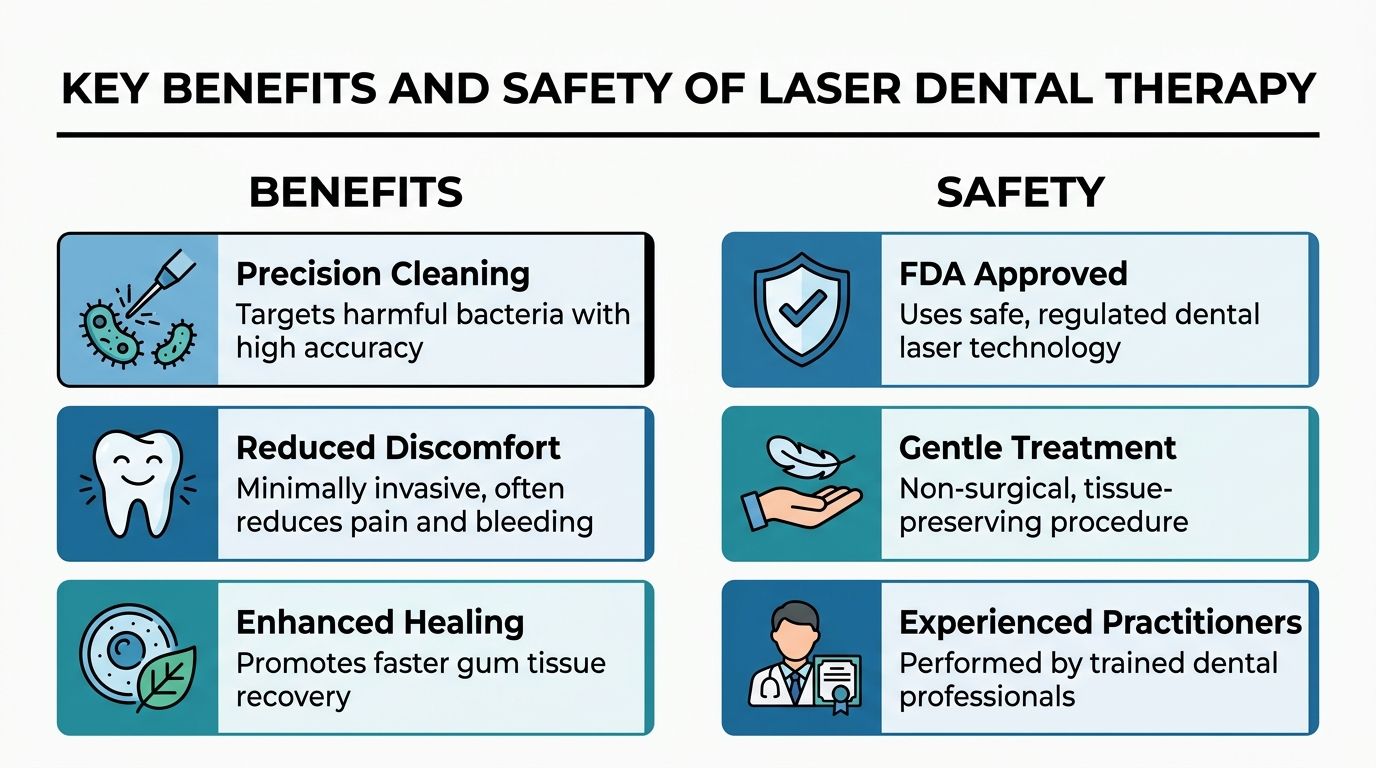
Key Benefits and Safety of Laser Dental Therapy
A patient may be investing in a new crown, replacing missing teeth with implants, or restoring a worn bite after years of grinding. In each of those situations, the dentistry is only part of the story. The surrounding gum tissue also has to stay calm, clean, and stable if that work is going to look natural and last well.
That is where laser bacterial reduction earns its place in a prosthodontic setting like ours on the Upper East Side. We use it as a risk-reduction step that supports the biology around high-value restorative care, not merely as an add-on during a cleaning.
Why patients choose it
The first benefit is straightforward. Lowering the bacterial load under the gums gives irritated tissue a better chance to settle down. A cleaner environment can make it easier for the gums to respond well to the care you are already receiving at home and in the office.
Patients also tend to appreciate the experience itself. Diode lasers used in periodontal care are widely described in clinical literature as minimally invasive and well tolerated, with favorable healing and low postoperative discomfort when proper protocols are followed, as discussed in this overview of laser use in periodontics from the American Academy of Periodontology.
Benefits that matter in restorative and implant care
- Healthier tissue around future dental work: Before a crown, bridge, veneer, or implant restoration is finalized, we want the gums as quiet and stable as possible. For our patients, that can mean a lower chance of inflammation affecting the fit, appearance, or cleanability of the final result.
- A cleaner environment around existing restorations: Bacteria often collect around margins, implant components, and hard-to-reach contours. Reducing that burden can support maintenance around dentistry that already represents a meaningful investment.
- More predictable healing: Gum tissue behaves better when it is not constantly reacting to bacterial irritation. That matters when we are shaping, evaluating, or protecting the soft tissue frame around visible restorative work.
- Comfort-focused care: Many patients expect the word "laser" to mean something intense. In reality, the treatment is usually gentle and brief when used appropriately.
Readers who want a broader look at how laser-based periodontal care is used in advanced treatment settings may find these comprehensive LANAP treatment insights useful for background reading.
Safety and whole-body considerations
Safety is not an afterthought in our office. It is built into case selection, laser settings, tissue handling, and protective measures for everyone in the room.
There is also a medical reason some patients find reassuring. Research on dental procedures has examined whether laser use may reduce the spread of bacteria into the bloodstream during periodontal treatment. A clinical study published in the Australian Dental Journal reported lower post-treatment bacteremia when diode laser support was added to ultrasonic scaling, compared with scaling alone, according to this study on bacteremia following periodontal treatment.
For patients planning significant restorative or implant work, that kind of attention to bacterial control matters. The goal is not just to clean the gums for today. The goal is to create a healthier foundation for dentistry you want to keep stable, comfortable, and attractive for years.
Frequently Asked Questions About Laser Bacterial Reduction
Common concerns before booking
Patients usually ask these questions when they are trying to decide whether LBR belongs in a routine visit or in a larger treatment plan. At Prosth & Co., we answer it in the context of the work you are having done, your gum condition, and how to protect the dentistry you want to keep for years.
Does laser bacterial reduction hurt?
Most patients describe LBR as very manageable. The sensation is often mild and brief, and many people tell us it feels much easier than they expected after hearing the word “laser.” If you are already feeling nervous, we walk you through each step before we begin so there are no surprises.
How long does it take?
It usually adds only a short amount of time to your visit. In a hygiene appointment, that may be just a few extra minutes. In a restorative or implant case, timing depends on where it fits in the sequence. The goal is not speed alone. The goal is careful bacterial control at the right moment in treatment.
Is it only for gum disease?
No. LBR can also support care around crowns, bridges, implants, and areas where gum tissue needs to stay as calm and healthy as possible. A review in the Journal of Lasers in Medical Sciences discusses diode laser use as an adjunct in periodontal therapy and notes its role in reducing bacterial load and supporting tissue response in selected cases, as described in this review of dental diode lasers in periodontics.
Why is LBR particularly important if I am getting dental implants, multiple crowns, or full-mouth reconstruction?
In these cases, the treatment has a different meaning than a standard “cleaning add-on.” If you are investing in implants or complex restorative care, the gums and surrounding tissues are the foundation those restorations sit on. LBR helps lower bacterial pressure in that foundation.
A simple way to picture it is preparing soil before planting something valuable. If the environment is irritated or heavily contaminated with bacteria, even beautifully designed dentistry has a harder job. In our Upper East Side practice, we often use LBR as part of a larger risk-reduction strategy before, during, or after prosthodontic treatment so your crowns, implant restorations, or reconstructed bite have a healthier setting in which to heal and function.
Is it safe?
Yes, when it is done with the right training, settings, and protective protocols. Safety in our office includes tissue control, eye protection, and careful case selection. Patients who want a simple overview of that part of office protocol can review these notes on clinic protection with laser eyewear.
Is it covered by insurance?
Coverage depends on your plan and on why the procedure is being recommended. Some plans view it differently depending on whether it is part of periodontal care, maintenance, or treatment supporting a larger restorative case. Our team can review that with you before treatment.
How often should it be done?
That depends on your gums, your dental history, and the kind of dentistry you have in place. A patient with implants, recurrent inflammation around crown margins, or an ongoing prosthodontic plan may benefit from a different schedule than someone coming in for routine prevention. We tailor it to the condition of your mouth, not a one-size-fits-all calendar.
Patients looking for a thoughtful dentist near me on the Upper East Side, whether for preventive care, dental implants near me, restorative dentistry, tooth extraction, cosmetic treatment, or an emergency dentist, can learn more and request an appointment with Prosth & Co.. The practice offers complete care in New York City with a strong focus on precision, comfort, and long-term oral health.
Related topic: Learn more about Periodontal And Gum Health.

Founder and lead prosthodontist of Prosth & Co. on Manhattan's Upper East Side. DDS, Columbia University; Prosthodontics certificate and MMSc in Oral Biology, Harvard School of Dental Medicine; Implantology fellowship, Columbia University.
Meet Victoria →