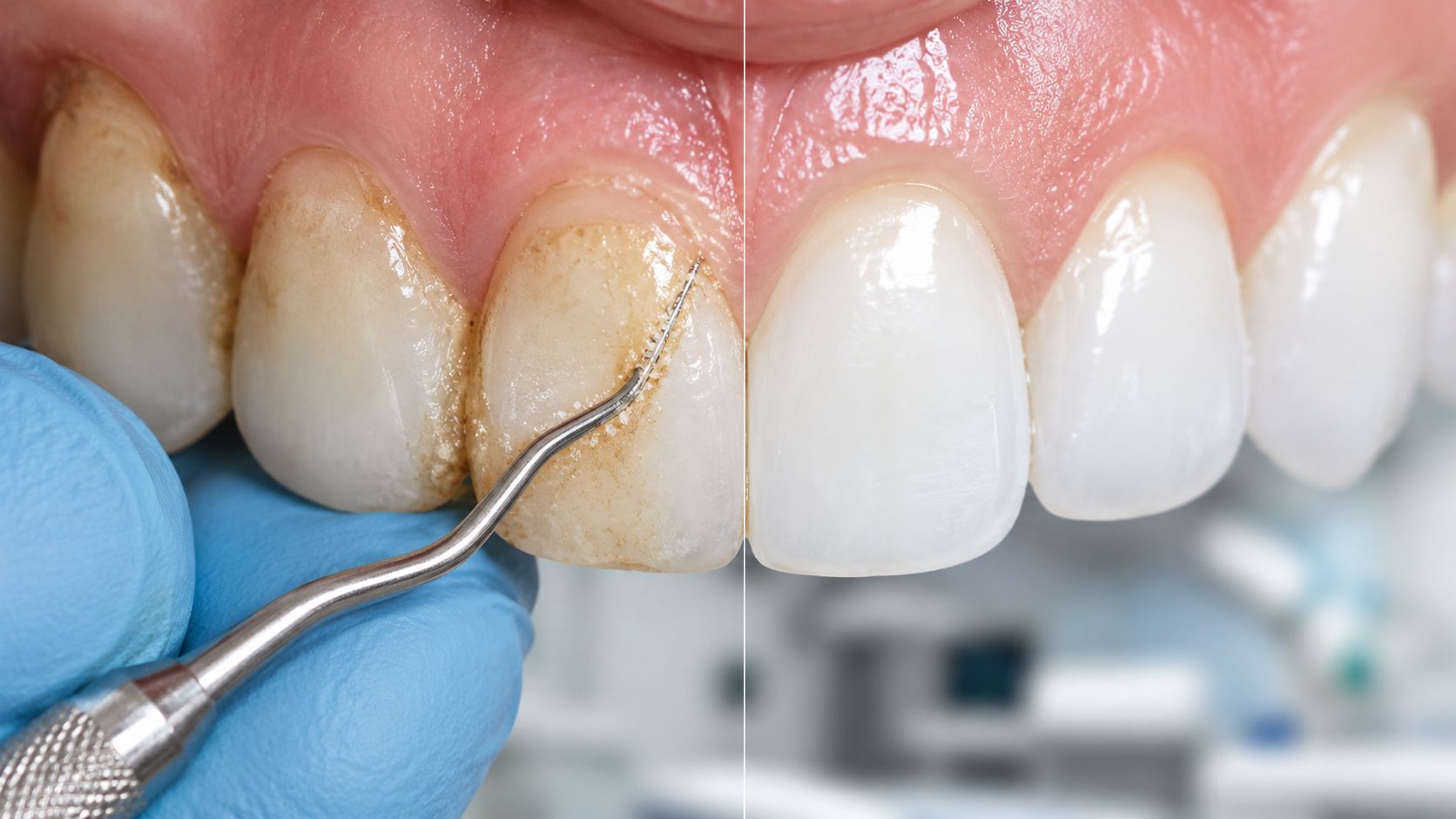
Yes, tartar can be removed, but only by a dental professional. Once plaque hardens into tartar, it can't be removed by brushing or flossing alone, and plaque can calcify into calculus within 12 to 14 days.
A lot of Manhattan patients have the same moment of concern. They're brushing at the sink, run their tongue along the back of the lower teeth, and notice something rough that wasn't there before. It doesn't feel like food. It doesn't brush away. Then the search begins: can tartar be removed, and can it be done at home?
That confusion is understandable. Plaque and tartar get discussed as if they're the same thing, but they aren't. One is soft and manageable with daily care. The other is hardened and needs professional removal. For patients looking for a trusted dentist near me on the Upper East Side, that distinction matters because it changes what helps and what can make things worse.
This guide explains what tartar is, why home methods fall short, and what professional tartar removal looks like in a modern Manhattan dental office. It also helps readers understand when a routine cleaning and exam may be enough and when deeper care may be needed.
Table of Contents
- Your Trusted Dentist on the Upper East Side for a Healthier Smile
- What Is Tartar and Why Does It Form
- The Dangers of DIY Tartar Removal at Home
- Professional Tartar Removal at Our NYC Dental Office
- What to Expect at Your Upper East Side Appointment
- Preventing Tartar and Maintaining Your Healthy Smile
Your Trusted Dentist on the Upper East Side for a Healthier Smile
A common Upper East Side scenario goes like this. A patient keeps up with brushing, tries to floss when possible, and still notices a hard yellowish edge near the gums or behind the lower front teeth. The natural assumption is that more brushing should fix it. When it doesn't, people often feel frustrated or even embarrassed.
The reassuring answer is simpler than many expect. Tartar is hardened plaque, and once it mineralizes, it requires professional scaling by a dentist or dental hygienist rather than more force at home, as explained in this overview of tartar removal and professional scaling.
That's why patients searching for a cosmetic dentist near me, an emergency dentist, or a dentist in New York, NY often start with the same basic need: clear guidance from someone who won't overcomplicate the problem. Hard buildup on teeth is common. It doesn't automatically mean someone has failed at home care. It means the mouth has reached the point where home tools aren't enough.
A local concern with a practical solution
Busy New Yorkers delay routine visits for all kinds of reasons. Work calendars fill up. Symptoms don't seem urgent. A rough spot on a tooth doesn't always feel like a reason to book an appointment. But tartar rarely stays a cosmetic issue. It gives plaque and bacteria more places to cling, especially around the gumline.
Practical rule: If the buildup feels hard, fixed in place, and resistant to brushing, it should be assessed professionally rather than scraped at home.
Practices that depend on local trust in dense neighborhoods often pay close attention to how patients search and choose care. For readers interested in how location-based visibility shapes healthcare discovery, LocalHQ's piece on optimizing local search for chiropractors offers a useful look at how neighborhood intent affects patient decisions across local practices.
Why this matters in Manhattan
Patients on the Upper East Side often want more than a quick answer. They want to know whether they need a routine cleaning and exam, whether the buildup is affecting gum health, and whether the visit can also address related concerns like stained teeth, older restorations, or long-delayed preventive care.
That's the point where expert dental care becomes useful, not just convenient. A proper exam can determine whether the issue is simple tartar buildup, early gum irritation, or a deeper problem that needs restorative dentistry, cosmetic dentistry, or more focused periodontal care.
What Is Tartar and Why Does It Form
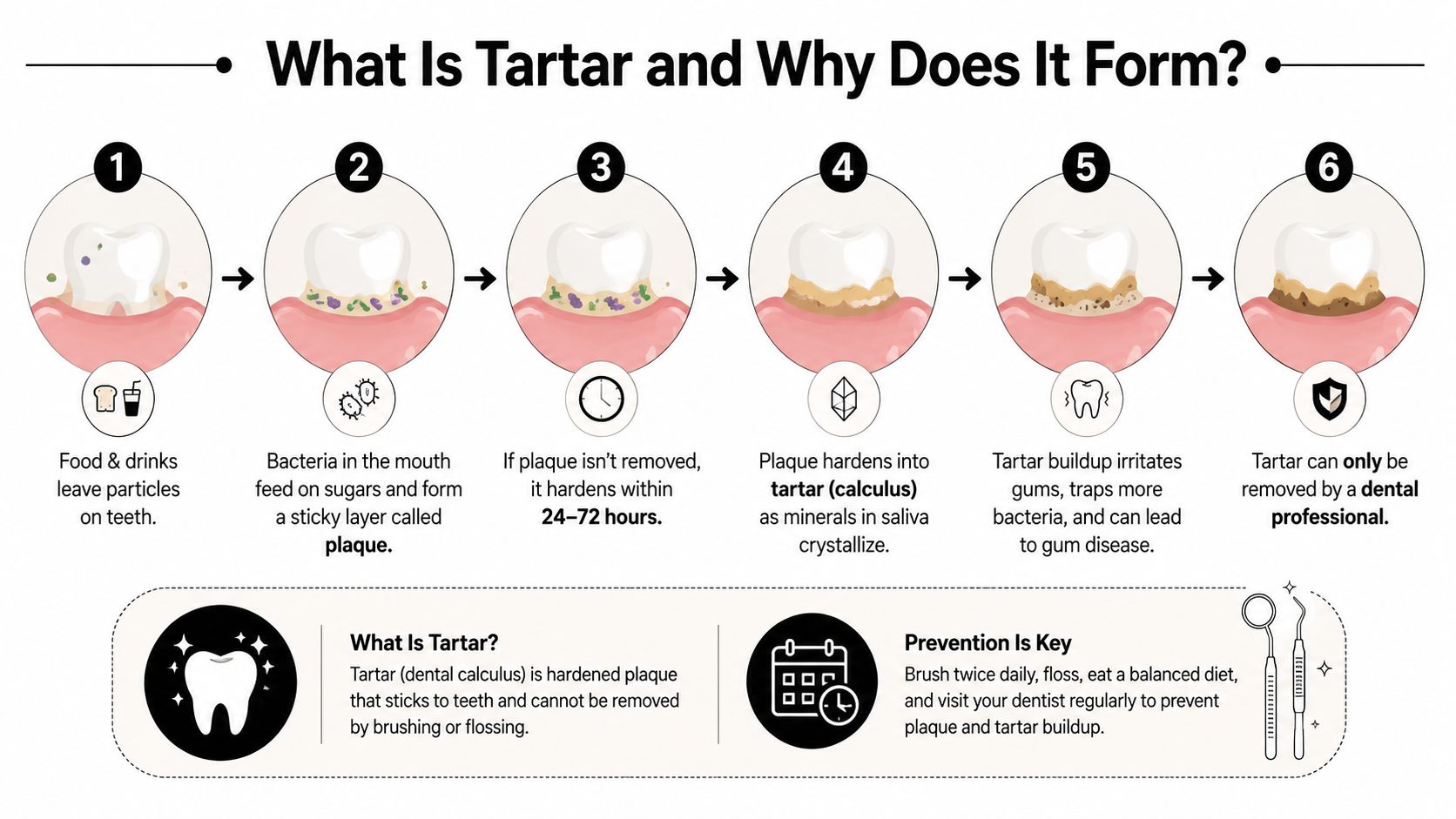
Tartar sounds mysterious, but the process is straightforward. It starts as plaque, which is the soft film that forms on teeth throughout the day. If that plaque isn't removed in time, minerals in saliva harden it into tartar, also called calculus.
A simple way to think about it is wet sand drying into something much tougher. At first, the material is easy to disturb. Later, it becomes fixed and stubborn. That change is why a toothbrush can handle plaque but not tartar.
Plaque and tartar are not the same thing
Many readers often get tripped up. They hear “buildup” and assume all buildup behaves the same way.
A clearer comparison helps:
| Buildup type | What it feels like | What removes it |
|---|---|---|
| Plaque | Soft, sticky film | Brushing and flossing |
| Tartar | Hard, attached deposit | Professional scaling |
Plaque can calcify into calculus within 12 to 14 days, which is why prevention has a relatively short window. Once that change happens, brushing harder doesn't solve the problem.
Tartar isn't just old plaque. It's plaque that has changed into a hardened deposit with a different physical structure.
That distinction matters for anyone asking can tartar be removed. The answer is yes, but the better follow-up question is whether the material on the teeth is still plaque or has already hardened.
Why some people notice buildup faster
Not every mouth builds tartar at the same pace. Some people collect more buildup along the gumline or behind the lower front teeth even when they're trying to take care of their teeth well. The process can move faster with poor oral hygiene, smoking, and higher salivary pH. Genetics and tooth position can also affect how easily plaque stays trapped.
A few patterns often show up in everyday life:
- Crowded teeth: Tight spaces are harder to clean thoroughly.
- Busy routines: Inconsistent flossing leaves plaque in place longer.
- Staining habits: Coffee, tea, and tobacco can make existing buildup easier to see.
- Dryer mouth conditions: Less natural rinsing can let plaque sit undisturbed.
The important takeaway is that tartar is a biological process, not a personal failure. Patients who stay ahead of it usually do so with a mix of daily plaque control and regular professional cleanings.
The Dangers of DIY Tartar Removal at Home
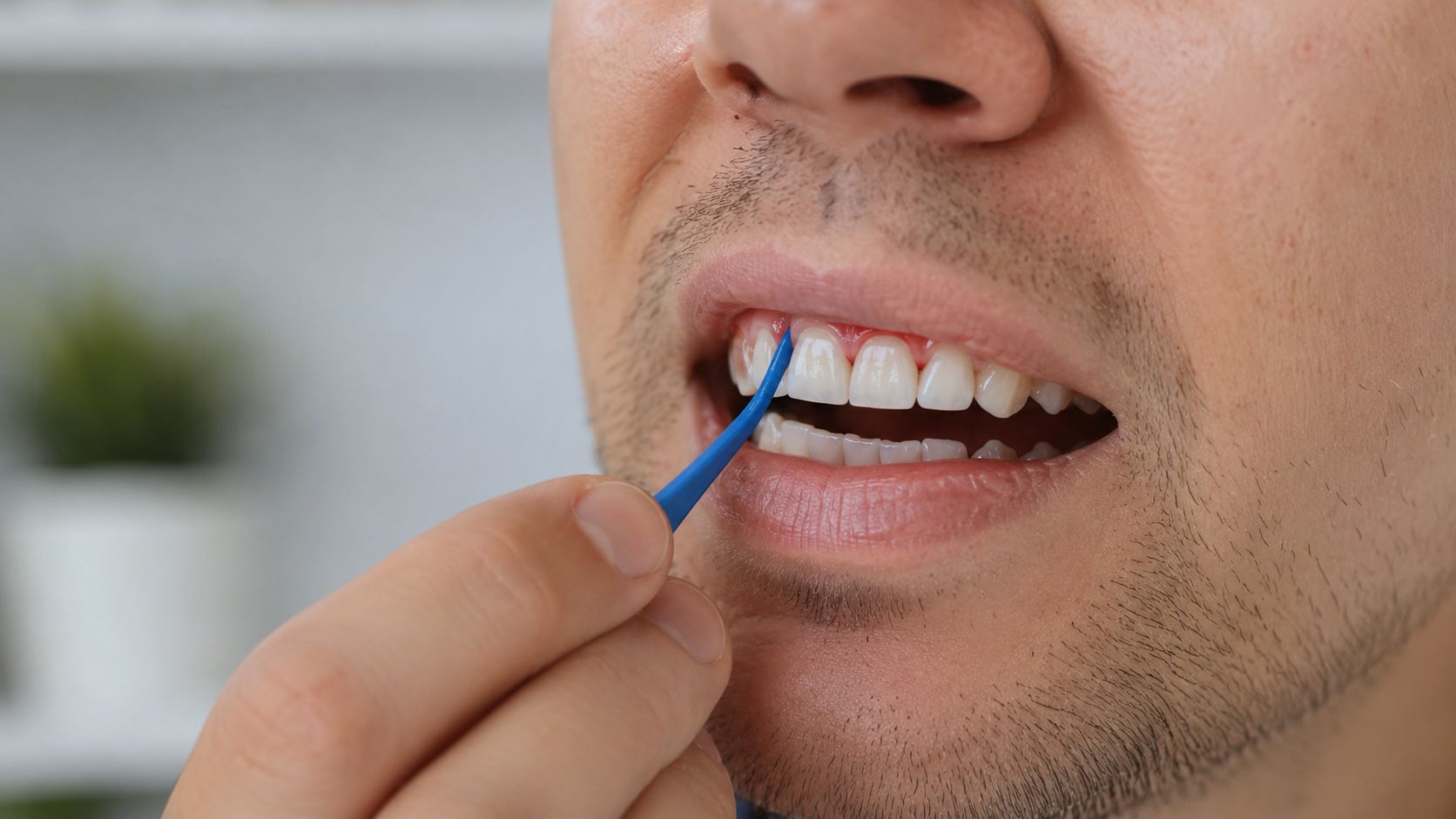
When people realize the buildup won't brush away, many go looking for a shortcut. That's where trouble starts. Home scraping kits, baking soda scrubs, vinegar rinses, and social media tricks all promise a simple fix. The problem is that tartar isn't a surface stain or a soft coating.
Why home scraping and remedies fail
Plaque calcifies into calculus within 12 to 14 days, and once it does, removal by mechanical abrasion such as baking soda or chemical dissolution such as vinegar isn't effective. Those methods don't have the necessary force to fracture crystalline calculus, and only professional scaling achieves therapeutic removal.
That matters because many people mistake two different issues for one:
- Surface stain: Discoloration sitting on the outer tooth surface
- Plaque: Soft film that may still be removable at home
- Tartar: Hardened material that is bonded and fixed
Someone may loosen a bit of stain or irritate soft debris near the gums and think tartar is coming off. In reality, the hard deposit often remains, while the surrounding enamel or gum tissue takes the damage.
What can go wrong at home
The risk isn't only that DIY methods won't work. The bigger concern is what they can do on the way to failing. Aggressive attempts to remove tartar at home can scratch enamel, injure gums, and break deposits into fragments while leaving harmful buildup behind.
The concerns are practical and immediate:
- Enamel scratches: Hard metal tools can leave the tooth surface rougher, which gives plaque more places to stick.
- Gum injury: Delicate tissue around the tooth can tear or recede if scraped.
- Missed buildup below the gums: Visible tartar is only part of the picture in some cases.
- False reassurance: A person may think the issue is handled and delay real treatment.
A rough deposit on a tooth is not the same as a splinter. It shouldn't be picked off at home.
For patients in Manhattan with sensitive gums, cosmetic dental work, veneers, crowns, or implant restorations, DIY removal is even less wise. Restorative materials and gum margins need careful handling. A cleaning and exam can identify what's buildup, what's stain, and what needs a more specialized approach.
Professional Tartar Removal at Our NYC Dental Office
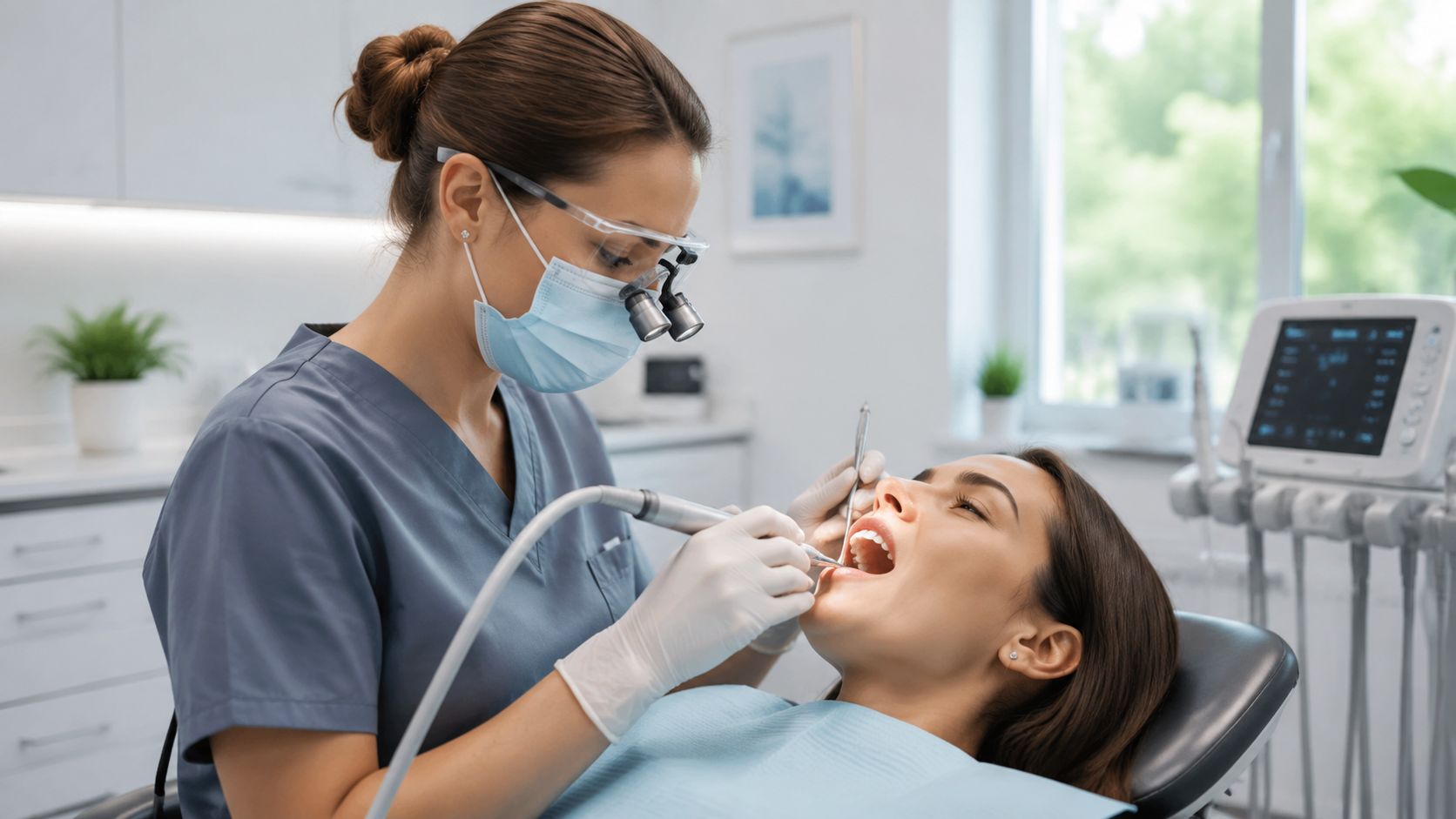
Professional tartar removal is precise, controlled, and designed to protect the teeth while removing hardened deposits. In a clinical setting, the goal isn't to scrape aggressively. It's to remove calculus thoroughly while preserving enamel, gum tissue, and existing dental work.
How professional scaling works
Dentists and hygienists use specialized instruments that are made for this exact job. Ultrasonic scalers operate at 25 to 50 kHz, using high-frequency vibrations to fracture calculus, and complete professional scaling has been associated with a 60 to 80% reduction in gingival inflammation within 4 to 6 weeks. These figures are part of the verified clinical data provided for this topic.
Manual instruments are often used alongside powered tools, especially in detailed areas around the gumline and tooth contours. The combination matters because not all buildup sits in easy-to-see places.
A typical visit may include:
- Careful evaluation: The team checks where buildup is located and whether the gums show signs of irritation.
- Ultrasonic scaling: Vibrations and irrigation help break up tartar efficiently.
- Hand instrumentation: Fine instruments remove remaining deposits with control.
- Polishing and review: The teeth are smoothed and the patient is shown what was found.
For readers who want a visual sense of how more involved gum-focused cleaning can differ from a routine visit, this page on deep cleaning before and after results offers helpful context.
When a standard cleaning is enough and when deeper care is needed
This is another area where patients often get mixed messages. Not every case of tartar requires advanced treatment. In many cases, a same-visit prophylaxis is enough to remove visible buildup and reset the mouth to a healthier baseline.
Other situations call for more than a routine cleaning. If tartar extends below the gumline or the gums are inflamed and pulling away from the teeth, deeper periodontal care may be more appropriate. That decision depends on clinical findings, not guesswork.
Some patients need a standard cleaning. Others need deeper treatment below the gumline. The right answer comes from an exam, not from how hard the buildup feels with a fingernail.
This is also where well-rounded care becomes helpful. A patient who comes in for tartar removal may also learn that a chipped tooth needs restorative dentistry, that discoloration is better addressed with teeth whitening after cleaning, or that a damaged tooth requires a crown rather than waiting for an emergency dentist visit later.
Prosth & Co. provides preventive cleanings as part of broader prosthodontic, restorative, and cosmetic care in Manhattan, which is useful when tartar buildup appears alongside worn teeth, old restorations, missing teeth, or bite-related issues.
What to Expect at Your Upper East Side Appointment
For many adults, the hardest part isn't the cleaning. It's booking the visit after putting it off. Patients often worry that they'll be judged, rushed, or overwhelmed by complicated explanations.
The experience should feel calmer than that. A modern dental appointment works best when the patient understands what's being seen, what needs attention now, and what can wait.

A calm and clear first visit
At an Upper East Side office visit, patients can expect a thorough but straightforward process. The team gathers dental history, listens to current concerns, and checks the areas where buildup, bleeding, tenderness, or roughness have been noticed.
Many people arrive asking one question and discover they've really been worried about several things at once:
- The rough area: Is it tartar or something else?
- The gums: Why do they bleed in one spot?
- The appearance: Is the yellow area stain, tartar, or both?
- The bigger picture: Does this affect crowns, fillings, implants, or cosmetic work?
A visit built around understanding
A patient-centered appointment usually includes visual aids, such as intraoral photos, so patients can see what the clinician sees. That tends to lower anxiety because the discussion becomes concrete. Instead of hearing vague terms, the patient can understand where buildup sits and why a certain type of cleaning is recommended.
There's also value in discussing next steps in plain language. If the issue is limited tartar buildup, the path may be simple. If the visit uncovers decay, a failing restoration, or a tooth that may eventually need extraction, that can be addressed before it turns into pain or an urgent emergency dentist situation.
Clear images and simple explanations often change the visit from stressful to manageable.
For busy professionals and families in Manhattan, that clarity matters. It helps patients move from uncertainty to a practical plan for cleaning, exams, dental x-rays when needed, and any cosmetic or restorative treatment that should follow.
Preventing Tartar and Maintaining Your Healthy Smile
Once tartar has been removed, the long-term goal is controlling plaque before it hardens again. That's where home care has real power. Patients can't remove established tartar by themselves, but they can do a lot to reduce the chance of it returning quickly.
Daily habits that help
Good prevention is usually simple and repeatable, not complicated. The basic habits still matter most.
- Consistent brushing: Thorough brushing helps remove plaque before it hardens.
- Daily flossing: This reaches areas a toothbrush misses, especially between teeth and near the gumline.
- Attention to crowded areas: Teeth that overlap or trap food often need extra focus.
- Regular review of buildup-prone spots: Many patients repeatedly collect plaque behind the lower front teeth and don't realize it until it feels rough.
Patients who notice recurring buildup in the same areas may also benefit from reading more about plaque on bottom teeth and why it tends to collect there.
Why regular cleanings matter
Multiple major oral-health sources recommend routine professional cleanings about every 6 months to remove plaque and any plaque that has hardened into tartar before it progresses, as explained in this discussion of why cleanings every six months are widely recommended.
That timing is practical because it gives patients a regular checkpoint before buildup becomes a recurring problem. Some people may be advised to come in more often depending on their gums, restorations, or history of buildup, but the 6-month interval is the widely recognized baseline.
For those seeking a dentist in New York, NY, a cosmetic dentist near me, or even dental implants near me, preventive care is still the foundation. Clean teeth and healthy gums support every other part of dentistry, from whitening and veneers to crowns, bridges, implant care, and long-term restorative work.
A healthier smile starts with knowing what can be handled at home and what needs professional care. If hard buildup has appeared on the teeth, or if it's time for a cleaning and exam, Prosth & Co. offers Upper East Side patients a clear, supportive path forward in Manhattan.
Related topic: Learn more about Periodontal And Gum Health.

Founder and lead prosthodontist of Prosth & Co. on Manhattan's Upper East Side. DDS, Columbia University; Prosthodontics certificate and MMSc in Oral Biology, Harvard School of Dental Medicine; Implantology fellowship, Columbia University.
Meet Victoria →