
Most patients experience less pain from dental implant placement than from a tooth extraction. In a clinical study, 78.7% reported no-to-mild pain during surgery, while only 10.4% reported moderate-to-severe pain when local anesthesia was effective.
A nervous Manhattan patient may search “how painful are dental implants” late at night, imagining drilling, pressure, swelling, and several days away from work. That concern is understandable, especially when a missing or failing tooth has already caused discomfort. The practical answer is reassuring: implant placement is usually well tolerated, and the discomfort after treatment tends to be temporary and manageable.
At Prosth & Co., implant care is planned around comfort, function, bite, appearance, and long-term maintenance. The Upper East Side practice brings prosthodontic planning, implant treatment, restorative dentistry, and an in-house dental laboratory together, so patients can discuss the surgical and restorative stages with a coordinated team.
Table of Contents
- Why So Many Patients Ask About Dental Implant Pain
- Real Pain Levels During and After Implant Surgery
- How We Keep You Comfortable with Anesthesia and Sedation
- What to Expect During the First Week of Recovery
- When to Call Your Dentist About Pain or Swelling
- Choosing a Trusted Dental Implant Provider in Manhattan
Why So Many Patients Ask About Dental Implant Pain
A patient from Manhattan's Upper East Side may sit in an implant consultation after postponing treatment for months. The missing tooth can affect chewing, speech, and confidence, yet replacing it may feel more frightening than living with the problem. The first question is usually direct: will the implant hurt more than the tooth it replaces?
In many cases, no. Clinical evidence suggests implant placement generally produces less postoperative pain than extraction. Local anesthesia should block sharp pain during surgery, although pressure, movement, or vibration can remain noticeable. That distinction matters for anxious patients because unfamiliar sensations do not necessarily indicate pain or harm.
The study included 366 implant-dentistry patients and found that intraoperative pain was the exception rather than the rule. The consultation should therefore focus on anesthesia technique, communication, and a plan for responding if a patient feels discomfort, rather than on how much pain a patient can tolerate. The full findings are available in this cross-sectional study of patient-reported pain during implant treatment.

Why the experience can feel easier than expected
Implant surgery differs from the pain of an infected tooth or a difficult extraction. The surgical area is numbed before treatment, and the team can check comfort throughout the appointment. Patients may feel pressure without the sharp sensation associated with untreated dental pain.
Recovery usually follows a short, recognizable pattern. In the same study, reported discomfort declined from 57.7% on the first postoperative day to 36.1% on day three and 17.5% on day seven (clinical findings on pain and discomfort after implant surgery). Those figures do not predict every individual experience, but they show why discomfort commonly eases as healing progresses.
Practical rule: Pain should gradually become easier to manage, not progressively harder, as recovery continues.
Patients researching oral health may also find broader context in this resource on detecting bacterial infections naturally. Implant suitability still requires an examination, imaging, and professional diagnosis.
At Prosth & Co., a prosthodontist leads planning across the surgical and restorative stages, while the in-house dental laboratory supports coordinated care for comfort, function, bite, appearance, and maintenance. That structure gives nervous patients a clear explanation of what they may feel and a direct way to raise concerns.
Real Pain Levels During and After Implant Surgery
A patient who feels anxious on the first evening usually wants one clear answer: how painful will this be? The answer depends on the procedure, the surgical site, and the individual, but implant placement is commonly less painful than patients expect. Separate pain during placement from soreness after anesthesia wears off. Local anesthesia is intended to block sharp pain during surgery. Tender gums, pressure, or mild swelling can develop afterward as the tissues heal.
Clinical comparisons show the difference. In a 2023 study of 84 patients, mean pain after implant insertion was 2.9 at 24 hours, 1.1 at 48 hours, and 0.27 at 72 hours on the visual analogue scale. After tooth extraction, the corresponding scores were 6.1, 4.3, and 2.4 (comparative clinical evidence on implant and extraction pain). These are group averages, not a guarantee for one patient, but they help explain why implant recovery can feel more manageable than anticipated.
When discomfort is usually strongest
A dedicated implant-pain study found that pain generally reached its clearest peak at 24 hours and remained mild for most patients. Longer surgery and failure to take postoperative analgesics were independent risk factors for pain at that stage (study of pain after dental implant surgery).
The first evening may feel different from the following days. As numbness fades, the surgical area can become tender, and mild swelling may appear. Following the prescribed aftercare plan and using recommended pain relief can help keep these symptoms manageable.
The mechanics of placement also influence recovery. One study reported significantly more pain when implants were placed with 50–80 N of insertion torque compared with 30–45 N. The same study reported that discomfort declined during the first postoperative week (evidence on insertion torque and postoperative pain). Higher torque does not automatically signal a complication. It indicates greater compression or surgical resistance, which can increase tissue stress and makes careful planning relevant.
Mayo Clinic's prospective study of postoperative dental pain overview describes expected soreness and recovery after dental implant surgery. Patients should use general recovery information as a guide, then follow the instructions specific to their procedure.
Patients with jaw-muscle or temporomandibular symptoms may also encounter information about low level laser therapy for TMJ. TMJ treatment is separate from routine implant-site soreness, so the source of pain should be assessed before selecting treatment. At Prosth & Co., prosthodontist-led planning and an in-house laboratory support coordinated decisions about the surgical and restorative stages, giving nervous patients a clearer explanation of expected discomfort and recovery.
How We Keep You Comfortable with Anesthesia and Sedation
For a nervous patient, comfort starts before entering the treatment room. A prosthodontist-led consultation reviews the missing tooth, gum and bone condition, medical history, anxiety level, planned restoration, and any related treatment, such as extraction, bone grafting, or periodontal care. These details help the team choose an appropriate anesthetic and surgical approach for the case.
What happens before placement
The treatment team explains each stage in plain language. Patients should know where the anesthetic will be given, which sensations may occur, how long the appointment is expected to take, and how to signal the team if discomfort develops. Clear information gives anxious patients a practical sense of control.
Local anesthesia numbs the treatment area, so sharp pain should not be felt during implant placement. Pressure, movement, and vibration can still be noticeable, but they are different from pain. The dental team checks numbness before starting and can provide additional anesthetic if the patient remains sensitive.
Sedation may be appropriate for significant dental anxiety or more involved treatment. The choice depends on the patient's health history, the extent of care, and the clinician's assessment. Sedation does not replace local anesthesia. It helps the patient relax while local anesthesia blocks pain. The team should also explain what the patient may remember, how they will be monitored, and what arrangements are needed after the appointment.
How comfort continues after the appointment
Postoperative instructions should match the procedure and the patient's medical needs. They may cover recommended analgesics, food texture, oral hygiene, activity, and swelling management. The Cleveland Clinic guidance on dental implants and recovery does not identify one analgesic protocol as superior for every patient. Medication advice should therefore account for medical history, allergies, current medicines, and the details of surgery.
Patients should contact the dental team if the recommended medication does not control symptoms or causes a concerning reaction. Early communication gives the clinicians an opportunity to adjust the plan before discomfort becomes harder to manage.
At Prosth & Co. in Manhattan, Dr. Victoria Park's postgraduate training in prosthodontics and implantology supports coordination between implant placement and the final crown, bridge, or denture. The in-house laboratory keeps the restorative team closely involved in designing and adjusting the replacement tooth. This prosthodontist-led, in-house approach can make the treatment plan easier to understand and keep expectations clear, while acknowledging that each surgical case has its own healing pattern.
What to Expect During the First Week of Recovery
A patient leaving the office on procedure day may still feel numb, tired, and unsure what the evening will bring. Keeping the schedule light, protecting the treatment area, and following the written instructions can make the first night more manageable. Mild bleeding or oozing and increasing cheek or gum swelling can occur as sensation returns. Soft foods, careful oral hygiene, and the recommended pain plan help limit irritation.
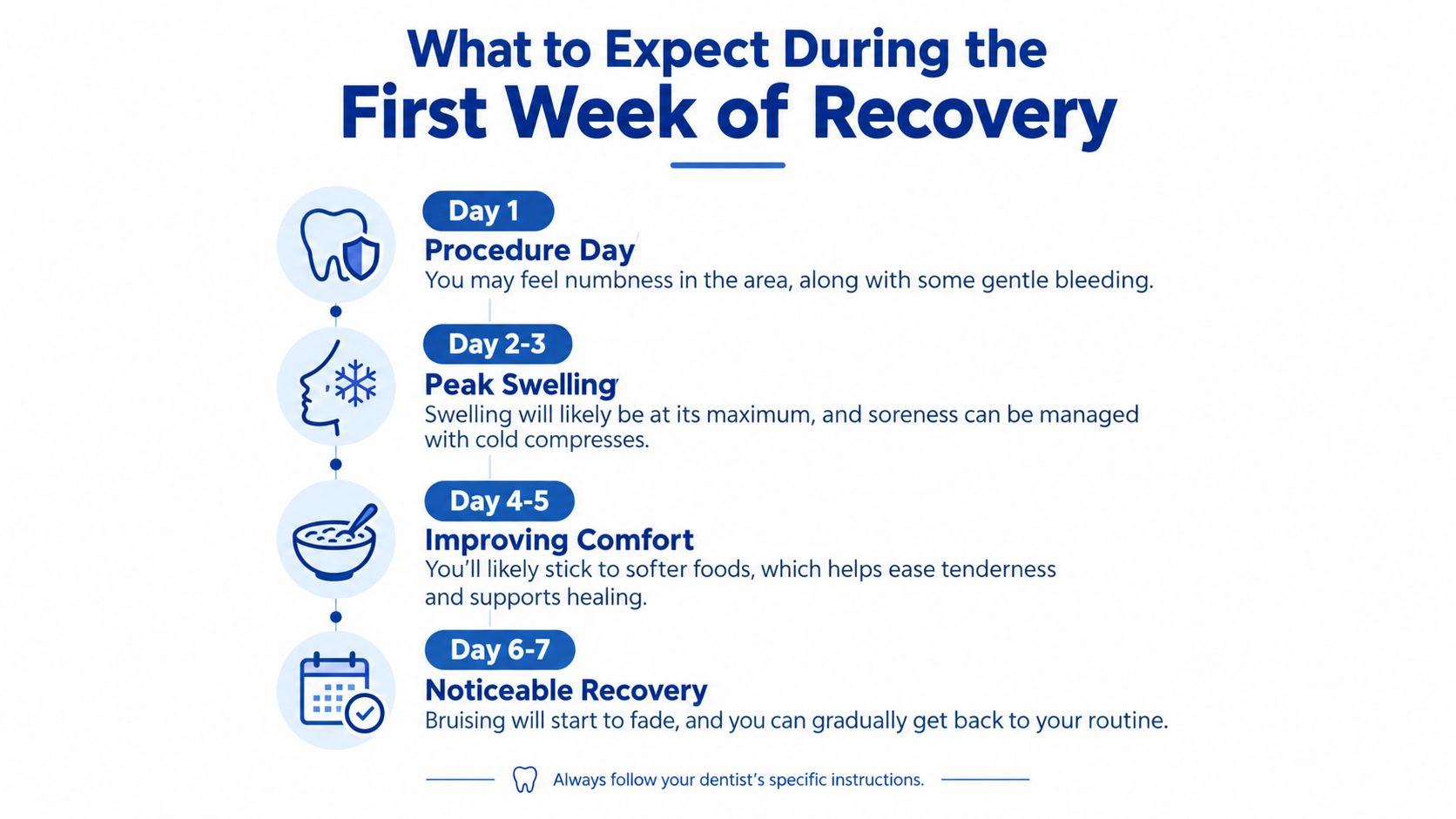
A practical day-by-day guide
Day one, procedure day. Numbness, tenderness, and gentle bleeding are common. Rest, use a cold compress if your dentist recommends one, and avoid disturbing the surgical area. Choose foods that need little or no chewing.
Days two and three, the most noticeable soreness. Swelling and tenderness may become more apparent after the first evening. Continue the recommended pain plan, keep meals soft, and avoid strenuous activity or anything that increases throbbing or bleeding.
Days four and five, improving comfort. The area is often easier to manage, although chewing directly over the implant can still feel uncomfortable. Keep a softer diet if needed, and follow the treatment team's instructions rather than changing care based only on how the site feels.
Days six and seven, noticeable recovery. Bruising and swelling should be fading, and many patients can return to more of their usual routine. The implant remains protected beneath the gum while it heals. Feeling better does not make the site ready for heavy chewing or self-directed changes in care.
Patient recovery data cited earlier in this guide showed a sharp decline in discomfort across the first week. By the final days, some patients still report symptoms, so persistent discomfort should be assessed rather than dismissed.
Patients seeking general guidance about returning to activity can review physical therapy after surgery MedAmerica Rehab. Dental implant recovery has different restrictions, so the implant team's instructions should control exercise, diet, and oral care.
The practice's implant placement procedure information explains the treatment sequence before consultation. A written plan can help Manhattan patients coordinate work, commuting, social events, and follow-up care without guessing which activities are appropriate.
When to Call Your Dentist About Pain or Swelling
A sore, swollen implant site does not automatically signal a complication. Tenderness and sensitivity can occur as the anesthetic wears off and the gum begins to heal. The practical test is the trend: symptoms should gradually become easier to manage, not intensify after initial improvement.
Contact the dental office if pain becomes stronger after the early recovery period. Worsening pain after day three, swelling that returns after it had started to settle, or pain continuing beyond about two weeks deserves professional triage rather than waiting longer to see if it settles. These thresholds reflect the usual pattern of declining discomfort, while recognizing that some patients need an examination. The patient guidance on dental implants and recovery cited earlier also supports contacting a clinician when recovery does not follow the expected course.
Symptoms that shouldn't be ignored
- Increasing swelling: Report a cheek or gum that becomes more swollen after it had begun to improve.
- Persistent or intensifying pain: A new increase may require examination of the implant site and nearby tissues.
- Unusual drainage or fever: These symptoms can point to a problem requiring prompt clinical attention.
- Heavy or continuing bleeding: Call if bleeding does not settle after following the dental team's instructions.
- A feeling of movement: An implant or temporary restoration that feels loose should be assessed. Do not keep testing it with your tongue or fingers.
These symptoms do not prove that a complication is present. They indicate that a clinician should identify the cause. Early contact can spare patients several days of anxiety and discourage home remedies that may mask symptoms without addressing the underlying problem.
Patients at Prosth & Co.’s Upper East Side office can use the practice's contact process for treatment-related concerns. The office is located at 47 E 77th St #207, New York, NY 10075, and has weekday hours from 9:00 AM to 6:00 PM, Monday through Friday, with urgent care availability. Seek immediate medical help for a serious emergency involving breathing or swallowing.
Choosing a Trusted Dental Implant Provider in Manhattan
Pain control is only one part of a successful implant experience. The replacement tooth must also fit the bite, support comfortable chewing, look natural, and remain maintainable. A provider who considers surgery and restoration together can identify problems earlier in planning and reduce the need for disconnected appointments.
A prosthodontist brings specific expertise in rebuilding damaged or missing teeth. That perspective is valuable when an implant is part of a larger plan involving crowns, bridges, dentures, worn teeth, a changing bite, or full mouth rehabilitation. A multidisciplinary team can also coordinate with periodontic, endodontic, oral surgery, orthodontic, pediatric, or cosmetic services when a patient or family needs more than one type of dental care.
What patients can evaluate before booking
- Diagnostic planning: The practice should explain the examination, dental x-rays, photographs, and other diagnostic information used to plan treatment.
- Restorative oversight: The clinician should discuss the final crown, bridge, or denture, not only the implant post.
- Comfort communication: Patients should receive clear instructions about anesthesia, sedation, aftercare, and when to call.
- Laboratory coordination: Direct oversight of custom restorations can support communication between the clinical and laboratory teams.
- Continuity of care: Implant placement and restoration performed through one coordinated practice may simplify communication and follow-up.
The Manhattan practice led by Dr. Victoria Park provides implant placement and implant-supported restorations alongside preventive dental care, restorative dentistry, cosmetic dentistry, root canal treatment, tooth extraction, periodontal treatment, orthodontics, and care for children. That range allows a patient to begin with a new patient exam or emergency dental visit and receive a treatment plan suited to the actual source of the problem.
The Upper East Side location near the 77th Street 6 train is convenient for patients traveling from nearby Manhattan neighborhoods. The office's in-house dental laboratory and collaborative team approach support custom treatment planning, while visual case reviews help patients understand the proposed changes to health, function, bite, and smile appearance.
Patients searching for a dentist near me, dentist in Manhattan, or dentist in New York may also be comparing services such as dental implants near me, a cosmetic dentist near me, an emergency dentist, an endodontist, or a prosthodontist. Families may need a pediatric dentist, kids dentist, or children's dentist, while adults may be seeking cleaning and exams, dental x-rays, teeth whitening, a root canal, tooth extraction, or restorative dentistry. The right first appointment is the one that identifies the clinical need and explains realistic options without minimizing the patient's concerns.
Prosth & Co. provides prosthodontist-led implant consultations, placement, custom restorations, and coordinated restorative care on Manhattan's Upper East Side. Patients concerned about implant pain can schedule a consultation at Prosth & Co. to discuss anesthesia, recovery expectations, and a personalized plan for replacing missing teeth.

Founder and lead prosthodontist of Prosth & Co. on Manhattan's Upper East Side. DDS, Columbia University; Prosthodontics certificate and MMSc in Oral Biology, Harvard School of Dental Medicine; Implantology fellowship, Columbia University.
Meet Victoria →