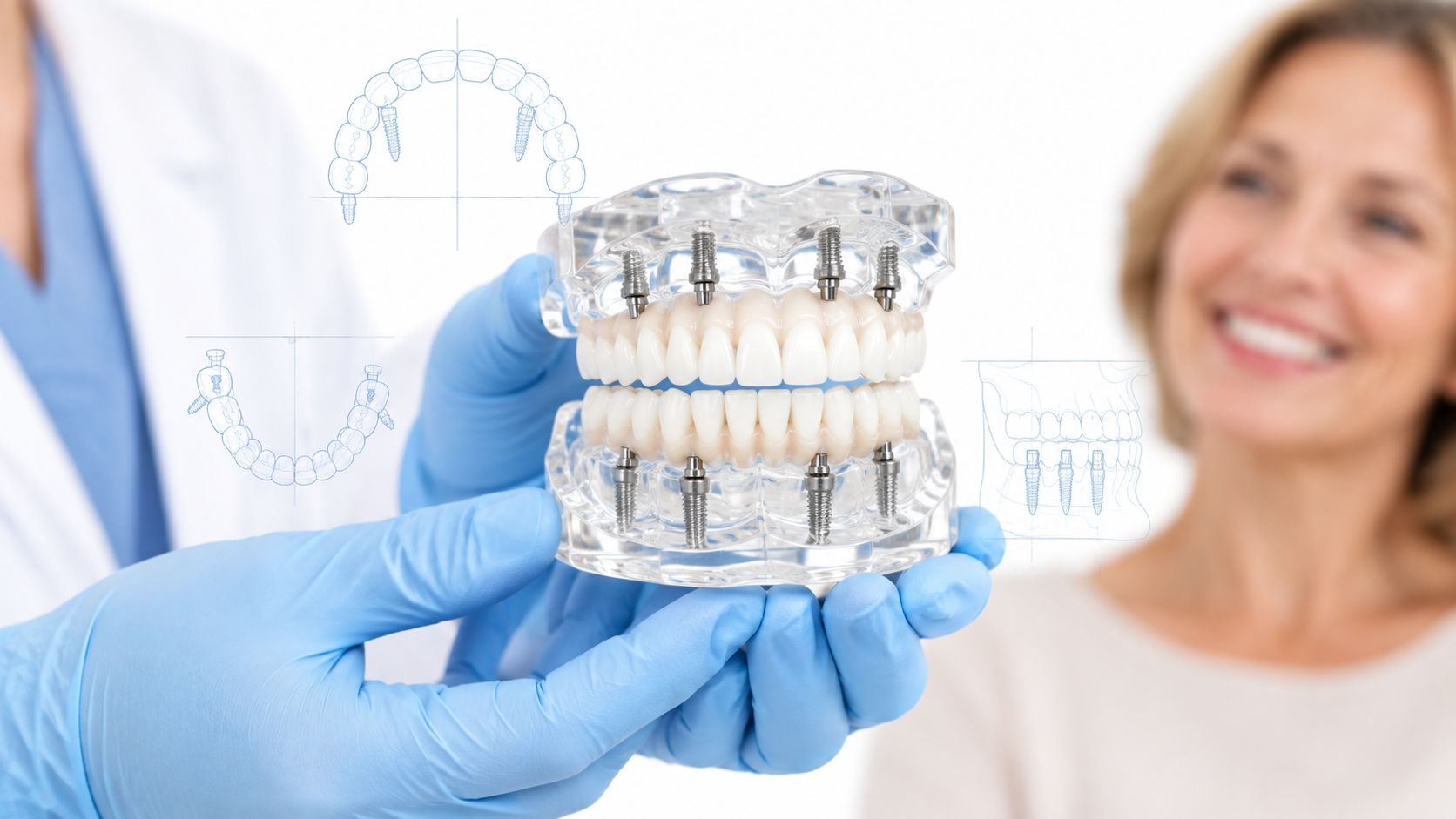
Living with failing teeth or loose dentures changes the whole day. Meals get narrower, conversations feel less relaxed, and smiling in a meeting or across a dinner table can start to feel like work. For patients looking for a dentist in Manhattan or searching Dental implants near me, dental implants for full mouth restoration can restore more than appearance, it can rebuild the bite, support facial structure, and create a stable foundation for long-term function.
A prosthodontist-led plan matters because full-mouth treatment is never just about replacing what was lost. The restoration has to fit the bone, the bite, the cleaning routine, and the life the patient lives in New York. That balance is where durable treatment starts, and where rushed promises usually fall short.
Table of Contents
- Reclaiming Your Smile and Bite Function
- Comparing Full Arch Implant Options
- The Diagnostic and Surgical Workflow
- Strategic Implant Positioning and Biomechanics
- Healing and Provisional Teeth
- Long Term Maintenance and Hygiene Access
- Your Next Steps for Full Mouth Rehabilitation
Reclaiming Your Smile and Bite Function
A patient who avoids certain foods long enough starts to plan life around the mouth, not the other way around. Tough bread gets left behind, social meals get negotiated, and even a simple smile can feel self-conscious when teeth are broken down, missing, or held in by old dentistry that keeps failing.
Function comes before cosmetics
Dental implants for full mouth restoration are designed to restore chewing function, speech, and facial support at the same time. In full-mouth cases, the point isn't only to make teeth look complete, it's to create a stable framework that can handle daily use without constant movement or sore spots. That's why a thoughtful plan matters for patients in Manhattan who want something that feels reliable at work, at home, and at the table.
Osseointegration, the direct connection between bone and implant surface, is the biological reason implant-supported reconstruction works at all. That principle has guided modern full-arch treatment since the early clinical work that followed the first human application in 1965 and the broader recognition of osseointegration in the early 1980s historical review.
A full-mouth restoration should be judged by how it performs after the novelty fades, not by how dramatic the first day looks.
For patients in New York, the value is practical. A well-planned restoration can bring back confidence while also supporting chewing, speech, and long-term oral health. It's a health decision with cosmetic benefits, not the other way around.
Comparing Full Arch Implant Options
Not every patient needs the same prosthetic design, and that's a good thing. Bone volume, jaw shape, bite force, and maintenance habits all influence whether the right solution is a fixed bridge, separate implant crowns, or an implant-supported removable overdenture.
Fixed, individual, or removable
A fixed full-arch bridge is often the most direct answer for someone who has lost most or all teeth in one arch and wants a non-removable result. A systematic review found a mean implant survival rate of 96.71% for full-arch fixed prostheses, compared with 96.19% for single-tooth restorations and 98.51% for partial fixed prostheses over long-term follow-ups study. That doesn't mean one option is universally superior, it means the plan has to match the case.
Individual implant crowns make sense when the remaining teeth pattern, bone anatomy, or restorative goals call for tooth-by-tooth replacement rather than a connected arch. An overdenture can still be a smart answer when removability, hygiene access, or budget matter more than a fully fixed result. The right choice depends on how much support is needed and how much daily maintenance the patient can realistically manage.
| Feature | Fixed Full-Arch Bridge | Individual Implants | Implant Overdenture |
|---|---|---|---|
| Best use | Replacing most or all teeth in an arch | Replacing selected teeth | Replacing a full arch with removability |
| Daily feel | Non-removable and stable | Feels like separate teeth | Removable for cleaning |
| Maintenance | Needs excellent hygiene access under the bridge | Similar to natural-tooth cleaning | Easier to remove and clean |
| Bone and spacing needs | Requires careful implant distribution | Depends on each tooth site | Usually more forgiving |
| Bite and function | High stability for chewing | Very natural by tooth position | Good support, but still removable |
For readers comparing dentist near me, prosthodontist, and full-mouth solutions in Manhattan, the key question isn't “which is strongest?” It's “which design can stay healthy, serviceable, and cleanable for years?”
The best candidates for a fixed bridge usually want the most stable feel and can commit to ongoing maintenance. Patients who prioritize removability, or whose anatomy calls for a different balance, may be better served by another path. A consultation can sort that out before treatment starts.
A useful local resource on fixed-arch planning is this All-on-4 overview from Prosth & Co., which fits into the broader conversation about full-arch replacement and maintenance.
The Diagnostic and Surgical Workflow
A full-mouth case should never begin with surgery. It begins with diagnostics, because the bone, the nerves, the sinuses, and the future bite all have to be mapped before anyone chooses the number or position of implants.
What has to be checked first
The evaluation usually includes a medical-history review, periodontal assessment, and 3D imaging when indicated. FDA safety information identifies poor bone quality or quantity as a primary contributor to implant failure, and it notes that thorough 3D imaging and medical-history review are essential to reduce risks like sinus perforation or nerve injury FDA safety information. For patients in Manhattan, that level of planning is what separates a predictable case from an avoidable problem.
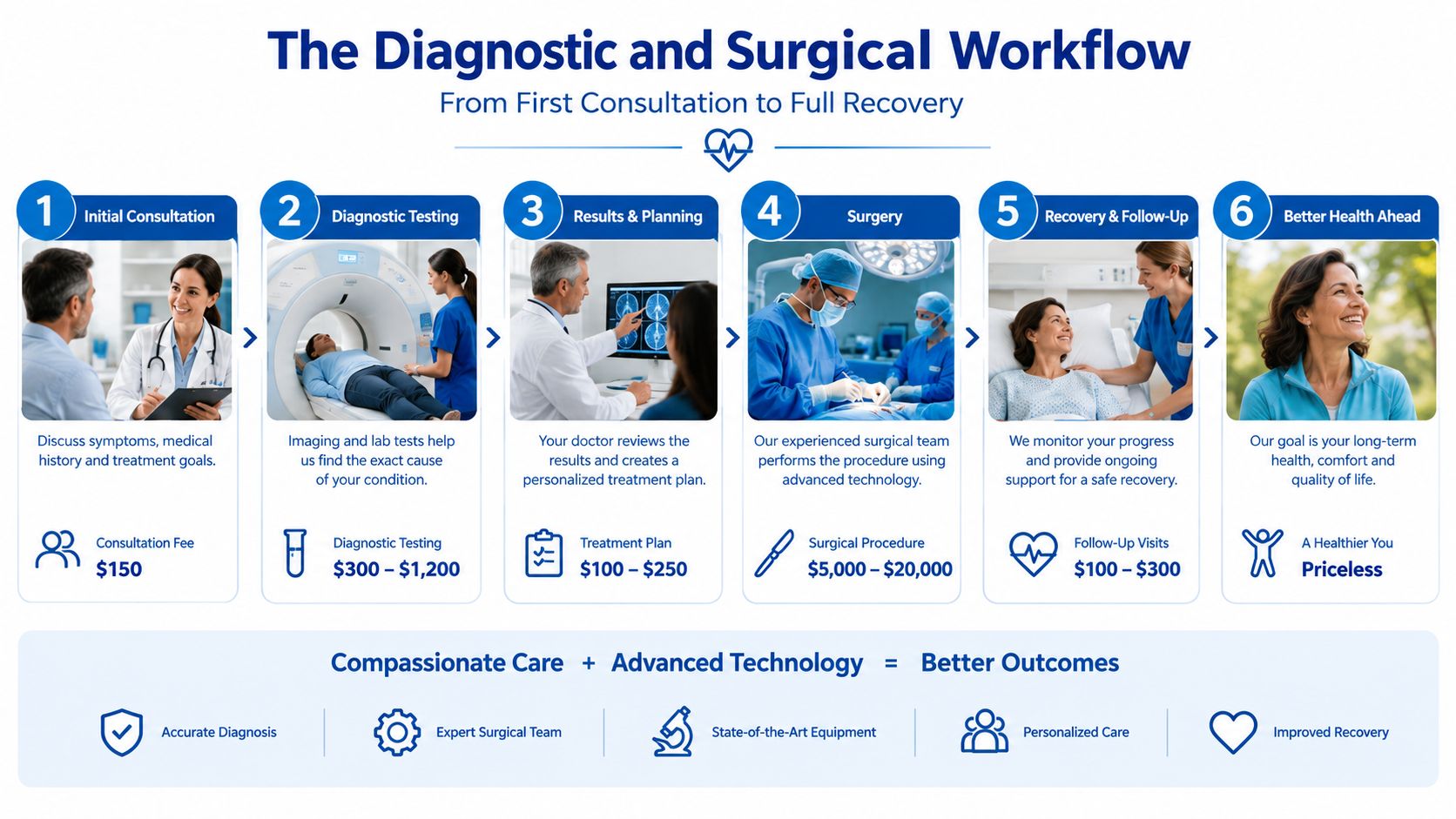
If the bone is thin, uneven, or not yet ready, preparatory care may be needed before implant placement. That can include grafting or sinus-related augmentation, depending on where the missing support is and what the final prosthesis has to accomplish.
The safest implant plan is often the one that waits long enough to build a stable foundation.
On surgery day, guided placement and anesthesia are used to place the implants in the planned positions. The restoration is then built around the actual surgical result, not around a guess. That's especially important in dental implants near me searches, where patients are often trying to compare speed with predictability.
For a practice like Prosth & Co. on Manhattan's Upper East Side, the value of a careful workflow is continuity. The diagnostic work, surgical planning, and restorative design all have to line up before the final teeth are ever made.
Strategic Implant Positioning and Biomechanics
More implants don't automatically produce a better full-arch outcome. What matters is how the implants are distributed, how the bridge spans them, and how the prosthesis handles force across the arch.
Why spacing matters more than count
The ITI consensus found no statistically significant difference in survival or complication rates between tilted and axial implant configurations, provided the anterior-posterior spread is maximized to reduce cantilever loading on the prosthesis ITI consensus. That finding matters because the arch acts as a lever, and this mechanical force is what creates stress when the back of the bridge extends too far beyond the support points.
Tilted posterior implants can help clinicians avoid the maxillary sinus or mandibular nerve while still creating a broad support polygon. In the right case, that means fewer compromises in prosthetic design and a better chance of keeping the restoration serviceable over time. The important point is that tilting is a planning tool, not a shortcut.
What the bite depends on
The final result depends on more than implant placement alone:
- Cross-arch splinting helps distribute force across the full restoration.
- Passive prosthetic fit reduces unwanted strain on the implants.
- Occlusal control protects against overloading from bite mismatch or grinding.
- Retrievability keeps repairs possible if a screw or component needs service later.
Those principles matter for patients searching for a cosmetic dentist near me or prosthodontist in New York, because a beautiful result that can't be maintained isn't a complete result. A restoration has to be engineered for real chewing, not just for the photo on delivery day.
Healing and Provisional Teeth
“Teeth in a day” sounds tidy, but biology does not follow a marketing line. Implant integration with bone has to happen before the definitive restoration can be trusted for long-term use, so the healing phase is part of treatment, not a detour.
What provisional teeth are for
The FDA says implant healing and osseointegration may take several months or longer, and patients often wear a temporary provisional restoration while the final prosthesis is built around a stable, balanced bite FDA guidance. That provisional phase has a practical job. It protects the surgical sites, preserves appearance, and lets the team refine bite contacts before the final bridge is made.
Rushed expectations create disappointment here. Immediate teeth can be a strong part of treatment, but they are not the final product, and they should not be treated as if they were. The mouth still has to heal, settle, and show that the occlusion holds up under function.
Why timing improves the final result
During healing, the provisional restoration lets the patient speak, smile, and eat carefully while the team watches how the bite behaves. That period often reveals where adjustments are needed before the permanent bridge is fabricated. In full-mouth rehabilitation, that is the difference between a restoration that looks finished and one that is finished.
For patients in Manhattan comparing dental implants for full mouth restoration with removable options, that honesty matters. A staged plan respects biology, and long-term implant success depends on biology being respected.
Long Term Maintenance and Hygiene Access
The final bridge is not the end of treatment. It's the start of a maintenance routine that has to be realistic, consistent, and built into the design of the prosthesis from the beginning.
Cleaning has to be possible
A fixed full-arch prosthesis can make plaque removal harder, especially under the bridge where normal brushing doesn't reach. That's why access matters so much. The restoration should leave enough room for cleaning tools, and the patient has to be coached on how to use them correctly.
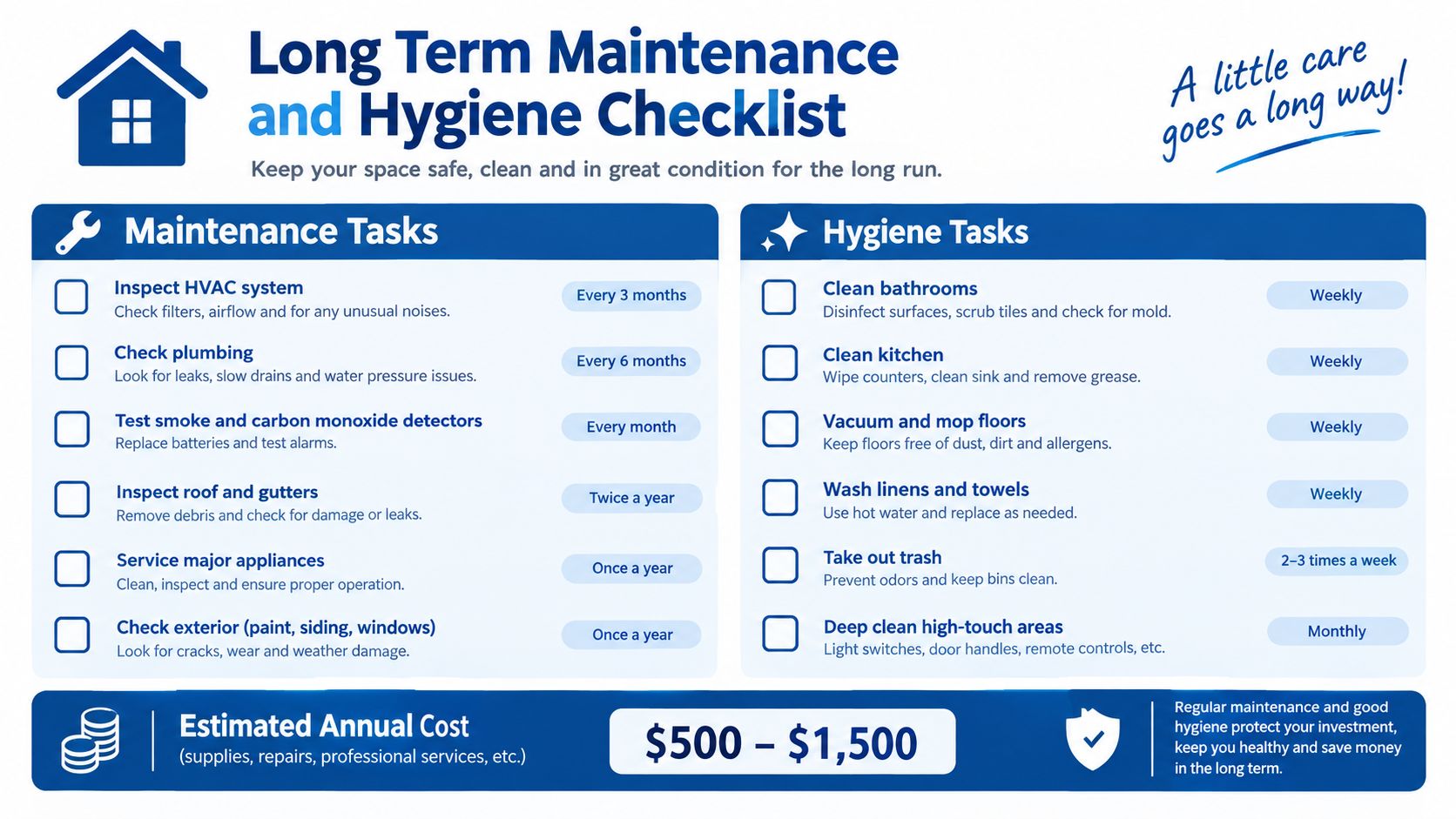
A 2026 global consensus study found that 58.5% of patients worry about implant failure, while clinicians identified increased cleaning difficulty as a major complication, and structured supportive therapy reduces peri-implantitis risk by approximately 75% global consensus study. That's a strong reminder that maintenance is part of the treatment plan, not an optional add-on.
What the long-term routine usually includes
- Daily brushing: Use a soft toothbrush or powered brush around the bridge margins.
- Water irrigation: A water flosser helps flush debris from under the prosthesis.
- Interdental access: Specialized brushes can reach around posts and components.
- Professional recall: Regular cleanings and tissue checks are needed to monitor bone and gums.
- Night protection: A guard may be appropriate if grinding is part of the picture.
Mechanical wear also has to be expected over time. Screw loosening, veneer chipping, loss of retention, and other repair needs can happen even when the implants themselves remain stable. That's why a fixed arch should be designed to be maintained, inspected, and repaired when needed.
If a full-arch prosthesis is hard to clean at home, it's not finished properly.
For patients in New York weighing restorative dentistry against convenience, the smartest choice is the one that can stay healthy. The goal isn't just a bright smile, it's a smile that can be kept clean without turning every night into a struggle.
Your Next Steps for Full Mouth Rehabilitation
Full-mouth implant treatment works best when the plan is realistic from day one. The right team looks at the bone, the bite, the esthetics, and the cleaning access together, instead of chasing speed alone. That's why a Manhattan patient considering dental implants near me should look for a practice that can coordinate diagnosis, surgical planning, and restoration under one roof.
Choosing the right restorative partner
For patients who want a coordinated approach on the Upper East Side, Prosth & Co. brings prosthodontic planning together with restorative, implant, pediatric, endodontic, periodontic, and oral surgery care, supported by an in-house dental laboratory. That kind of setup helps keep treatment decisions connected to the final prosthesis, which matters when the mouth needs more than a quick fix.
Readers evaluating care online often compare practices the same way they compare services, and a useful example of how dental teams present complex care can be seen in this healthcare SEO agency resource, which shows how patient education and service clarity shape search intent. For implant patients, the clinical lesson is simple, clarity builds better decisions.
A full-mouth restoration should never be rushed just because the first appointment sounds impressive. It should be planned so the result can be cleaned, maintained, and trusted years later. That's the standard patients deserve when they're investing in a permanent change.
If you're considering dental implants for full mouth restoration in Manhattan, schedule a consultation with Prosth & Co. to review your bone, bite, and treatment options in detail. The team can help you compare fixed bridges, implant-supported dentures, and staged restorative care so the plan fits your mouth, your goals, and your long-term maintenance needs.

Founder and lead prosthodontist of Prosth & Co. on Manhattan's Upper East Side. DDS, Columbia University; Prosthodontics certificate and MMSc in Oral Biology, Harvard School of Dental Medicine; Implantology fellowship, Columbia University.
Meet Victoria →