
A treatment estimate can land with a thud. One minute a patient is focused on getting out of pain, the next minute the question is how to help pay for dental work without turning a crown, implant, or root canal into a financial mess. For restorative care at Prosth & Co. on Manhattan's Upper East Side, the right answer usually isn't one single option, it's a payment path that matches the treatment plan, the patient's eligibility, and how much monthly cash flow is realistic.
That's why this list starts with tools that fit planned care, then moves to income-based clinics, and finally to coverage tied to age, service, or family status. A good financing choice should make treatment possible without hiding the fine print. If a promotion depends on paying in full by a deadline, if a clinic has a waitlist, or if a state program only covers one diagnosis, that detail matters before anyone signs.
For readers comparing installments, insurance, and savings, the HSA vs FSA breakdown is a useful companion. The point is simple, a written estimate, a clear financing route, and a realistic monthly number should all line up before treatment starts.
Table of Contents
- 1. CareCredit for monthly dental payments
- 2. Wells Fargo Health Advantage for enrolled providers
- 3. Sunbit for fast point-of-sale financing
- 4. Cherry for smaller applications and flexible offers
- 5. Proceed Finance for major restorative cases
- 6. HRSA-funded community health centers for sliding-fee care
- 7. Dental Lifeline Network for donated comprehensive treatment
- 8. Remote Area Medical for free event-based care
- 9. Medicaid and CHIP for age and state-based coverage
- 10. VA Dental Care and VADIP for eligible Veterans
- 10 Dental Care Payment Resources Compared
- Build a Dental Budget Before You Commit
1. CareCredit for monthly dental payments
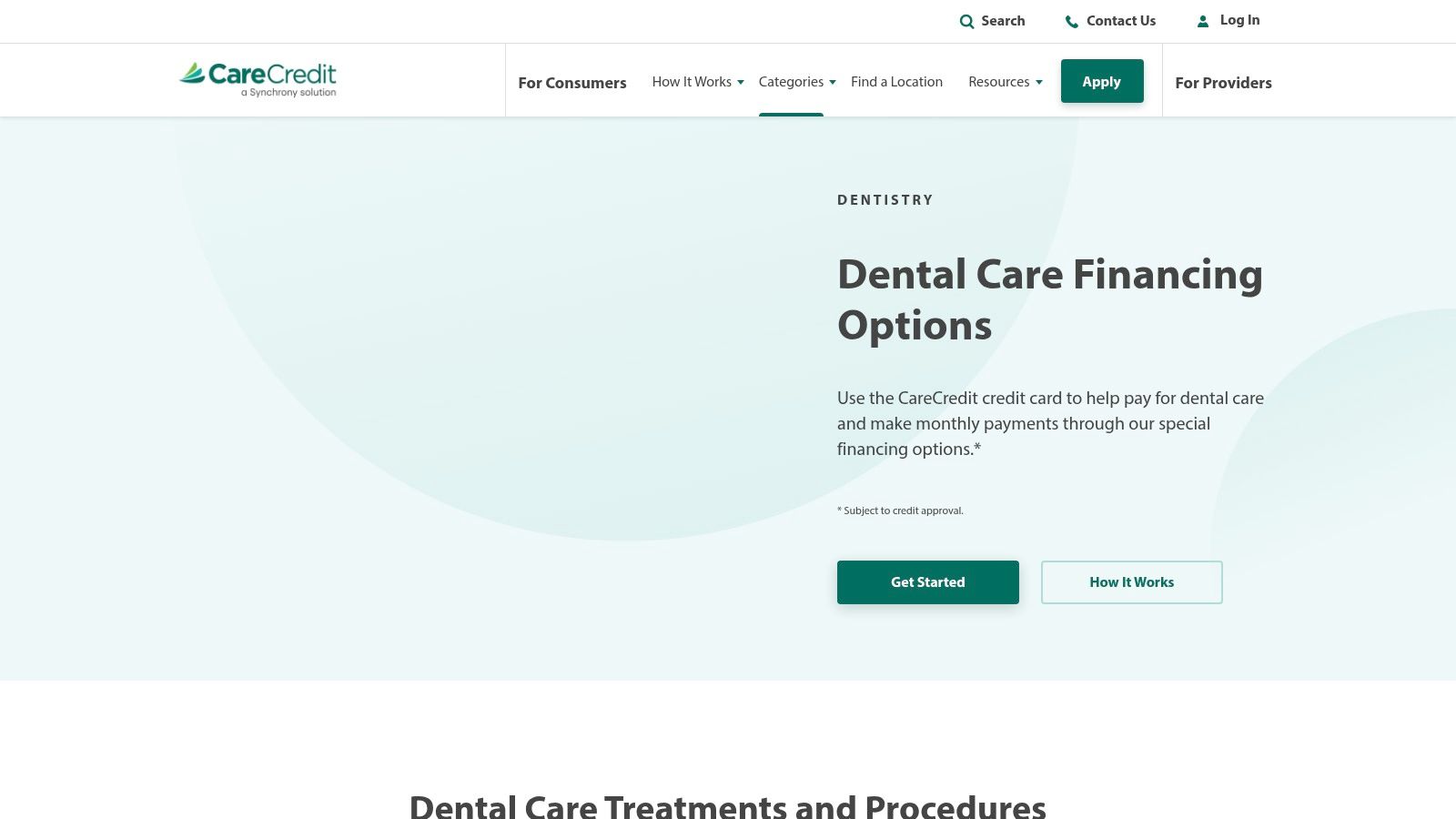
CareCredit is one of the most familiar ways to help pay for dental work when the treatment is already mapped out. It works at participating dental offices, and the big advantage is straightforward: the patient can spread the bill into monthly payments instead of taking the whole hit at once. The trade-off is just as important, promotional financing terms can change the cost if the balance isn't paid on time, and that fine print deserves slow reading before anyone swipes the card. CareCredit's dentistry program makes the structure clear, and Prosth & Co. also shares its own financing workflow on the financial and insurance page.
Where CareCredit fits best
CareCredit often makes sense for patients who need a general dentist, a prosthodontist, or a specialist and want one line of credit they can reuse for future visits at participating offices. It can cover a wide range of care, from routine treatment to more complex restorative work, which is why office coordinators often see it paired with crowns, implants, and staged treatment plans.
Practical rule: if the office says the promotion is deferred interest, the patient should know exactly what happens if the balance is still there after the deadline.
The main limitation is credit approval. Limits vary, and the monthly payment only stays manageable if the whole plan is set up with the payoff window in mind.
2. Wells Fargo Health Advantage for enrolled providers
Wells Fargo Health Advantage tends to fit patients who want a revolving credit option that stays available for future care at enrolled offices. That can be useful in a multi-visit situation, especially when treatment is phased and the total isn't all due at once. The Wells Fargo Health Advantage program is built around participating providers, so the first question is always whether the dental office offers it.
This option works best when the practice already uses it regularly and can explain the promotion clearly at checkout. In a busy Manhattan practice, that matters because patients often need the estimate, the treatment sequence, and the payment terms in the same conversation.
What patients should verify first
- Provider participation: The office has to be enrolled for the account to be usable there.
- Promotion length: The monthly payment only helps if the patient can meet the promo deadline.
- Interest after promo: If the balance survives the promotional window, standard interest may apply.
- Future use: Revolving access can be helpful for later treatment, but only if the patient stays comfortable with the credit line.
The upside is predictability if the offer is used correctly. The downside is that it still depends on credit approval, and revolving debt can get expensive if the treatment plan expands after the first visit.
3. Sunbit for fast point-of-sale financing
Sunbit is often the easiest route when a patient needs a fast answer at the dental office. The platform is set up for participating practices, and the prequalification step is designed to move quickly. That can matter a lot when someone needs an emergency dentist, a same-week extraction, or a plan for implants and cosmetic care that can't wait for a slow bank application. Sunbit explains the process here.
Sunbit is usually strongest when the patient wants to separate the clinical decision from the payment decision. The approval can make it easier to move forward with urgent care, then spread the cost over time. That said, the terms depend on the patient and the practice, so two people sitting in the same waiting room may get very different offers.
Real-world trade-offs
Some dental offices offer extended terms through Sunbit, and that can be a better fit for larger cases than a short promo card. The catch is that not every practice offers the same structure, and APR can vary based on the offer.
A financing option is only helpful if the monthly number fits the household budget after rent, food, and transportation are already covered.
That's the part patients sometimes miss. A quick approval feels reassuring, but the office should still review the payment schedule before treatment starts.
4. Cherry for smaller applications and flexible offers
Cherry tends to work well for patients who want to check financing without a hard credit inquiry just to see what's available. That makes it useful for people comparing options after a consultation, especially if they're trying to help pay for dental work without immediately locking into one lender. The Cherry consumer platform also includes a provider locator, which matters because the dentist has to participate.
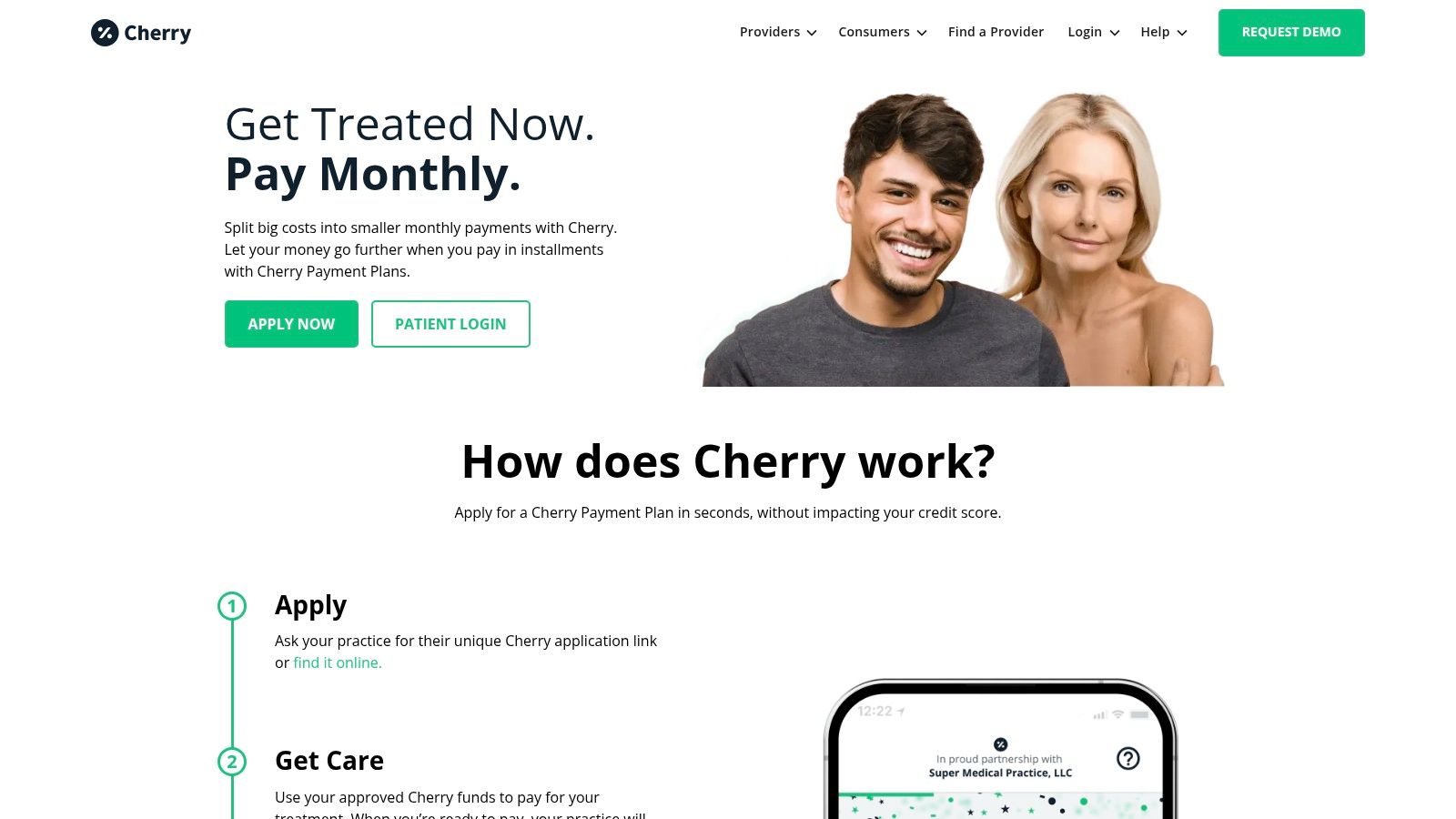
Cherry is usually a better fit for modest to mid-sized treatment than for extremely large full-mouth cases. It can help patients test the water, especially if they're nervous about credit impacts or just want a clearer view of monthly payment options before they commit.
What to read before applying
- Office participation: If the practice doesn't offer Cherry, it's not an option.
- Down payment terms: Some offers require money upfront, others don't.
- APR range: The rate depends on the provider and the specific offer.
- Plan size: It may be less practical for very large treatment plans.
Cherry's real strength is accessibility. The application feels simpler than many traditional financing paths, but the patient still has to compare the offer against the total treatment cost, not just the smallest monthly number shown on screen.
5. Proceed Finance for major restorative cases
Proceed Finance is built for larger dental treatment plans, the kind that can include implants, full-arch work, or full-mouth reconstruction. That makes it especially relevant in a prosthodontic setting where the treatment estimate can involve several services at once. The Proceed Finance patient page describes a setup with fixed rates and multi-year terms, which is exactly what some patients want when they need payment certainty.
For complex care, fixed monthly payments can be easier to plan around than variable credit terms. That matters when the treatment isn't cosmetic alone, it's about function, chewing, speech, and long-term durability.
Why this option stands out
Proceed Finance can cover multiple procedures through one loan, so patients don't have to juggle separate balances for separate phases. That can simplify planning when a dentist, endodontist, or prosthodontist is coordinating several steps.
The trade-off is that this route usually depends on participating practices and credit approval. The loan may also be reported to credit bureaus, which is worth understanding before applying. For patients in Manhattan who are already looking at a large restorative plan, the benefit is clarity, the monthly payment stays fixed instead of moving around with promotional rules.
6. HRSA-funded community health centers for sliding-fee care
HRSA-funded community health centers are often the best starting point when the patient's priority is basic dental care at a lower cost. These centers use sliding-fee discounts tied to income, and they serve patients regardless of insurance status. The HRSA Find a Health Center tool is the official starting point for locating one.
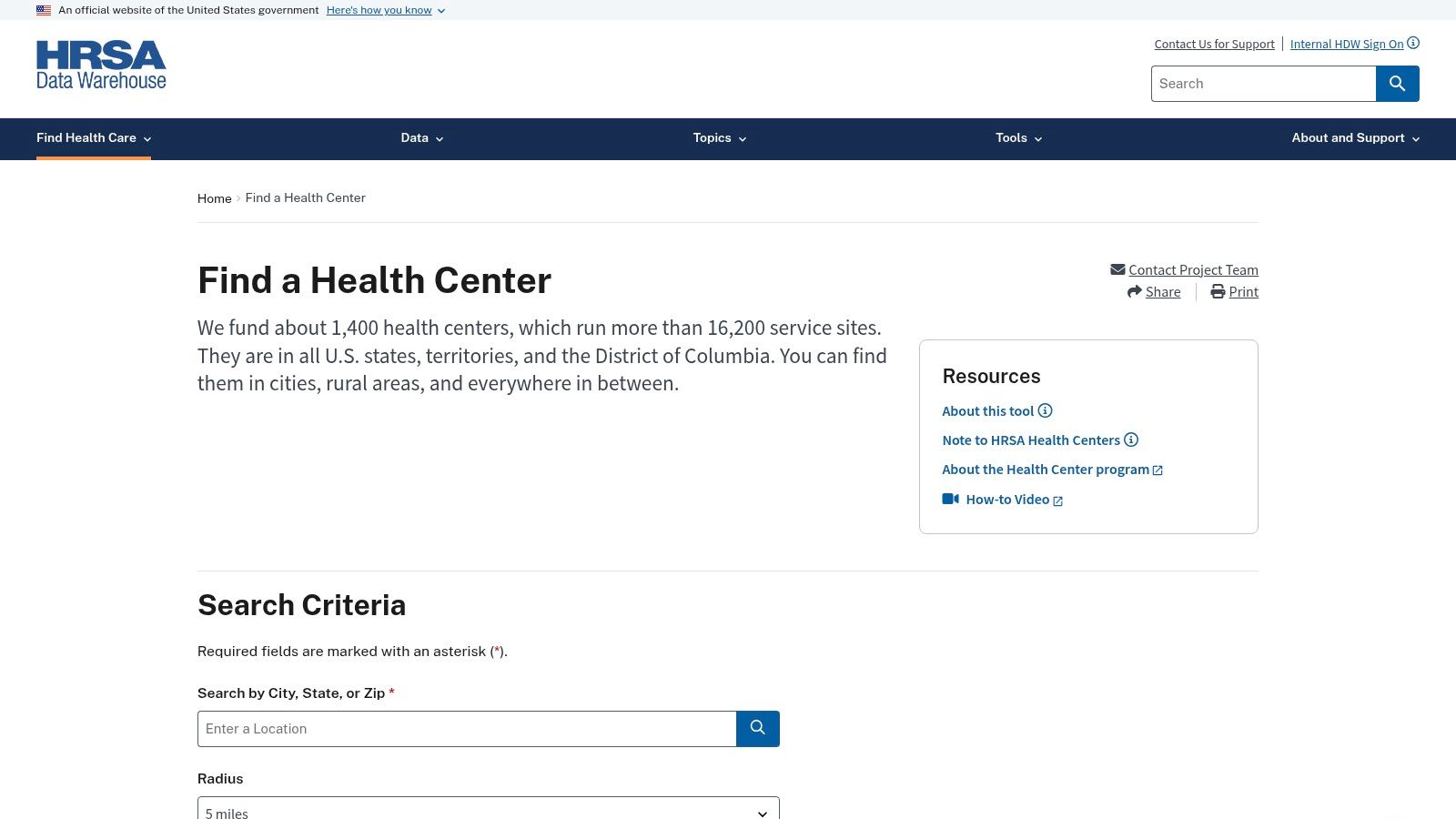
This route fits preventive and basic treatment well, especially for patients who need an exam, cleaning, or a straightforward restoration and don't have room in the budget for private fees. Some centers also offer restorative care or referrals, which helps when a case needs more than one visit.
The fine print that matters
Wait times can be longer because capacity is limited. That's the trade-off for lower fees, and it matters if the patient is in pain or needs a tight timeline.
Lower cost is useful, but access still depends on appointment availability and the services a specific center actually offers.
Complex specialty treatment, including implants, may not be available at every center. Patients should call before assuming a full restorative case can be completed there.
7. Dental Lifeline Network for donated comprehensive treatment
Dental Lifeline Network's Donated Dental Services program is one of the few options that can cover extensive treatment without a bill, but eligibility is narrow. The program serves people who are 65 or older, have a permanent disability, or are medically fragile, and availability varies by state. The Dental Lifeline Network site explains the state-by-state structure and volunteer network.
This is not a fast emergency option, and it's not designed for everyone. What makes it valuable is the scope, accepted patients may receive care rather than just a single extraction or temporary fix.
Who should look here first
Patients with very limited finances and substantial unmet treatment needs should check whether they qualify. The program can be especially helpful when the problem involves many teeth, not just one painful area.
The downside is the waitlist risk. State capacity varies, so a patient may qualify and still wait a while for placement. That's why this option works best when the timeline is flexible and the goal is lasting care, not immediate same-day treatment.
8. Remote Area Medical for free event-based care
Remote Area Medical, or RAM, runs volunteer clinics that provide free dental care at scheduled events across the United States. The RAM website is the place to check upcoming events and clinic locations. Services vary, but patients may find exams, fillings, extractions, and limited denture care.
RAM is useful for people who need basic or urgent care and can get to an event early. No insurance or ID is required, which lowers one barrier immediately. The catch is that the events are first-come, first-served, so timing and patience matter as much as eligibility.
What makes RAM different
It's one of the few routes that can provide free care without a formal application process. That's a big deal for patients who are stuck between wanting treatment and not being able to afford a private visit.
The limitations are just as real. Clinics are held on specific dates, the line can be long, and the model is not built for complex multi-visit treatment such as implants. It's a strong option for relief, not a full restorative pathway.
9. Medicaid and CHIP for age and state-based coverage
Medicaid and CHIP matter because they're built around eligibility, not just credit. For children, coverage can be broad and low cost. For adults, the answer depends heavily on the state, which is why the Medicaid dental care page is the right place to start instead of guessing.
This is one of the most important routes for families trying to help pay for dental work over time. Children may qualify for preventive and restorative services, while adult benefits can range from limited coverage to more extensive care depending on where the family lives.
What to confirm before scheduling
- State rules: Adult dental coverage changes by state.
- Participating dentists: Coverage doesn't help if the office isn't taking the plan.
- Service limits: Restorative care may be covered differently from major specialty work.
- Child eligibility: CHIP can open the door for children who don't qualify for Medicaid.
The key point is that public coverage is not automatic proof of access. Provider availability and benefit design both shape whether care is reachable.
10. VA Dental Care and VADIP for eligible Veterans
VA dental care is one of the clearest examples of coverage tied to status and eligibility. Veterans who meet the VA's criteria may receive direct dental care, while those who don't qualify may still be able to buy coverage through VADIP. The official VA dental care page lays out the categories and the insurance option.
This route works best when a patient wants to know whether direct coverage is available before shopping for private financing. If the Veteran qualifies for direct care, the out-of-pocket burden may be very different from a standard dental office estimate. If not, VADIP can still provide a path, but it comes with premiums and cost-sharing.
Why this option belongs on the list
It's not a universal answer, but it is a real one for the people who qualify. That makes it important to check early instead of assuming every dental bill has to be financed privately.
The downside is the narrower eligibility structure. Direct dental benefits are not as broad as general VA medical benefits, so the first step is always checking the category, not the invoice.
10 Dental Care Payment Resources Compared
| Option | Type and Coverage | Best Suited For | Cost or Payment Structure | Key Consideration |
|---|---|---|---|---|
| CareCredit | Healthcare credit card for routine and specialty dental care | Patients seeking to spread costs, including larger treatments | Monthly payments; promotional financing may be available | Credit approval required; deferred interest may apply if not paid on time |
| Wells Fargo Health Advantage | Revolving credit for eligible healthcare expenses at participating practices | Patients planning care with an enrolled provider | Promotional financing may be offered | Credit approval required; interest may apply if promotion terms are missed |
| Sunbit | Point-of-sale financing at participating dental practices | Emergencies, implants, orthodontics, and cosmetic care | Plans and terms vary; some practices offer 6–72-month terms | Soft-check prequalification is available; longer terms are not offered everywhere |
| Cherry | Consumer financing at participating dental practices | Patients exploring payment plans, including those with limited credit history | Offers, APR, and down payment vary; some practices may offer 0% APR promotions | Availability depends on the practice; may be less suited to very large cases |
| Proceed Finance | Installment loans for dental treatment | Implants, full-arch care, or full-mouth reconstruction | Fixed-rate loans with multi-year terms | Provider participation and credit approval required |
| HRSA-Funded Community Health Centers (FQHCs) | Dental care with income-based sliding-fee discounts | Low- to moderate-income patients seeking preventive or basic care | Discounts based on Federal Poverty Guidelines; insurance not required | Specialty services may be limited; wait times can be longer |
| Dental Lifeline Network, Donated Dental Services | Volunteer-provided comprehensive dental treatment | Eligible older adults, people with permanent disabilities, or medically fragile patients | Free care for accepted applicants | Eligibility and capacity vary; waitlists are common |
| Remote Area Medical (RAM) | Free dental services at scheduled pop-up clinics | Patients seeking basic or urgent care | Free; no insurance or ID required | First-come, first-served; limited dates and not intended for complex treatment |
| Medicaid and CHIP | Public dental coverage, including children's care | Eligible children and adults | Coverage and costs depend on state rules and income | Adult benefits and specialty access vary by state |
| VA Dental Care and VADIP | VA dental care for eligible Veterans; insurance option through VADIP | Veterans who meet VA eligibility rules or seek dental insurance | Eligible VA care may be low- or no-cost; VADIP has premiums and cost-sharing | Direct VA dental eligibility is limited |
| Prosth & Co. | Multi-specialty dental care; financing availability not specified | Patients seeking coordinated general or specialty treatment in one practice | Contact the practice for payment options and costs | Confirm which financing plans, if any, are accepted |
Build a Dental Budget Before You Commit
The smartest way to handle a dental estimate is to compare the full cost of each route, not just the first monthly payment. A promotion with deferred interest can look easy until the deadline arrives, a clinic with sliding fees can be affordable but slow, and a public program can look generous on paper while still requiring the right diagnosis, state, or eligibility category. For patients at Prosth & Co., the practical move is to match the treatment estimate to the payment route before committing to crowns, implants, root canal care, dentures, or full-mouth rehabilitation.
Coverage fine print matters because dental finance is rarely one-size-fits-all. Patients should confirm whether a plan has waiting periods, prior approval, annual limits, or provider participation rules, then ask what happens if treatment is staged over time. A written estimate, especially for restorative and implant treatment, helps separate what's covered from what still needs to be paid out of pocket.
The safest budget plan starts with urgency. Stabilize pain and infection first, then compare the remaining elective or restorative phases against the payment options that fit. When a patient's budget is tight, it's better to know that up front than to learn it after treatment begins.
For Manhattan patients comparing financing, insurance, and staged care, Prosth & Co. at 47 E 77th St can review the treatment estimate and discuss the options in a way that's clear and practical. The goal is not to push a single payment product. It's to make the care plan affordable enough to finish.
Prosth & Co. helps patients in Manhattan understand treatment estimates, insurance coordination, and payment options before care begins. The team also works with restorative, implant, cosmetic, pediatric, and emergency dental needs under one roof. To review a plan and discuss ways to pay for treatment, visit Prosth & Co..

Founder and lead prosthodontist of Prosth & Co. on Manhattan's Upper East Side. DDS, Columbia University; Prosthodontics certificate and MMSc in Oral Biology, Harvard School of Dental Medicine; Implantology fellowship, Columbia University.
Meet Victoria →