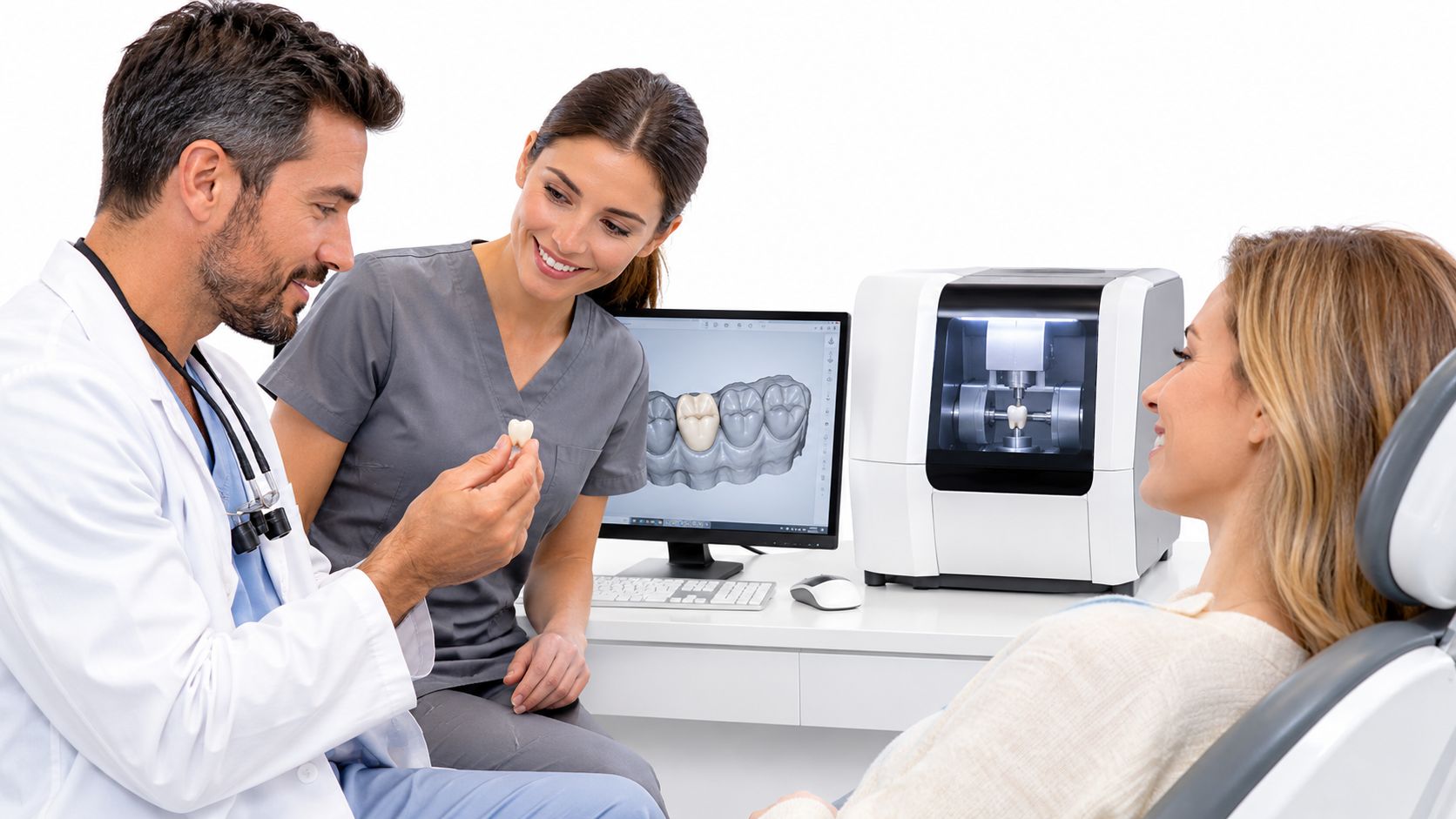
A temporary crown keeps loosening, chewing feels awkward, and the final tooth is still at an outside laboratory. For a Manhattan patient searching for a dentist with in house lab near me, the immediate question is understandable: could treatment be more coordinated closer to home? The useful answer starts with checking what the dental team designs, makes, and verifies inside the office.
Table of Contents
- How to Find a Dentist With an In-House Lab Near You
- When Pain Means Urgent Dental Care
- What an In-House Lab Changes at Each Visit
- Questions to Ask at Your Consultation
- Does an In-House Lab Improve Fit and Results
- Treatments That Depend Most on Lab Work
- Request a Written Estimate and Book Your Visit
How to Find a Dentist With an In-House Lab Near You
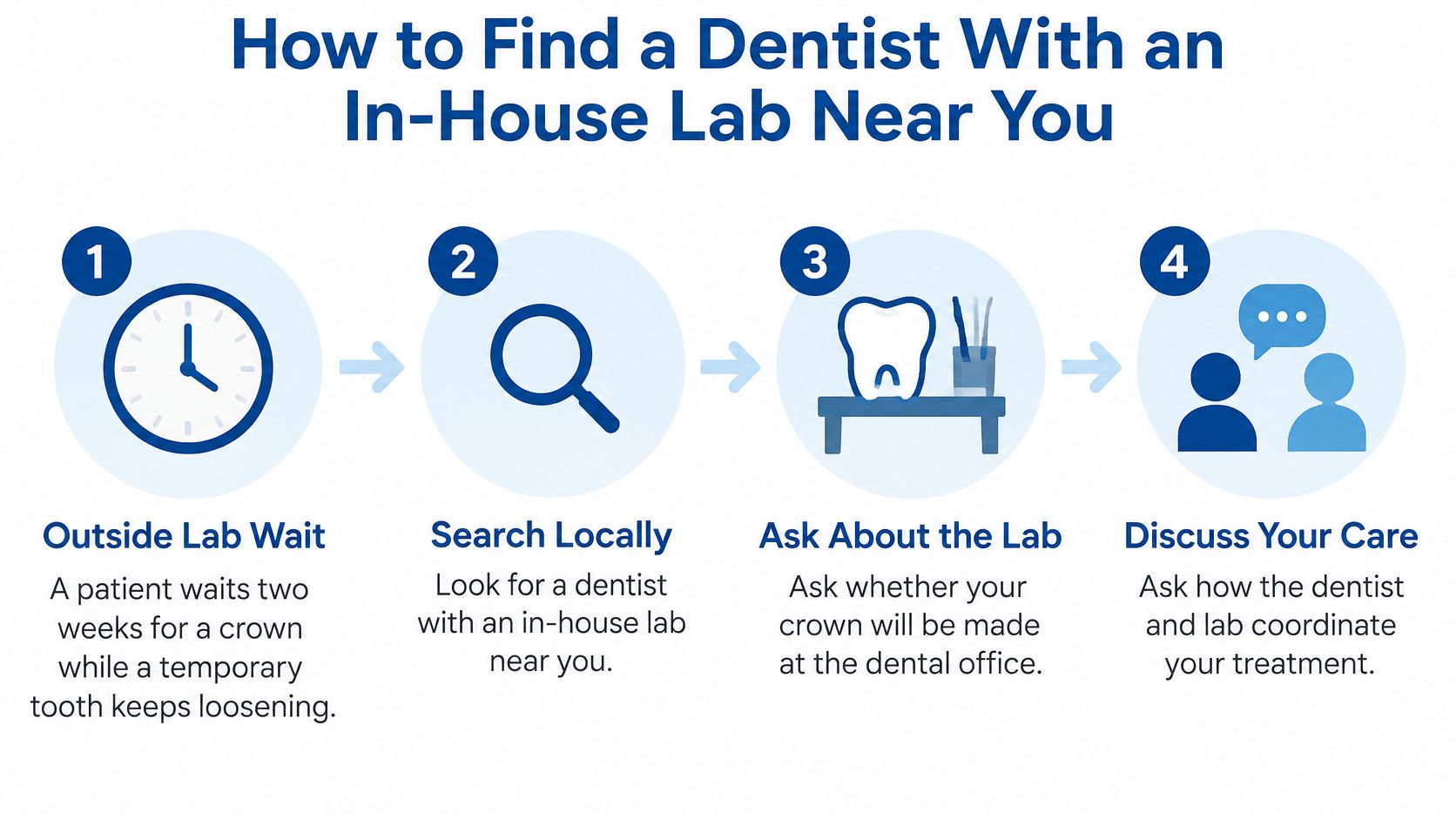
A crown can be planned in one office and made in another. To find out what “in-house” means at a particular practice, check the location, the clinician's training, and which steps happen on-site. The label is a starting point, not proof that every stage takes place in the building.
Use this five-step search:
- Search by location. Add Manhattan or New York, NY to your search. Look for a description of the practice's laboratory and the work done there, not just a mention of digital dentistry.
- Check the restorative clinician's training. A prosthodontist's expertise is relevant to complex replacement teeth and bite planning. For any named credentials, consult the clinician's practice biography rather than relying on an unverified claim.
- Confirm access details. The office is at 47 E 77th St #207, New York, NY 10075, near the 77th Street 6-train. Published hours are Monday to Friday, 9:00 AM to 6:00 PM. Call to confirm hours and urgent-care availability before visiting.
- Ask how treatment is planned. Intraoral photographs and visual case reviews can help you understand proposed tooth shapes and treatment choices. The equipment itself matters less than whether the team explains how it informs your plan.
- Ask where your restoration is made. Find out whether the specific crown, bridge, or implant restoration will be fabricated in the office or sent to an outside lab.
Separate digital equipment from laboratory capability
A scanner records the teeth; it doesn't establish where the restoration is made. Digital impressions can be used for in-office milling or sent to an outside laboratory, as described in this systematic review of digital restorative workflows.
Ask the practice to walk through the stages for your case: scanning, design, fabrication, finishing, and clinical checks. A clear answer identifies which steps happen on-site and which are handled elsewhere. That lets you assess the workflow without assuming that an in-house lab guarantees a particular fit or result.
When Pain Means Urgent Dental Care
A swollen cheek with throbbing pain needs prompt attention. The American Association of Endodontists lists severe tooth pain, a knocked-out tooth, painful swelling, infected gums, and an abscess as dental emergencies. Its guidance on dental emergencies warns that an untreated infection can worsen. If a knocked-out permanent tooth is involved, contact a dentist immediately and arrange care as soon as possible. Keep the tooth moist, ideally in milk or saliva, and avoid touching its root.
Some symptoms call for the emergency room, not a wait for a dental appointment: trouble breathing or swallowing, or fever with swelling that is spreading. For other dental pain, contact an emergency dentist or endodontist promptly to find out what care is needed. Dental pain treatment advice from DentalHealth can offer background while you arrange an examination, but it cannot replace one.
Root canal treatment versus tooth extraction
A root canal removes inflamed or infected pulp from inside the tooth, cleans and disinfects the canals, then seals them with gutta-percha. A filling or crown protects the treated tooth. Tooth extraction may be needed if the tooth cannot be preserved. Ask whether root canal treatment is a reasonable option before deciding.
The AAE's guidance on saving natural teeth explains that modern anesthesia generally makes root canal treatment no more painful than routine dental procedures. Mild soreness or numbness may last for several days. The AAE describes root canal treatment as a way to relieve pain and preserve a natural tooth, rather than making an unsupported comparison with extraction.
Urgent-care priority: Treat pain and infection before choosing a replacement tooth.
If replacement is needed, the Upper East Side practice can coordinate implant care and restoration fabrication in the same building. Confirm urgent appointment availability by phone.
What an In-House Lab Changes at Each Visit
The main benefit is fewer handoffs, not a guaranteed speed record. The comparison below follows a restoration from its initial records through possible remaking. These are typical workflow differences, not promises about every appointment.
Restoration stages at an in-house lab versus an outside lab
| Stage | In-house lab practice | Outside lab practice | What it means for you |
|---|---|---|---|
| Impression or scan | Taken and checked in the same office | Taken in the office, then sent to a lab | Fewer handoffs and physical shipping steps |
| Design review | Clinician and technician review the case together | Commonly coordinated by email or phone | Potentially quicker decisions on shape, bite, and fit |
| Fabrication | Milled or produced on site when the case allows | Made at an outside lab on its schedule | Same-day work is possible only for selected cases |
| Try-in and adjustment | Team may adjust and recheck during the visit | Some changes require return to the lab | Minor changes may require fewer appointments |
| Remake if fit is off | Managed internally by the clinical and lab team | Requires coordination with the outside lab | Timing still depends on the case and practice |
Communication is an advantage, not a guarantee
A clinician can discuss an uneven contact or tooth-shape concern directly with an on-site technician. That proximity can simplify design revisions, reduce shipping, and make some repairs easier. It doesn't automatically produce perfect fit, superior longevity, or freedom from adjustment visits.
A review of CAD/CAM restorative outcomes reported approximately 90% five-year survival among restorations across approximately 1,580 patients, comparable to conventional crowns, while digital workflows generally reduced production time and costs. Digital complete dentures can also achieve clinically acceptable fit and patient satisfaction, but retention findings remain mixed and long-term evidence is limited.
The practical distinction is accountability. Patients should be able to learn who designs the restoration, who approves changes, and who handles a remake. A well-explained workflow names each stage and the person responsible rather than relying on the laboratory label.
Questions to Ask at Your Consultation
The consultation is where laboratory claims become specific treatment decisions. A useful discussion identifies the people involved, the records they review, and the checks required before final placement.
Consultation questions and how to judge the answers
| Question to ask | Strong answer to listen for | Red flag |
|---|---|---|
| Does the practice design and mill restorations on site? | A named technician and a clear explanation of which restorations qualify | Vague wording or a laboratory that is only a referral address |
| Who designs the crown or implant restoration? | Dentist and technician review photographs and the proposed design together | Third-party design without clinician review |
| How are bite and fit checked before final placement? | Bite records, a try-in or appropriate fit assessment, and checks before cementing | No explanation of fit verification |
| Can patients see digital scans or shade options? | Records and relevant choices are reviewed visually | Unwillingness to explain the records |
| What happens if a restoration needs remaking? | A written policy describing timing and possible charges | No written policy or inconsistent answers |
| Which parts of treatment are included in the price? | An itemized, phase-by-phase estimate | A lump sum without an explanation of inclusions |
Why the scanning details matter
Accurate work begins before fabrication. The dentist assesses the mouth, takes photographs and bite records, and selects dental X-rays or three-dimensional imaging when needed for implant planning. Before scanning, the team controls saliva, blood, and soft-tissue movement.
The clinician then checks the preparation margins, meaning the boundaries where the restoration meets the tooth, and confirms enough space for the chosen material. Dentist and technician should review the design before milling or printing. Skipping these checks can leave the laboratory working from incomplete information.
Evidence reviewed in the Journal of Prosthodontics on digital impression accuracy supports digital impressions for single crowns and short bridges, including suitable implant restorations. Full-arch implant cases need additional caution because scanning errors can accumulate across a longer span; verification jigs, passive-fit checks, or conventional or splinted impressions may be appropriate.
A conventional impression isn't necessarily outdated care. In a complex case, it may be part of a deliberate accuracy check.
For new patient exams, useful preparation includes:
- Previous records: Bring available dental X-rays and details of existing restorations.
- Main concerns: Write down the most important questions about comfort, appearance, or chewing.
- Written next steps: Request the proposed treatment sequence, including any further testing.
A specific answer explains how a check will happen. Reassurance without that explanation is a reason to ask again before committing.
Does an In-House Lab Improve Fit and Results
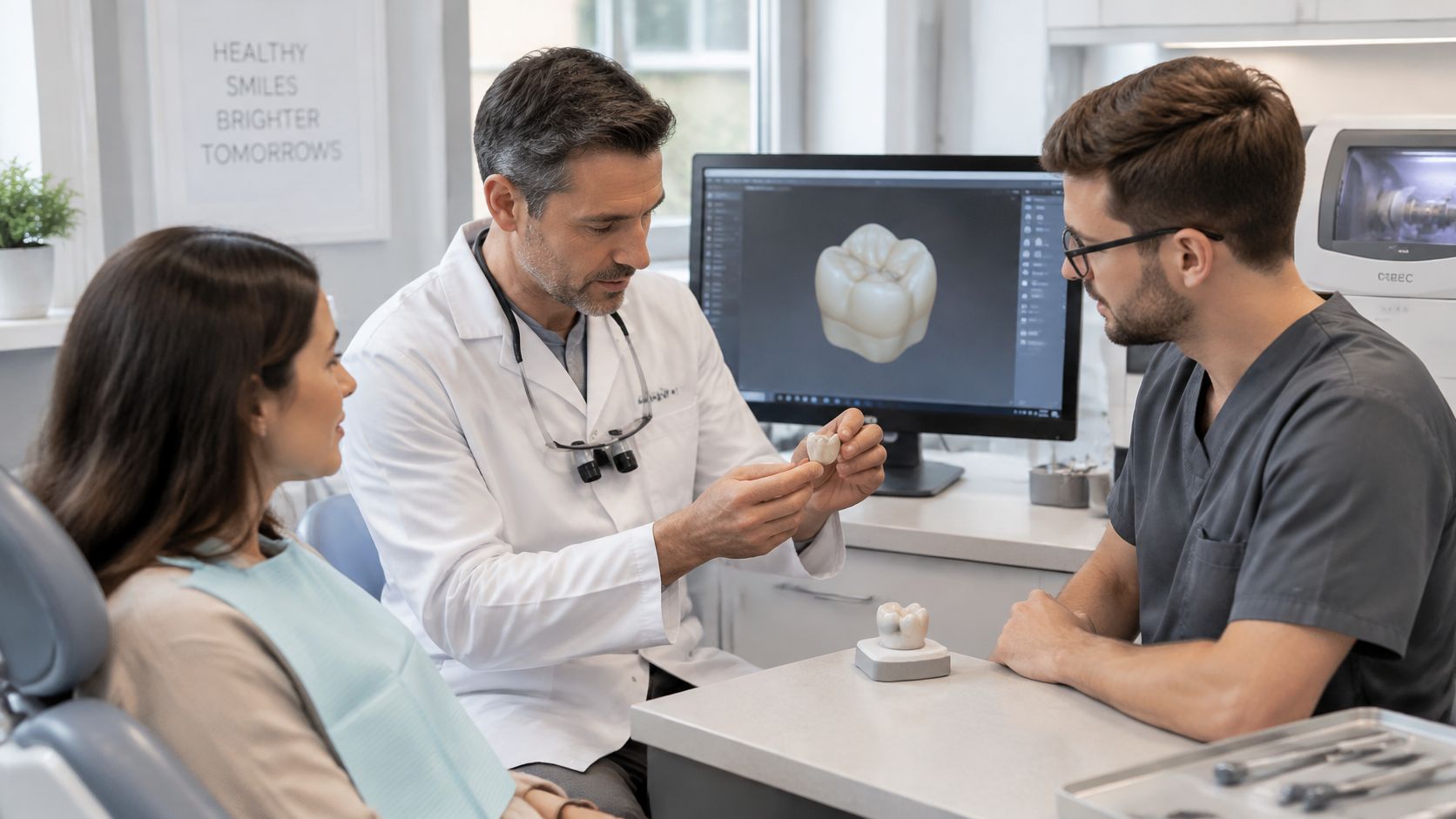
A crown made in the same building may be easier for the dentist and technician to discuss, but location alone does not prove better fit or longer-lasting results. An in-house lab can support communication and coordination if the dentist checks the records, approves the design, and reviews the finished restoration. The result still depends on clinical oversight, not just on having milling equipment on site.
A systematic review and meta-analysis of CAD/CAM restorations included 13 studies, 1,598 restorations, and 1,161 patients. The mean observation period was 3.6 years, with follow-up ranging from 1 to 9.3 years. The review reported chipping rates of approximately 1.4% for zirconia crowns and 5% for lithium-disilicate crowns. These are findings across the reviewed studies, not a prediction for one patient. The review addresses CAD/CAM restorations; it does not establish that an in-house lab produces better fit or results than an outside lab.
Material choice needs a clinical explanation
Chipping rates are not a simple way to choose a material. The dentist should consider the restoration's design, bite forces, available space, finishing, and the tooth's role. The choice should fit the patient's mouth, not follow a blanket preference.
Digital impressions may support accurate crown fit, but the method alone cannot guarantee the result. Marginal fit means how closely the crown's edge meets the prepared tooth. A direct digital impression may offer an advantage over an indirect one, but that does not mean every directly scanned crown fits better than every alternative.
Denture findings also need separate interpretation. A crown and a complete denture involve different clinical challenges, so results for one workflow do not establish success for the other.
Before booking, ask how the practice divides the work: which stages happen in the office, which are sent elsewhere, and who checks the design and finished restoration. Look for:
- Clinical control: The dentist reviews records and approves the lab design.
- Documented checks: The team explains how it assesses margins, seating, contacts, and bite.
- A correction pathway: The dentist clarifies when adjustment is appropriate and when a remake is needed.
When choosing a cosmetic dentist near me, the same checks apply. Shade and shape matter, alongside function and long-term maintenance.
Treatments That Depend Most on Lab Work
A patient with a missing molar may be comparing a bridge with an implant and wondering where laboratory work enters the decision. The lab creates the replacement tooth or teeth, but the dentist first determines which treatment suits the mouth. The practice's crowns and bridges information provides a starting point for that restorative discussion.
Laboratory planning is particularly relevant to:
- Implant-supported restorations: Crowns, bridges, and dentures attached to implants.
- Tooth-supported replacements: Crowns and bridges designed around remaining teeth.
- Cosmetic and extensive care: Porcelain veneers and full mouth rehabilitation.
How an implant restoration develops
First, the team evaluates gum health, bite risks, available restorative space, and implant position using appropriate three-dimensional imaging and an intraoral scan. The planned gum-line contour and screw-access position should be considered before surgery or provisionalization.
After healing, the team records implant positions and makes a provisional restoration. This temporary version allows assessment of speech, chewing contacts, tissue contours, and access for cleaning. Final manufacturing follows clinical approval and discussion of the patient's experience, rather than proceeding solely because a laboratory can fabricate quickly.
A meta-analysis of implant-supported single crowns reported survival benchmarks of approximately 97.2% at five years and 95.2% at ten years. These are benchmarks, not guarantees or a promise of complication-free treatment.
For patients comparing dental implants near me, maintenance and bite assessment belong in the discussion. Patients concerned about nighttime clenching can use The Sleep Consultant on teeth grinding as background for questions during the visit, rather than as a diagnosis.
A painful or infected tooth should receive an emergency assessment first. An endodontist may be able to preserve it with root canal treatment, making replacement unnecessary.
Request a Written Estimate and Book Your Visit
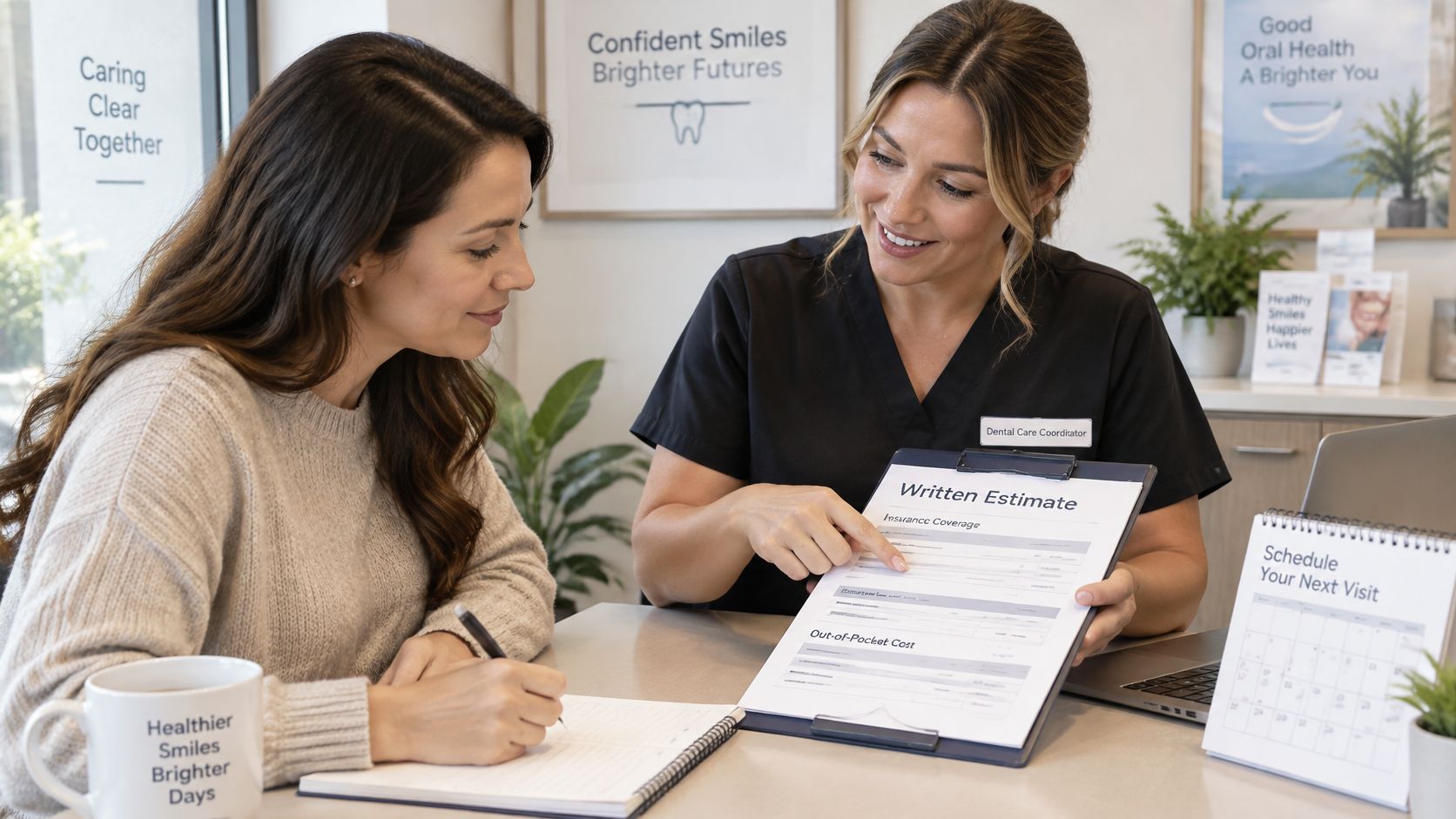
Before scheduling treatment, ask for a written estimate that shows what happens at each stage and which work is completed in the office. A consumer cost summary published by the Georgia Dental Association reported that 58% of respondents considered dental care unaffordable, 46% were unprepared for their largest out-of-pocket dental expense, and only 30% found dental-cost information easy to understand. These figures describe the survey respondents, not the cost of treatment at a particular Manhattan practice.
Compare the complete treatment pathway
An estimate is easier to compare when it separates charges by phase, like an itemized itinerary rather than one total:
- Diagnosis: Consultation, imaging, and any additional planning records.
- Surgery: Implant components, sedation when applicable, and possible bone grafting.
- Restoration: Laboratory charges, temporary teeth, material choices, and remake terms.
- Maintenance: Recall visits, professional monitoring, and anticipated ongoing care.
For each phase, ask what is included, what could add cost, and what insurance is expected not to cover. If an in-house lab is part of the plan, ask which steps happen in the office and which are sent elsewhere. A lower starting price may leave out later appointments or replacement expenses, so compare estimates that cover the same treatment.
Before committing: Request the inclusions, exclusions, and remake terms in writing. A headline price alone does not show the full pathway.
To arrange a visit, use Prosth & Co.’s consultation request at prosthandconyc.com or call the office. Bring your insurance information, any relevant dental records or recent imaging, and a list of questions about the estimate and lab workflow. Ask the team to clarify financing and coverage before treatment begins, and call to confirm urgent-care availability if you need prompt attention.
Prosth & Co. provides prosthodontist-led restorative and implant care with an in-house laboratory and a collaborative specialty team. During your consultation, ask which restoration stages are completed on site and request a written, phase-by-phase estimate.

Founder and lead prosthodontist of Prosth & Co. on Manhattan's Upper East Side. DDS, Columbia University; Prosthodontics certificate and MMSc in Oral Biology, Harvard School of Dental Medicine; Implantology fellowship, Columbia University.
Meet Victoria →