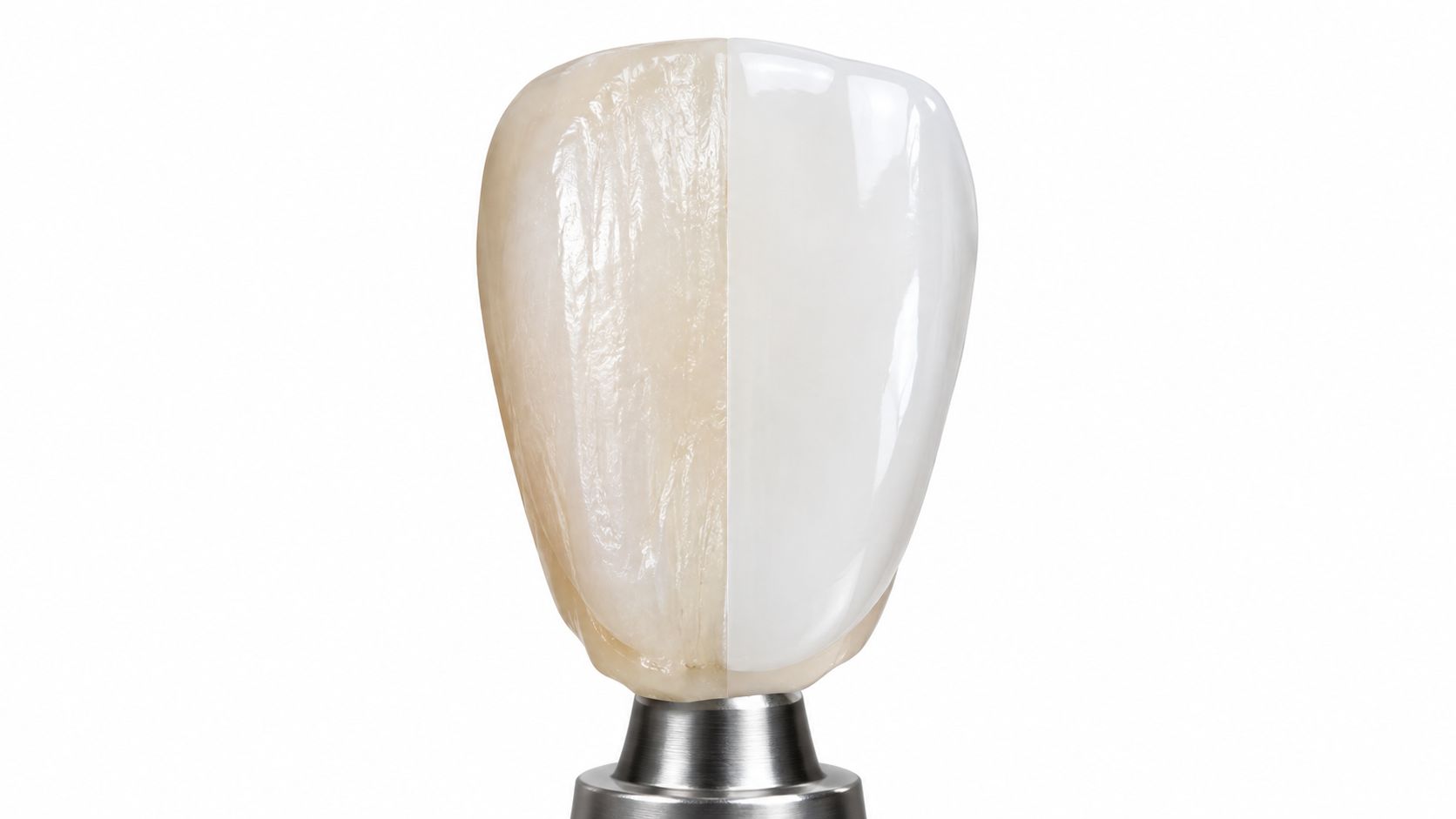
Veneers aren't automatically bad for teeth. A 2021 review estimated a 95.5% 10-year cumulative survival rate for porcelain laminate veneers, but conventional treatment usually removes enamel permanently and can commit the tooth to future replacement.
A patient on Manhattan's Upper East Side may start with a simple goal: soften discoloration, close a small space, or rebuild worn edges before an important event. Then a more serious question appears: are veneers bad for your teeth if they look beautiful today but alter natural tooth structure forever?
The careful answer depends on what the dentist removes, what remains underneath, how the bite functions, and how the restoration will be maintained. Veneers can provide durable cosmetic improvement, but they aren't a temporary coating that leaves the tooth unchanged. A thorough consultation with a prosthodontist or cosmetic dentist in Manhattan should compare porcelain veneers with bonding, teeth whitening, orthodontics, and restorative options before treatment begins.
Table of Contents
- Understanding Whether Veneers Harm Your Teeth
- How Veneer Preparation Affects Long-Term Tooth Health
- Comparing Conservative Veneer Options and Alternatives
- What a Thorough Veneer Evaluation Looks Like
- Maintenance, Monitoring, and What Happens After Veneers
- Making a Confident Decision About Veneers
Understanding Whether Veneers Harm Your Teeth
An Upper East Side patient considering porcelain veneers may have healthy teeth but feel self-conscious about uneven edges or long-standing discoloration. The concern isn't unreasonable. A veneer is a thin restoration bonded to the visible front surface of a tooth, so the result can change shape and color, but the natural tooth remains underneath and still requires protection from decay, gum problems, and bite forces.
Veneers aren't harmful in themselves. The risk comes from the treatment decisions around them, especially preparation depth, existing enamel, untreated disease, grinding, and the design of the bite. If tooth structure is removed, that change is irreversible because enamel doesn't naturally grow back.

What the evidence actually shows
A 2021 systematic review of porcelain laminate veneers reported an estimated 95.5% cumulative survival rate at 10 years. In practical terms, that means approximately 4.5% were classified as failures by 10 years under the review's criteria. The main complication categories included fracture, debonding, secondary caries, and the need for endodontic treatment.
Those results support a balanced interpretation. Veneers can perform well for a long time when the patient is selected carefully and the restoration is designed appropriately, but survival isn't the same as perfect health or freedom from maintenance. Fracture was the most common complication in the review, followed by debonding, and both occurred more often during the early years after cementation.
A useful question for a consultation: “How much natural enamel can remain, and what happens if this veneer needs replacement later?”
That question moves the discussion beyond whether porcelain is “safe” or “unsafe.” It asks how the treatment will affect the tooth over a lifetime. A patient searching for a cosmetic dentist near me, an emergency dentist, or a prosthodontist in New York should expect a provider to discuss both the cosmetic result and the future pathway.
How Veneer Preparation Affects Long-Term Tooth Health
The most important technical issue is often the bonding surface. Enamel provides a more predictable foundation for veneer adhesion than exposed dentin, so conservative preparation can influence both stability and future options.
Conventional porcelain veneers may require measurable enamel removal so the ceramic can fit naturally, support the planned shape, and bond securely. The 2021 review included studies where incisal reduction was at least 1.0 millimeter, demonstrating that conventional veneer treatment can involve meaningful preparation. Once enamel has been reduced, the tooth cannot regenerate it, and a future veneer or another restoration may become necessary if the original restoration fractures, debonds, develops a marginal problem, or no longer fits the bite.
Why dentin exposure changes the risk
A clinical study involving 672 ceramic veneers found 11 failures, corresponding to a 98.4% survival rate over follow-up periods ranging from 1 to 15 years. The study also found that dentin exposure was associated with 3.47-fold higher odds of failure, while veneers bonded exclusively to enamel showed a 99.3% success rate. These figures are reported in the clinical study of ceramic veneer outcomes.
The plain-language meaning is important. A veneer placed mostly on enamel isn't automatically risk-free, but it generally has a more favorable bonding foundation than one placed over substantial exposed dentin. Greater preparation can also affect sensitivity, marginal sealing, debonding, fracture risk, and the amount of healthy structure available for a later repair.
A patient comparing veneer preparation with clinical crown preparation steps should remember that crowns and veneers aren't interchangeable treatments. A crown covers more of a tooth and may be appropriate for extensive structural damage, while a veneer is usually a more limited facial restoration. The correct design depends on how much tooth structure is healthy and what forces the tooth receives.
Preparation depth and expected outcomes
| Preparation Approach | Enamel Preservation | Bonding Substrate | Expected Longevity Consideration |
|---|---|---|---|
| No-preparation design | Highest when anatomy permits | Primarily enamel | May be unsuitable if adding material makes teeth look bulky or changes the bite |
| Minimal preparation | High when carefully planned | Mostly enamel, with limited dentin risk | Often supports more predictable bonding than aggressive preparation |
| Conventional preparation | Varies with tooth shape and cosmetic goals | Enamel may be reduced, with possible dentin exposure | Can provide the planned form, but future repair and replacement deserve discussion |
| Extensive preparation | Lowest | May rely substantially on dentin or existing restorative material | Can reduce restorative flexibility and increase long-term planning demands |
Preparation isn't a simple choice between “no-prep” and “full-prep.” A dentist must assess tooth position, discoloration, existing fillings, gum contours, occlusion, and the amount of change the patient wants. The safest design is the one that achieves the goal while preserving the most sound enamel possible.
Comparing Conservative Veneer Options and Alternatives
The right cosmetic treatment depends on the problem being solved. A patient with mild discoloration doesn't need the same intervention as a patient with worn edges, a deep bite, crowding, or a heavily damaged tooth. Treating every concern with porcelain veneers can remove healthy structure unnecessarily.
A 2024 review found that remaining enamel strongly affects veneer success, with glass-ceramic veneers placed using minimal or no preparation showing the highest survival rates. The 2024 review of ceramic veneer preparation and survival supports an enamel-first approach, but it doesn't mean no-preparation veneers suit every smile.
Matching treatment to the concern
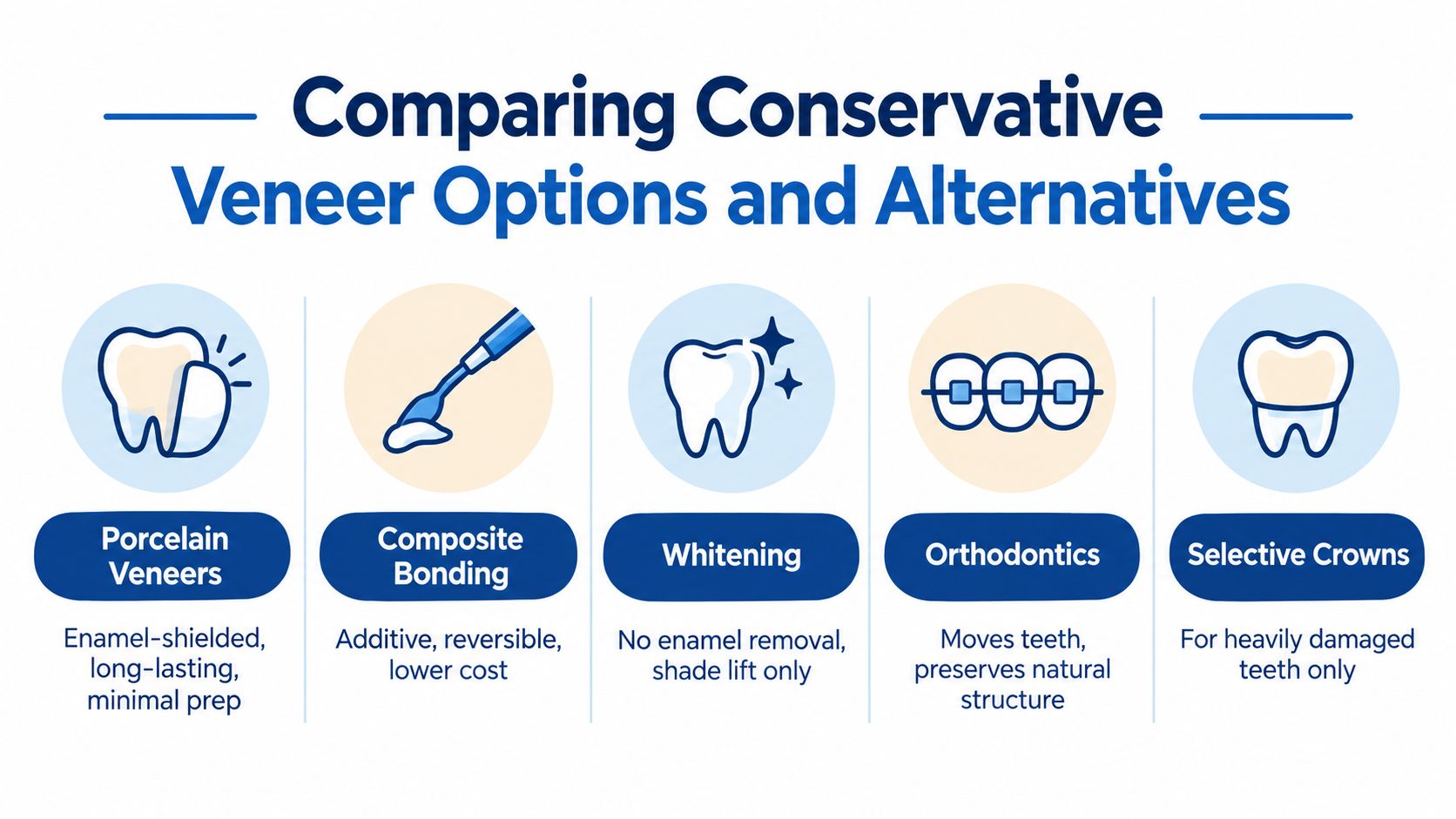
Whitening may be enough when the tooth shape and alignment are already acceptable and color is the primary concern. It doesn't remove enamel, but it also won't change worn edges, spacing, or tooth proportions.
Composite bonding can add material to small chips, narrow gaps, or minor shape irregularities. It may preserve more natural structure and can be adjusted more readily than ceramic, although it may require future polishing or repair.
Orthodontics addresses tooth position rather than covering it. Clear aligners or braces may be a better first step for crowding, rotations, or bite concerns, because moving teeth can create a better foundation for any later cosmetic work.
Porcelain veneers may make sense when a patient wants coordinated changes to color, shape, and proportion, and the teeth have enough healthy enamel for predictable bonding. The dentist still needs to test whether the planned design respects the bite and gum margins.
Selective crowns belong in a different category. They may be appropriate for teeth with extensive structural loss, but they require broader coverage and shouldn't replace a conservative veneer or bonding option when the tooth doesn't need that level of restoration.
A broader explanation of restorative choices, including traditional vs modern tooth replacement, can help patients understand why treatment should follow the condition of the tooth rather than a preferred cosmetic label.
Why no-prep isn't automatically safer
No-preparation treatment can preserve enamel when the tooth's shape and position allow it. If a tooth already projects forward, adding ceramic without creating space may make it look too prominent, affect speech, or create unfavorable bite contacts. A minimal-preparation design may be more appropriate, or orthodontic alignment may need to come first.
Patients shouldn't choose a treatment based on a slogan. The useful comparison is whether the plan preserves enamel, controls forces, supports clean margins, and leaves reasonable options if the restoration needs repair.
What a Thorough Veneer Evaluation Looks Like
A responsible veneer consultation begins with diagnosis, not a promise of a certain number of shells. The dentist needs to establish whether the teeth and gums are healthy enough for cosmetic treatment and whether the proposed design works when the patient speaks, smiles, bites, and cleans.
The clinical questions come first
The evaluation commonly includes a review of:
- Tooth structure: Existing fillings, cracks, wear, discoloration, and available enamel affect whether veneers can bond predictably.
- Gum health: Bleeding, inflammation, recession, or irregular tissue contours can compromise appearance and make margins harder to maintain.
- Decay risk: Active caries should be treated before a cosmetic restoration covers part of the tooth.
- Bite forces: A deep bite, uneven contacts, or bruxism can place damaging stress on ceramic.
- Alignment: Crowding or rotation may make orthodontics a more conservative first step.
- Patient goals: The desired shade, length, translucency, and degree of change determine how much preparation may be needed.
The dentist may use intraoral photographs, dental x-rays when clinically indicated, digital scans, and visual case reviews. These tools allow the patient and clinical team to examine tooth proportions, gum symmetry, and the proposed smile design before irreversible preparation begins.

Planning should include function and future care
A trial design or provisional phase can help reveal whether the planned length feels natural and whether the bite remains comfortable. Patients should ask how the dentist will verify the design, how the laboratory communicates with the clinician, and what happens if the proposed result doesn't look or feel right before final bonding.
Bruxism deserves direct attention. A patient who clenches or grinds may need a custom night guard, bite adjustments, or a different treatment sequence. A patient with significant crowding may benefit from orthodontics before veneers. Someone with a failing tooth may need an endodontist for root canal treatment, periodontal care, or a crown rather than a cosmetic shell.
This is also where related needs can be coordinated. A Manhattan practice may combine cleaning and exams, dental x-rays, fillings, orthodontics, cosmetic dentistry, restorative dentistry, and specialist referrals so that veneers aren't placed over unresolved disease. For families seeking broader care, the same evaluation philosophy applies to a pediatric dentist, kids dentist, or patients who need tooth extraction or dental implants near me. Diagnosis should determine the service, not the other way around.
Maintenance, Monitoring, and What Happens After Veneers
Placement is the beginning of the restoration's life, not the end of treatment. Veneers can remain attached while the tooth develops a marginal problem, gum inflammation, secondary caries, sensitivity, or a bite-related complication. That distinction matters because survival describes whether the restoration remains in place, not whether every surrounding tissue remains healthy.
A 9–10-year clinical follow-up reported high veneer survival while a substantial proportion of retained restorations experienced complications, including issues involving margins, gums, discoloration, material defects, or decay. The finding is summarized in the long-term clinical follow-up indexed by PubMed. Patients should therefore judge success by comfort, cleanability, gum health, function, and stable tooth structure, not attachment alone.
Daily care protects the margins
The veneer itself doesn't decay, but the exposed tooth at the edges and behind the restoration remains vulnerable. A practical routine includes gentle brushing, daily cleaning between teeth, attention to the gumline, and professional hygiene visits. Patients should also avoid using front teeth to open packaging or bite objects, particularly when a veneer has already shown wear or a patient grinds.
A dentist may recommend a custom night guard when bruxism or heavy clenching threatens the restorations. The appliance doesn't make a risky bite disappear, but it can reduce direct contact during sleep when the patient may not control the force.
Warning signs deserve prompt review: bleeding around a margin, persistent sensitivity, a rough edge, a change in color, movement, or a new chip.
Replacement is a lifetime-planning issue
A veneer may need repair or replacement after fracture, debonding, recurrent decay, gum recession, or changes in the bite. Each replacement requires a new assessment of remaining enamel, the bonding surface, tooth vitality, margins, and whether another veneer remains appropriate. A replacement isn't always a simple exchange of one shell for another.
That issue is especially important for younger adults, who may need to maintain the restorations over many years. A thoughtful dentist should explain what happens after a first chip, what can be repaired, when a replacement requires additional preparation, and under what circumstances a more extensive restoration could become necessary.
Monitoring may include periodic clinical examinations and radiographs when indicated. A dentist can inspect margins, evaluate the gums, test suspicious sensitivity, review bite contacts, and identify changes before a small problem compromises the tooth. Patients considering a root canal, tooth extraction, or dental implant should receive a separate diagnosis if a tooth becomes painful or structurally compromised. Veneers shouldn't delay treatment for disease.
Making a Confident Decision About Veneers
The strongest decision is usually an enamel-first decision. That doesn't mean every patient needs no-preparation veneers, and it doesn't mean porcelain is the wrong material. It means the provider should first determine whether whitening, bonding, orthodontics, or a smaller restoration can achieve the desired improvement without unnecessary removal of healthy structure.
Veneers may be appropriate when the teeth and gums are healthy, the cosmetic goals are realistic, the bite can protect the restorations, and the patient understands maintenance and replacement. They may be less suitable when untreated decay, gum disease, severe bruxism, limited enamel, major crowding, or extensive structural damage changes the risk balance.
Questions worth asking before treatment
- How much enamel will be removed? The answer should be specific for each tooth, not a general promise.
- Will the veneer bond mainly to enamel? The provider should explain any expected dentin exposure.
- Could orthodontics, whitening, or bonding solve part of the concern first? Staging treatment may preserve more tooth structure.
- How will the bite be checked? Aesthetic design must work during chewing and speaking.
- What happens if a veneer chips or debonds? The plan should address repair, replacement, and remaining tooth structure.
- Who will monitor the result? Long-term care should include hygiene, examinations, and bite protection when appropriate.
Patients researching how much veneers cost should also ask what the quoted treatment includes, such as diagnostics, provisional designs, laboratory work, follow-up visits, repairs, or future replacements. Cost matters, but the more consequential question is whether the treatment preserves a healthy tooth and remains maintainable.
Prosth & Co. is a Manhattan Upper East Side practice that provides prosthodontic, cosmetic, restorative, orthodontic, endodontic, periodontal, implant, and oral surgery care, with an in-house dental laboratory and digital treatment planning. That type of coordinated evaluation can be useful when a smile concern overlaps with bite, tooth wear, gum health, or the need for treatment from an endodontist or another dental specialist.
Patients considering veneers in Manhattan can schedule a consultation with Prosth & Co. to review enamel preservation, bite function, cosmetic goals, and realistic replacement planning. The practice can also help compare veneers with bonding, teeth whitening, orthodontics, crowns, or other restorative care so the next step supports both a bright smile and long-term tooth health.

Founder and lead prosthodontist of Prosth & Co. on Manhattan's Upper East Side. DDS, Columbia University; Prosthodontics certificate and MMSc in Oral Biology, Harvard School of Dental Medicine; Implantology fellowship, Columbia University.
Meet Victoria →