A lot of adults in Manhattan arrive at the same point. They catch their reflection in a meeting room window, notice crowding in a photo, or keep covering their mouth when they laugh. They want a straighter smile, but traditional braces feel hard to picture in a workday filled with client meetings, dinners, travel, and constant conversation.
That's where clear aligners often enter the conversation. For many busy New Yorkers, the appeal isn't only cosmetic. Its primary benefit is that treatment can fit into daily life while still supporting oral health, bite function, and long-term restorative goals. When straightening is planned carefully, aligners can become part of a bigger smile strategy, especially for adults who also have worn teeth, old dental work, or bite imbalance.
Table of Contents
- Achieve Your Dream Smile with a Cosmetic Dentist in NYC
- How Clear Aligners Create Straighter Smiles
- The Top Benefits of Choosing Clear Aligners
- Who Can Benefit from Clear Aligner Therapy
- What to Expect at Your Upper East Side Dentist
- Clear Aligners Compared to Traditional Braces
- Common Questions About Clear Aligners in NYC
- Schedule Your Clear Aligner Consultation in New York City
Achieve Your Dream Smile with a Cosmetic Dentist in NYC
A common Upper East Side scenario looks like this. A patient has a polished professional life, keeps up with cleaning and exams, and may even have had teeth whitening or cosmetic dentistry in the past. But the smile still doesn't feel finished because a few teeth overlap, a gap draws the eye, or the bite feels slightly off.
For many adults, the hesitation isn't about whether straighter teeth would help. It's about whether treatment will interrupt life. Braces can feel too visible, too inconvenient, or too difficult to manage around work and social commitments. That's why clear aligners have become such a strong option for people who want meaningful improvement without a dramatic change in how they look day to day.
A smile goal can be bigger than straight teeth
In a prosthodontic setting, alignment is rarely viewed as an isolated cosmetic issue. A slightly rotated tooth can affect how veneers sit. A collapsed bite can influence wear. Spaces or crowding can complicate restorative dentistry, from bonding to crowns to long-term maintenance.
That broader view matters in New York City, where many adults want treatment that does more than look good in photos. They want a plan that supports comfort, function, and future dental work if needed.
Straighter teeth can be the beginning of a healthier, easier-to-maintain smile, not just a cosmetic finishing touch.
Patients searching for a dentist near me or a cosmetic dentist near me often assume aligners are only for minor appearance upgrades. In reality, they can play an important role in an overall oral health plan when the case is selected carefully and the treatment is monitored closely.
Why this matters for busy Manhattan adults
An active city schedule changes how people evaluate dental care. They need something that works with early meetings, subway commutes, business lunches, and evenings out. They also want clarity. If treatment is worth doing, they want to know how it helps and where its limits are.
That's the core of the discussion around the benefits of clear aligners. The best cases combine convenience with thoughtful planning. For adults on the Upper East Side, that often means looking beyond the phrase “straight teeth” and asking a better question. Will this improve the smile in a way that fits the patient's lifestyle and supports long-term dental health?
How Clear Aligners Create Straighter Smiles
A common Upper East Side scenario goes like this. You notice one front tooth has started to overlap another in photos, or your bite feels a little off when you chew. You may also be thinking ahead to bonding, veneers, or replacing older dental work and wondering whether the teeth should be positioned more carefully first. Clear aligners are often part of that planning because they move teeth in controlled steps, with the larger goal of improving how the smile looks, feels, and functions.
Clear aligners create movement by applying light, steady pressure over time. Each tray is slightly different from the last, so the teeth are guided from their current position to the next planned position. It is a gradual process, more like adjusting books on a shelf one by one than forcing the whole row at once.
A simple way to understand the process
The process works like a set of custom keys. Each aligner is made to fit the teeth at one stage, then encourage the next small change. Those small changes add up.
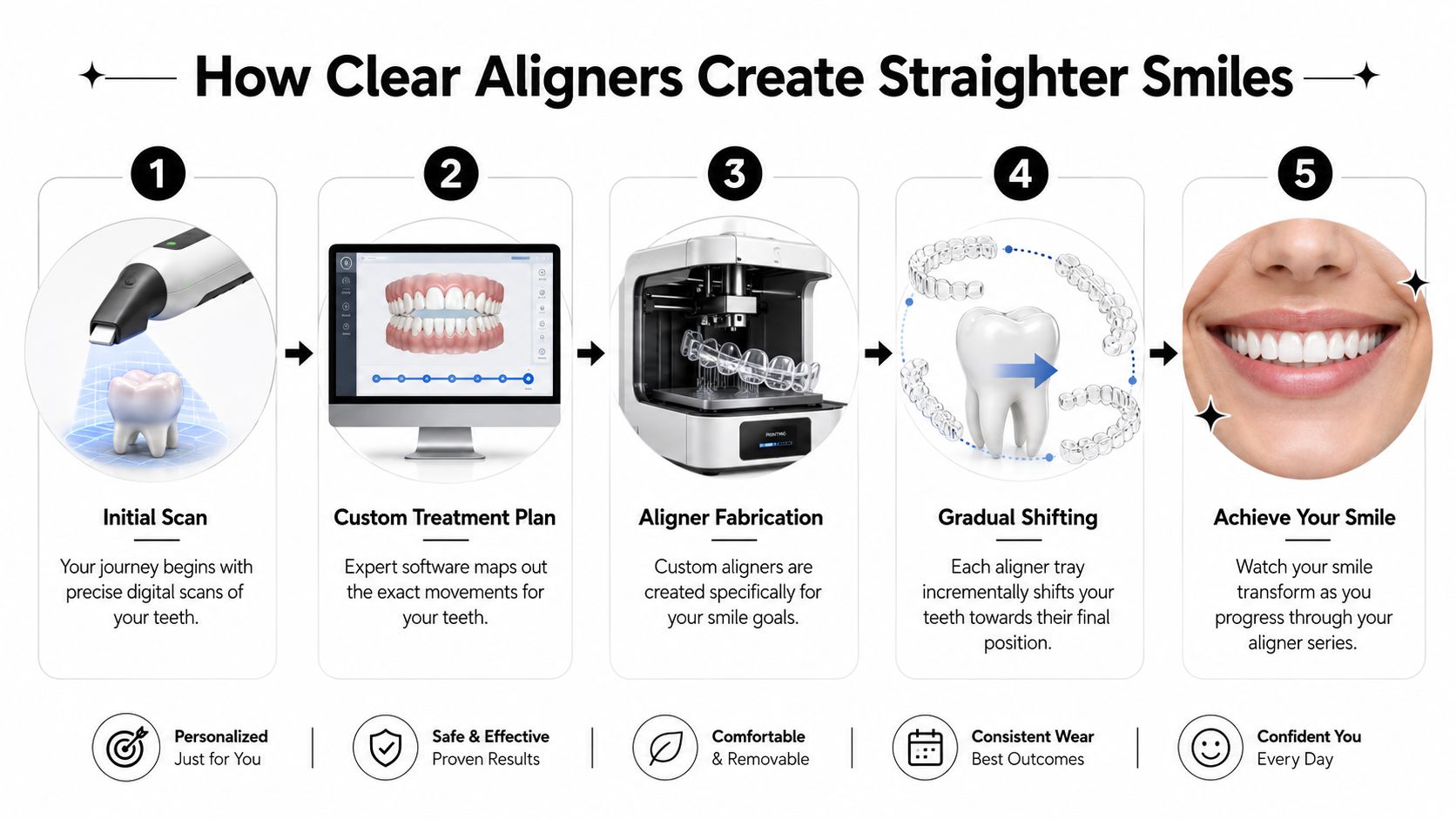
Treatment usually starts with a digital scan rather than traditional impressions. That scan gives your dentist a detailed 3D view of the teeth and bite, which is especially helpful if the smile plan involves more than alignment alone. In a prosthodontic office, we also look at worn edges, existing crowns, uneven spacing, and how the bite may affect future restorative work. That matters because the goal is not only to line teeth up. The goal is to put them in positions that support long-term comfort, hygiene, and any dentistry you may need later.
A typical sequence includes:
- Digital records to capture tooth position and bite.
- Movement planning to decide which teeth should move, how far, and in what order.
- Custom trays made for that exact sequence.
- Regular tray changes so movement continues in small increments.
- Check-in visits to confirm the teeth are tracking as planned.
Some tooth movements are simpler than others. Mild crowding or small spaces may respond more predictably than more complex bite changes. That is why case selection matters, and why close supervision matters. A carefully planned aligner case is very different from handing someone trays and hoping the teeth follow along.
Why wear time matters
This part is straightforward. Aligners work only when they are on the teeth for most of the day.
The American Association of Orthodontists guidance on clear aligner therapy advises wearing them 20–22 hours per day for best results. Patients can still remove them for meals, brushing, flossing, and brief social or professional moments when that makes sense. The key is consistency. Teeth respond to steady pressure, not occasional pressure.
Practical rule: If aligners are out for long stretches every day, teeth may stop tracking closely to the trays, and treatment can take longer.
For busy New York professionals, this usually becomes a routine quickly. Remove them to eat. Brush and floss. Put them back in. Patients who understand that rhythm from the start tend to have a much smoother experience, especially when aligners are part of a larger plan to improve the bite, protect existing dental work, or prepare for future cosmetic or restorative treatment.
The Top Benefits of Choosing Clear Aligners
A lot of Upper East Side patients ask me the same question in a very New York way. They want straighter teeth, but they also need to get through client meetings, business dinners, workouts, travel days, and family life without treatment taking over the calendar. Clear aligners appeal to adults for that reason. They fit into real life while still supporting meaningful changes in smile balance, bite function, and long-term dental planning.
Why adults often prefer them
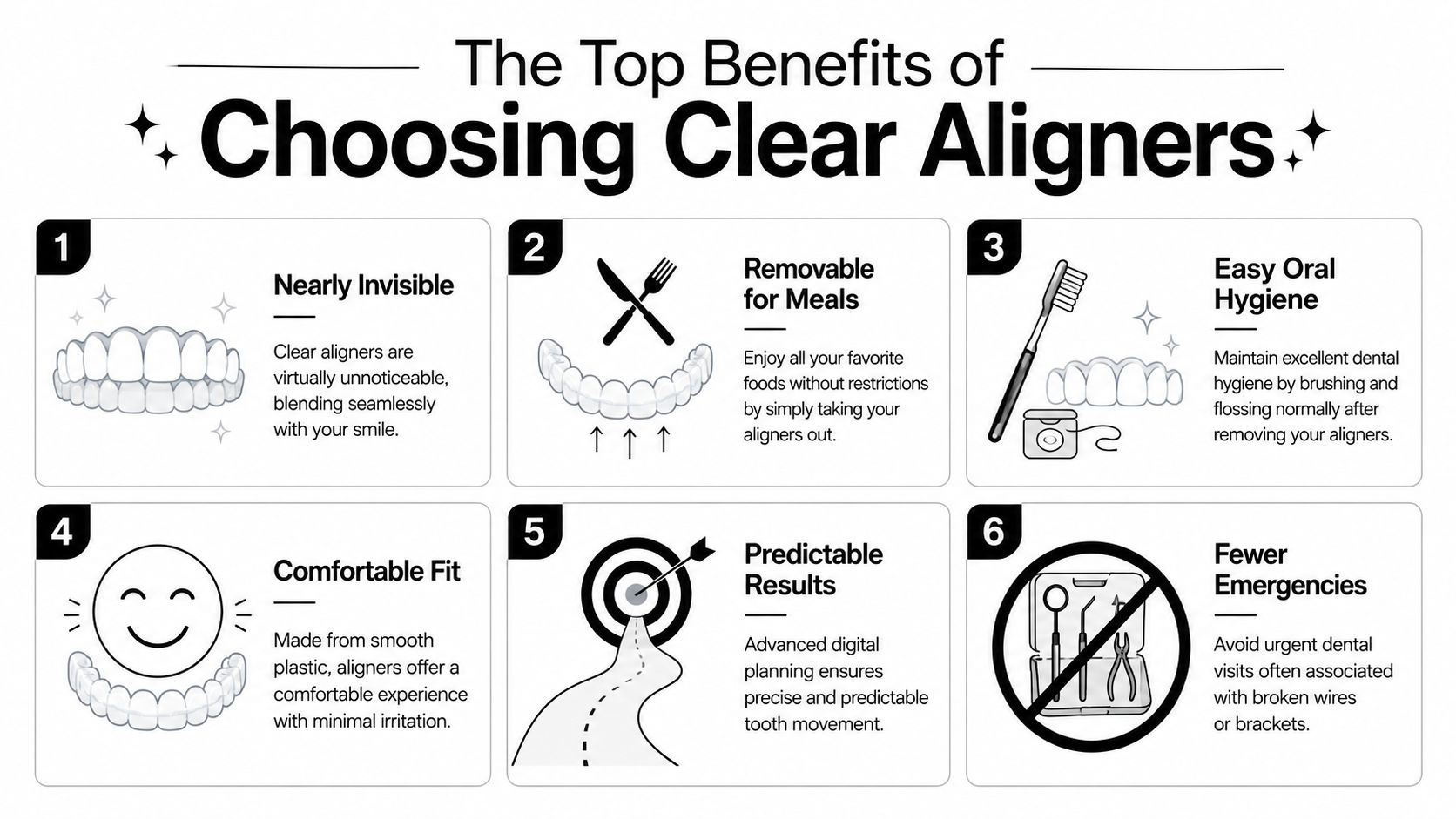
The first benefit many patients notice is discretion. If your work involves presentations, conversations across a conference table, or frequent social events, clear trays usually draw far less attention than brackets and wires. Patients often tell me they like that their orthodontic treatment does not become the first thing people see.
Comfort matters too. Smooth plastic trays usually feel easier on the lips and cheeks than fixed metal appliances. There is still pressure when switching to a new set. That pressure is expected. It means the tray is asking the teeth to move to the next planned position.
There is also a practical side that busy adults appreciate right away:
- Meals stay normal: You remove the trays before eating, so there are no food restrictions during work lunches or dinners out.
- Photos and important events are simpler: Patients can take aligners out briefly for a wedding, presentation, or special occasion when appropriate.
- Fewer appliance emergencies: There are no brackets to loosen and no wires rubbing the inside of the mouth after a meal.
For readers who prefer a visual summary, this short video gives a helpful overview of why adults often choose aligners.
The health and planning benefits matter too
Clear aligners also support cleaner daily hygiene. Since the trays come out for brushing and flossing, many adults find it easier to keep up with home care during treatment. That matters even more if the goal is larger than straightening alone. In a prosthodontic practice, tooth position often affects how well future bonding, veneers, crowns, or other restorative work can be designed and maintained.
I often explain it this way to patients. If the teeth are the foundation, alignment is part of setting that foundation correctly before finishing the room. Straighter positioning can create better spacing, more balanced contacts, and a healthier setup for dental work that may come later.
That is one reason aligners are so useful for adults with specific bite concerns, including patients exploring clear aligners for overbite correction as part of a larger treatment plan. The goal is not only a nicer photo. The goal may also include protecting worn teeth, improving cleaning access, or creating the right position for restorative treatment to last well.
Reliability matters here. Adults do not choose treatment just because it is discreet. They want to know it can produce real improvement in the right case. As noted earlier, published research supports clear aligner therapy for many mild to moderate alignment concerns when case selection and follow-through are appropriate.
Some patients also like the rhythm aligners create. Breakfast, coffee, lunch meeting, evening event. The routine stays familiar. Remove the trays, eat, brush, place them back in, and continue the day. For many working professionals, that feels easier to manage than planning around fixed hardware every time they sit down for a meal or clean their teeth at night.
Who Can Benefit from Clear Aligner Therapy
A common Upper East Side scenario goes like this. A patient has a demanding work schedule, notices one front tooth shifting, and feels ready to improve their smile, but also wants to protect older dental work and keep future treatment options open. That is often the right moment to ask whether clear aligners fit into a larger oral health plan, not just a cosmetic wish list.
Clear aligners can work well for adults and teens with mild to moderate tooth movement needs, especially if they want treatment that respects a full calendar and supports long-term dental goals. In my office, the best candidates are usually not focused on straightness alone. They also care about cleaner contours, a bite that functions more evenly, and a plan that makes sense if veneers, bonding, crowns, or other restorative steps may come later.
Common concerns aligners can improve
Many patients first notice the problem in daily life. Floss snaps in one contact and slides too easily through another. A tooth overlaps enough to trap plaque. A small gap draws the eye in photos or changes how the smile frames the face. These details may look minor, but they can affect cleaning, wear patterns, and the way future dental work fits together.
Aligners are often a good option for concerns such as:
- Small gaps between teeth that interrupt smile symmetry or catch food.
- Mild crowding that makes brushing and flossing harder than it should be.
- Slight rotations or uneven positioning that affect appearance and bite balance.
- Selected bite issues that can be improved with controlled tooth movement.
- Pre-restorative alignment when teeth need better positioning before cosmetic or restorative treatment.
Patients with bite concerns often need a more specific conversation. For example, someone exploring clear aligners for overbite correction may be less concerned with photographs than with wear on the front teeth, pressure on certain contacts, or how the bite supports future restorations.
That distinction matters.
A prosthodontic perspective looks at alignment the way an architect looks at room layout before cabinetry is installed. If teeth are crowded, tipped, or meeting unevenly, the smile may still be improved, but the full plan has to account for function, materials, and what will help the result last. For busy New York professionals, that can mean using aligners as one step in a carefully sequenced plan instead of treating them as a stand-alone cosmetic fix.
When a fuller treatment plan may be needed
Clear aligners are not right for every case. Severe bite discrepancies, significant jaw-position problems, or teeth affected by complex restorative history may call for a different approach or a more layered treatment plan.
That does not rule aligners out. It means the evaluation has to be more thoughtful.
Adults with crowns, veneers, missing teeth, worn edges, or signs of grinding often benefit from a closer review of how each tooth is functioning before movement begins. In some cases, improving alignment can make home care easier and support healthier gums. Patients who are also working on holistic oral care routines often appreciate that straighter positioning can make brushing and flossing more effective.
The strongest candidate is someone whose smile goals, bite pattern, and dental history all support aligners as the right tool for the job.
That is why candidacy should be based on more than appearance. The question is whether aligners can move the teeth in a predictable way that supports comfort, daily function, and the long-term stability of the smile.
What to Expect at Your Upper East Side Dentist
You come in before work, coffee in hand, and want straight answers. How long will this take? Will the trays fit into your schedule? Will this plan also make sense if you are considering veneers, replacing a missing tooth, or protecting worn teeth? A good consultation should answer those questions clearly.
At an Upper East Side prosthodontic practice, the visit starts with the bigger picture. Dr. Park is not only looking at whether teeth can be straightened. He is looking at how your bite works, how your existing dental work is holding up, and how tooth movement may support the next phase of your care. For many busy New Yorkers, that matters just as much as appearance.
The first visit
The first appointment usually begins with a conversation and an exam. You discuss what bothers you about your smile, what you want to improve, and what has happened in your dental history so far. Crowns, veneers, missing teeth, clenching, grinding, and past orthodontic treatment all help shape the plan.
Digital photos and scans are often part of that visit. They give a clear view of tooth position, bite contact, and areas of wear. If you have ever tried to understand your smile by looking in a bathroom mirror, a digital scan is a different experience. It works like a map. You can see where the teeth are now, where space is limited, and why certain movements may help.
That visual review often lowers anxiety. Patients are not left guessing what the dentist sees. They can follow the reasoning behind the recommendation, which is especially helpful when aligners are only one part of a larger smile plan.
For example, if the goal is to place a restoration more precisely or create a healthier bite before cosmetic work, aligners may be used to set the stage. That is one of the advantages of seeing a prosthodontic expert. The plan is built around the final result, not only the first tray.
Life during treatment
Once treatment starts, the routine is usually manageable for professionals with full calendars. You wear the trays as directed, take them out for meals and home care, and come in for periodic reviews. Those check-ins are not just formalities. They confirm that teeth are moving as planned and give your dentist a chance to catch small problems before they turn into delays.
Daily care still matters. Straighter teeth can make brushing and flossing easier, but aligners do not replace healthy habits. Some patients also benefit from learning more about holistic oral care routines that support the gums and soft tissues during treatment.
A typical treatment rhythm includes:
- Regular tray changes: Teeth move in controlled stages over time.
- Progress visits: Your dentist checks fit, tracking, and bite changes.
- Refinements when needed: Extra trays may be recommended to fine-tune the outcome.
- Retention after treatment: Retainers help hold the teeth in their new position.
The retention phase deserves special attention. Teeth can shift back if nothing holds them in place. Patients often think treatment ends when the last tray comes out, but the retainer is what helps protect the result you worked for.
Clear Aligners Compared to Traditional Braces
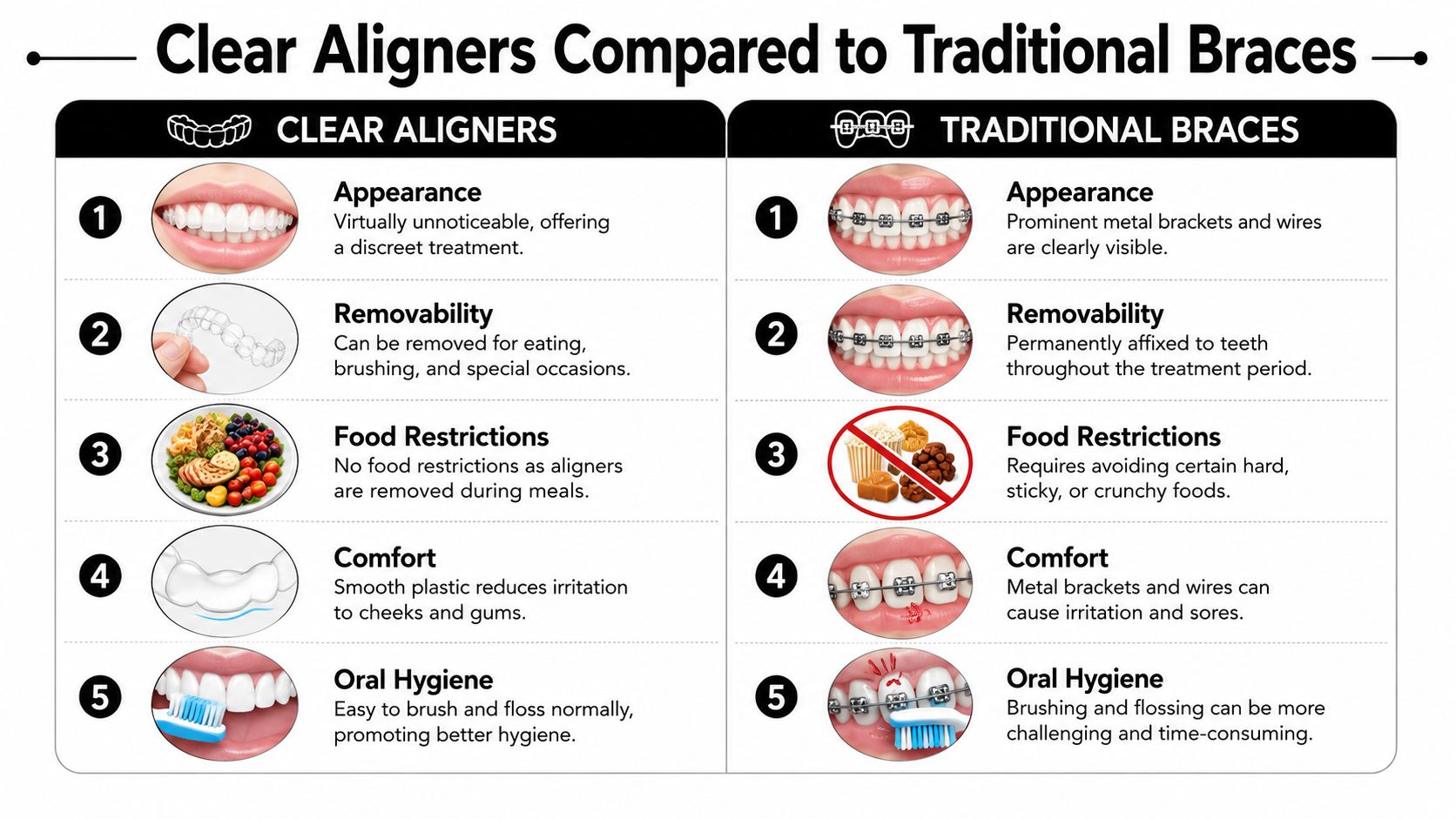
Adults often don't need a dramatic sales pitch. They need a clear comparison. Both clear aligners and traditional braces can move teeth. The better option depends on the case, the patient's habits, and the kind of daily experience they want during treatment.
A practical side-by-side view
For many professionals in New York City, the biggest difference is visibility. Aligners are discreet, while braces are much more noticeable. That alone can shape the decision for someone who speaks publicly, meets clients often, or wants treatment to stay private.
Daily maintenance is another dividing line. Aligners are removed for brushing and flossing, which tends to feel more familiar. Braces stay on full time, so cleaning takes more patience and technique.
Here's a simple comparison:
| Feature | Clear Aligners | Traditional Braces |
|---|---|---|
| Appearance | Subtle and low-profile | Clearly visible |
| Meals | Removed before eating | Fixed in place during meals |
| Hygiene | Easier to brush and floss normally | More challenging to clean around |
| Comfort | Smooth tray material | Brackets and wires may irritate soft tissue |
| Best fit | Many mild to moderate cases | Useful when more fixed control is needed |
That said, aligners ask more of the patient. They work best when worn consistently and handled responsibly. Braces remove that compliance variable because they stay on the teeth.
A treatment can be more convenient and still require more personal discipline. That's often the trade-off with aligners.
For adults who value aesthetics, flexibility, and easier oral hygiene, aligners often feel like the better lifestyle match. For patients with more complex movement needs, fixed braces may still be part of the conversation. The right answer depends less on trend and more on what the teeth and bite require.
Common Questions About Clear Aligners in NYC
Patients usually ask practical questions first. That's a good sign. It means they're picturing how treatment would fit into real life, not just how the end result will look.
Do clear aligners hurt
Most patients describe aligners as causing pressure rather than sharp pain. A new tray may feel snug for the first day or two because it's starting the next stage of movement. That sensation is expected.
The trays themselves are smooth, so they don't create the same kind of rubbing that many people associate with brackets and wires. If a tray feels unusually rough or doesn't seat fully, the dental office should evaluate it.
How should they be cleaned
Clear aligners should be cleaned gently and consistently. Patients generally do best when they rinse trays after removal and clean them as part of the same routine as brushing and flossing. Good hygiene helps the trays stay clearer and keeps plaque from sitting against the teeth.
A few basic habits help most:
- Remove aligners before meals: This helps avoid staining and damage.
- Brush and floss before reinserting: Cleaner teeth mean a healthier environment under the trays.
- Store them safely: A case reduces the chance of breakage or loss.
- Follow the change schedule exactly: Switching too early or too late can affect tracking.
What happens after treatment
The end of active treatment is not the end of maintenance. Teeth can shift if they aren't held in place. Retainers help preserve the result and protect the time and effort invested in treatment.
Patients who want a fuller explanation can review this page on retainers after Invisalign treatment. The key takeaway is simple. Finishing the last tray doesn't lock teeth permanently into place.
Some adults also choose to refresh the appearance of their smile after alignment with cosmetic services such as whitening or bonding. Others move into restorative care once the teeth are in a better position. That sequencing can be especially useful when a smile plan includes multiple goals.
Is cost discussed at the consultation
Yes. Cost should be discussed directly, along with what the treatment includes and whether any additional steps may be needed. Since every case is different, a proper estimate depends on exam findings, the complexity of movement, and whether aligners are part of a broader treatment plan.
A good consultation should leave the patient with clear expectations, not guesswork.
Schedule Your Clear Aligner Consultation in New York City
For the right patient, clear aligners offer a strong balance of discretion, comfort, and clinical usefulness. They can straighten teeth in a way that fits a demanding schedule, while also supporting a larger oral health and restorative strategy. That's why they continue to appeal to adults across Manhattan who want a healthier smile without the look and inconvenience of traditional braces.
Scheduling the first visit should feel simple. Patients looking for a dentist in New York, NY, a cosmetic dentist near me, or a practice that can connect aligners with restorative care often benefit most from a consultation that looks at the whole picture, not just tooth alignment by itself.
Busy patients also tend to appreciate organized communication during treatment. For anyone curious about how modern offices handle reminders and follow-up more securely, this overview of Call Loop for HIPAA compliant messaging offers useful context on appointment communication standards.
A straighter smile can make daily brushing easier, improve confidence, and create a better foundation for cosmetic and restorative dental care. To explore whether clear aligners are the right fit, schedule a consultation with Prosth & Co. at 47 E 77th St, Suite 207, New York, NY 10075, or call the office to book an appointment online and take the next step toward a healthier, more confident smile.