
A sharp toothache can turn an ordinary evening into a local search for an endodontic dentist near me. The pain may worsen when drinking something cold, biting down, or lying flat. Sometimes a filling or crown has come loose, and sometimes swelling appears before the tooth has caused much discomfort. The urgent question isn't only which office is closest. It's who can diagnose the tooth accurately, relieve the problem promptly, verify coverage, and coordinate the next stage of care.
For patients seeking a dentist near me, dentist in Manhattan, or dentist in New York, proximity matters, but it shouldn't be the only filter. A nearby general dentist may manage a straightforward root canal, while a specialist may be the safer choice for retreatment, a cracked tooth, unusual anatomy, or persistent symptoms. Prosth & Co. on Manhattan's Upper East Side provides endodontic care within a multi-specialty setting, allowing the treatment plan to account for the tooth, the bite, the final restoration, and the patient's practical needs.
Table of Contents
- When Tooth Pain Becomes a Search for an Endodontic Dentist Near Me
- What an Endodontist Actually Does and Why It Matters
- How to Choose the Right Endodontic Dentist Near Me
- Matching Your Case to the Right Level of Specialist Care
- What Your First Endodontic Visit Looks Like in Our Manhattan Office
- Emergency Root Canal Situations and What to Do Today
- Key Takeaways and How to Take the Next Step
When Tooth Pain Becomes a Search for an Endodontic Dentist Near Me
A patient may wake during the night with a throbbing molar, take an over-the-counter pain reliever, and hope the discomfort settles by morning. By lunchtime, chewing feels impossible. A search for an emergency dentist becomes a search for a clinician who can determine whether the pulp is inflamed, infected, cracked, or affected by another dental problem.
That distinction matters because tooth pain doesn't always identify its source. A tooth can hurt because decay has reached the pulp, a fracture allows bacteria inside, a previous root canal hasn't healed, or inflammation around the root is affecting the surrounding tissues. A dental examination and appropriate imaging are needed before treatment is chosen.
Root canal treatment is far from a niche procedure. A 2022 systematic review estimated that 8.2% of teeth worldwide have been root-filled, while 55.7% of adults over age 18 have at least one root-filled tooth (systematic review of root-filled teeth). For someone typing “endodontic dentist near me,” that means the need is widespread, and the right appointment may involve prevention of tooth loss as much as immediate pain relief.
Practical rule: The closest office is useful only if it can provide the right level of diagnosis and treatment for the tooth in question.
A Manhattan patient also has to consider access. Federal workforce data listed 5,609 endodontists in 2024 and 5,692 in 2025, while another federal workforce model projected 5,440 endodontists supporting about 3,220,000 annual visits under its planning assumptions (U.S. health care workforce report). That limited specialist pool helps explain why insurance verification, referral coordination, and urgent scheduling can be as important as the map distance.
What an Endodontist Actually Does and Why It Matters
An endodontist is a dentist who specializes in diagnosing tooth pain and treating the dental pulp and root canal system. The American Association of Endodontists describes root canal treatment as removing inflamed or infected pulp, cleaning and shaping the canal, then filling and sealing the space (American Association of Endodontists root canal explanation).
The process is far more precise than just “removing the nerve.” The clinician first identifies the tooth responsible for the symptoms, assesses the surrounding bone and tissues, and determines whether the tooth can be predictably restored. Treatment then focuses on eliminating diseased tissue, disinfecting the internal anatomy, and sealing the canal so the tooth can function beneath a final filling or crown.
When specialist training adds value
General dentists perform many root canals successfully, especially when the diagnosis is clear and the anatomy is manageable. An endodontist becomes particularly valuable when the tooth has narrow or calcified canals, curved roots, a fracture, previous treatment, a persistent infection, or symptoms that don't match the initial findings.
A specialist may also provide endodontic microsurgery when conventional treatment cannot resolve a root-end problem. The key question isn't whether one professional is automatically better than another. It's whether the clinician's training, equipment, and case experience match the tooth's difficulty.
Patients comparing dental specialties can use this overview of specialties in dentistry to understand how endodontics differs from prosthodontics, periodontics, oral surgery, and other areas of care.
Why the outcome needs context
Reported root canal success depends heavily on how success is defined. A 2022 systematic review found 92.6% success under loose criteria and 82.0% under strict criteria, while an older meta-analysis reported 85.2% and 74.7%, respectively (systematic review of primary root canal outcomes). Those figures aren't a promise for an individual tooth. They show why a careful consultation should explain the diagnosis, prognosis, and criteria used to judge healing.
How to Choose the Right Endodontic Dentist Near Me
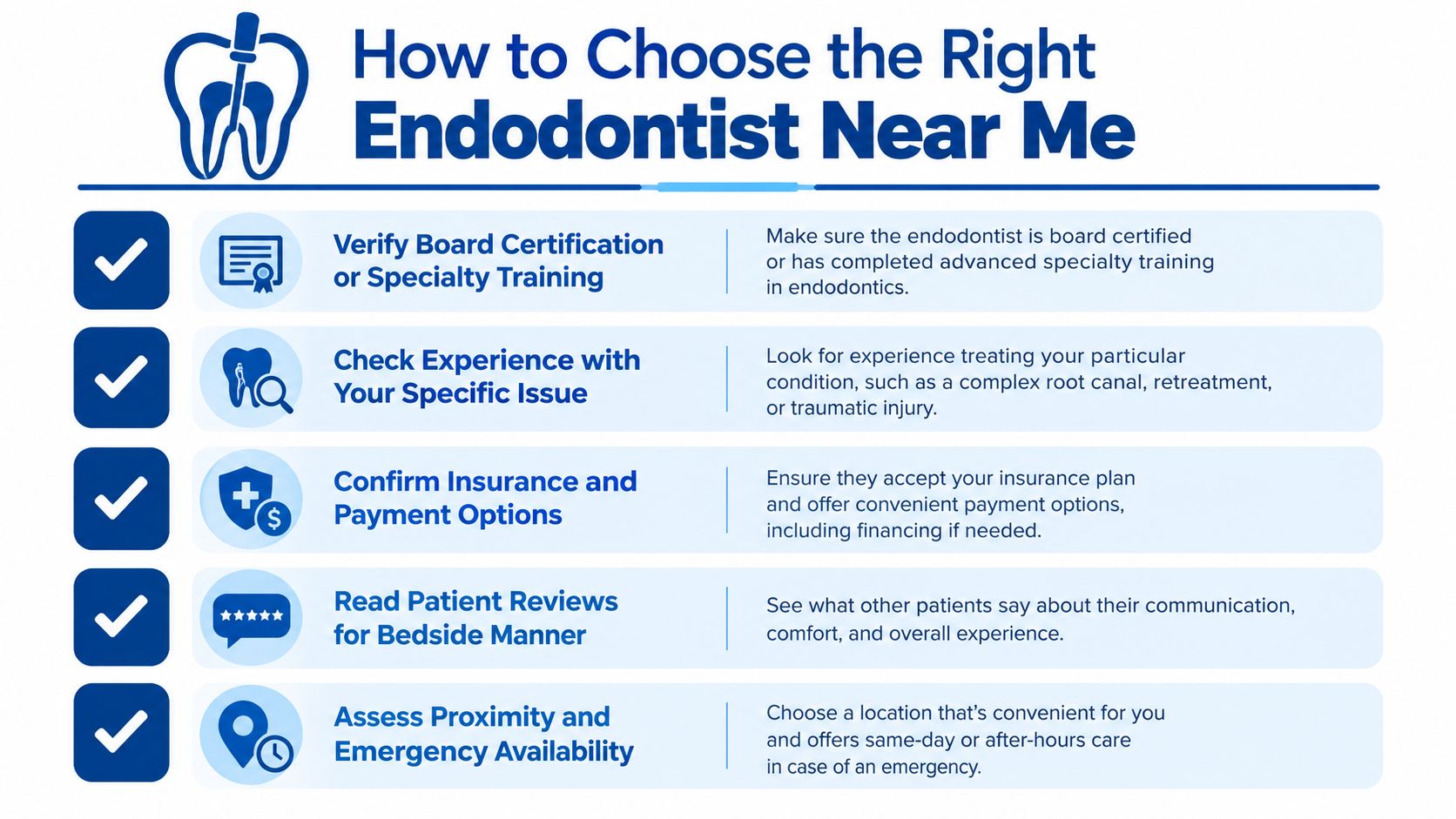
A useful shortlist starts with the reason for the appointment. Someone with sudden pain and swelling needs a practice that can triage promptly. Someone with a failed root canal needs experience with retreatment and a clear plan for understanding why the first procedure didn't heal.
Start with clinical fit
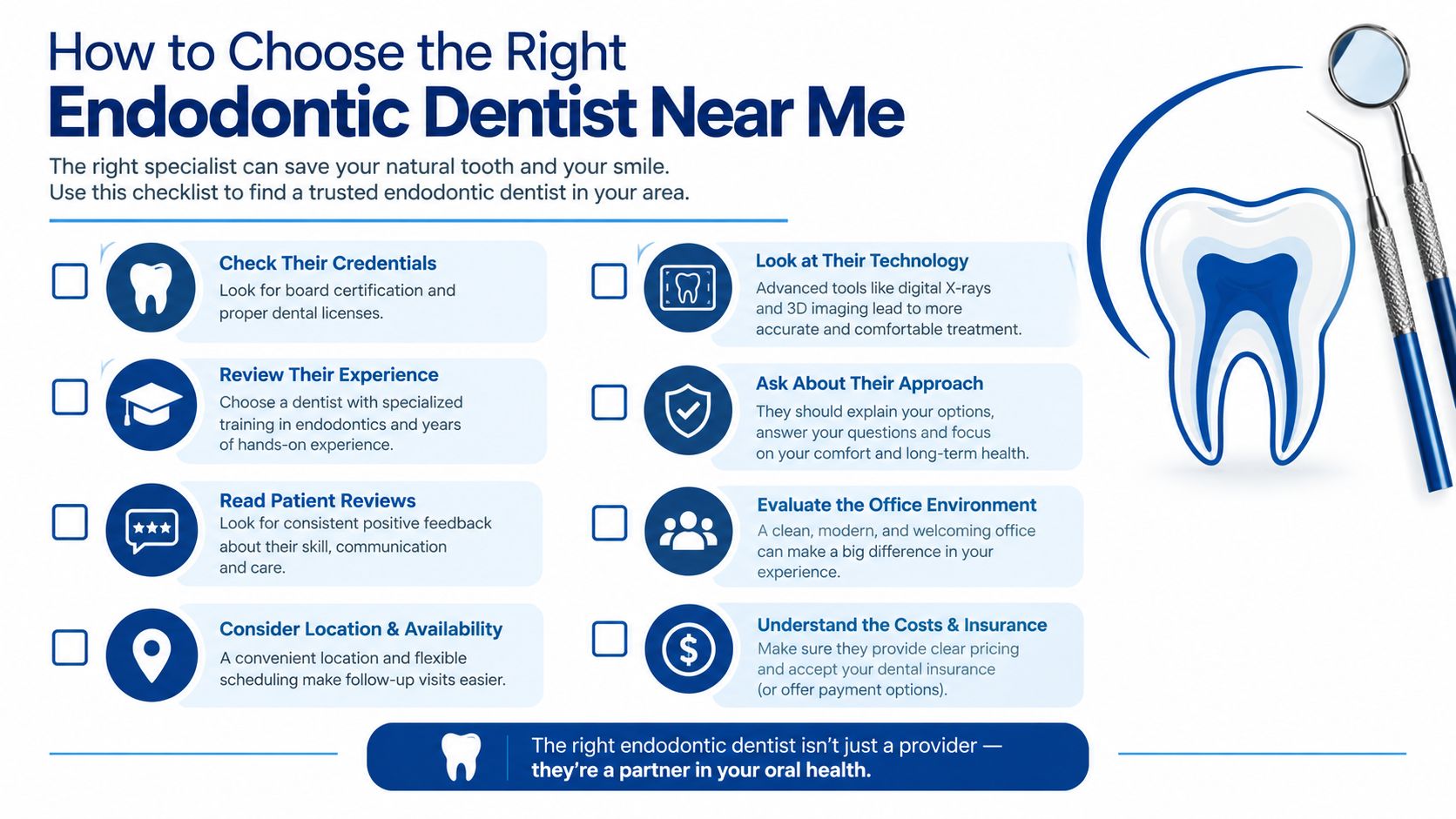
Look for specialty training in endodontics, experience with the specific tooth and procedure, and access to magnification. Ask whether the office evaluates cracked teeth, retreatments, apical surgery, traumatic injuries, and difficult canal anatomy. A clinic that mainly handles uncomplicated primary treatment may not be the right match for a molar with a previous root canal and persistent symptoms.
Technology should support judgment rather than replace it. Microscopes, digital radiography, and limited-field three-dimensional imaging can help the clinician see anatomy, but the important issue is whether those tools change the diagnosis or treatment plan.
Confirm the practical details before traveling
Call before booking and ask:
- Urgent access: Can the office provide same-day triage for severe pain or swelling?
- Insurance participation: Will staff verify benefits and explain whether the endodontic visit is covered?
- Referral requirements: Does the practice need a general dentist's referral, or can a patient request an evaluation directly?
- Treatment scope: Are retreatment, microsurgical endodontics, and cracked-tooth evaluations available?
- Restorative coordination: Who will place the permanent crown or other restoration after root canal treatment?
- Financial clarity: Will the expected fee, alternatives, and likely number of visits be discussed before treatment begins?
Insurance participation can be a genuine barrier rather than a minor administrative inconvenience. Research on pediatric endodontic referrals found that 33% of pediatric dentists reported referral problems related to insurance participation, and 82% reported that families cited time or money as barriers (study of pediatric endodontic referral barriers). Adults can face similar coordination problems, particularly when pain makes repeated calls and transfers difficult.
Use local search as a starting point, not a clinical verdict
A Google Maps listing can reveal location, hours, directions, reviews, and whether a practice appears responsive. It can't determine whether a particular endodontist is appropriate for a calcified canal or a failed restoration. Practices and marketing teams interested in how local visibility works can review this guide to SEO for dentist Google Maps, while patients should still verify credentials and treatment details directly with the office.
Reviews are most useful when they describe communication, explanations, appointment access, and follow-up. They shouldn't replace a clinical consultation.
Matching Your Case to the Right Level of Specialist Care
Distance matters, but it should not decide the referral by itself. A nearby general dentist with relevant endodontic experience may handle a straightforward case well. A specialist farther away may be the better choice when unusual anatomy, previous treatment, or access barriers could create delays.
| Case Type | Typical Features | Recommended Provider |
|---|---|---|
| Simple | Clear diagnosis, relatively straightforward anatomy, and no significant swelling | General dentist with relevant endodontic experience, or an endodontist if preferred |
| Urgent | Active infection, facial swelling, dental trauma, or irreversible pulp inflammation causing severe spontaneous pain | Provider offering prompt emergency triage, endodontic capability, and appropriate referral support |
| Complex | Calcified canals, sharply curved or dilacerated roots, retreatment, perforation, previous root canal failure, or difficult imaging findings | Endodontist with advanced equipment, magnification, three-dimensional imaging when indicated, and microsurgical training |
For primary treatment, a systematic review of endodontic treatment techniques found similar results across the filling techniques studied, with success of about 87.1% at six months and 87.2% at twelve months. That supports a practical decision: the filling brand or technique should not dominate your choice. Diagnosis, disinfection, anatomy, the final restoration, and follow-up deserve greater attention.
The same review reported lower retreatment outcomes, 77.0% at twelve months and 73.7% beyond three years. It also found poorer performance when preoperative radiolucency was present, 56.3% compared with 86.8% without radiolucency. These figures describe groups, not an individual prognosis. They do show why a tooth that has already been treated, or one with concerning imaging, deserves careful assessment before another procedure is planned.
Ask about appointment availability, insurance coordination, and whether the office can manage the expected complexity. A referral makes particular sense when the tooth was treated before, imaging suggests unusual anatomy, or symptoms continue after initial therapy.
What Your First Endodontic Visit Looks Like in Our Manhattan Office
A first visit at the Upper East Side office should begin with diagnosis, not with a drill. The clinician reviews the pain history, previous dental treatment, medications, relevant medical conditions, and the event that brought the patient to the office.
Diagnosis before treatment
The examination may include gentle percussion, palpation of the surrounding tissues, bite testing, and thermal testing. These findings help distinguish pulpal inflammation from a crack, periodontal problem, referred pain, or an issue involving a neighboring tooth.
Dental radiographs are reviewed with the clinical findings. Limited-field CBCT imaging is used only when it can change the diagnosis or treatment plan, consistent with the ALARA principle, which means keeping radiation exposure as low as reasonably achievable.
A sound consultation answers two questions before treatment begins: Which tooth is responsible, and can the tooth be restored after endodontic care?
The clinician uses the actual images to explain the problem. Patients may see evidence of inflamed or infected pulp, changes around the root tip, a missed canal, or another finding that affects the prognosis. Plain language matters, especially when pain and anxiety make technical explanations difficult to absorb.
Consent and the treatment plan
Before an instrument touches the tooth, the discussion should cover the expected prognosis, alternatives, anticipated number of visits, and expected costs. Alternatives may include monitoring in limited situations, root canal treatment, tooth extraction, or extraction followed by a dental implant and implant-supported restoration.
Treatment begins with local anesthesia and careful isolation using a rubber dam. The access opening is prepared under magnification so the clinician can locate the canals while protecting the remaining tooth structure. When the anatomy permits, same-day treatment may be completed. If the infection, drainage, anatomy, or patient comfort makes staged care more appropriate, medication can be placed inside the tooth and a temporary seal provided, followed by a visit within one to two weeks.
The final restoration remains important. A root-filled tooth may need a crown or another protective restoration, and a prosthodontist, restorative dentist, or in-house laboratory team may coordinate that stage. Prosth & Co. is a Manhattan multi-specialty practice that provides endodontic, restorative, prosthodontic, implant, cosmetic, pediatric, and surgical services, allowing related treatment planning to remain coordinated within one practice.
Emergency Root Canal Situations and What to Do Today
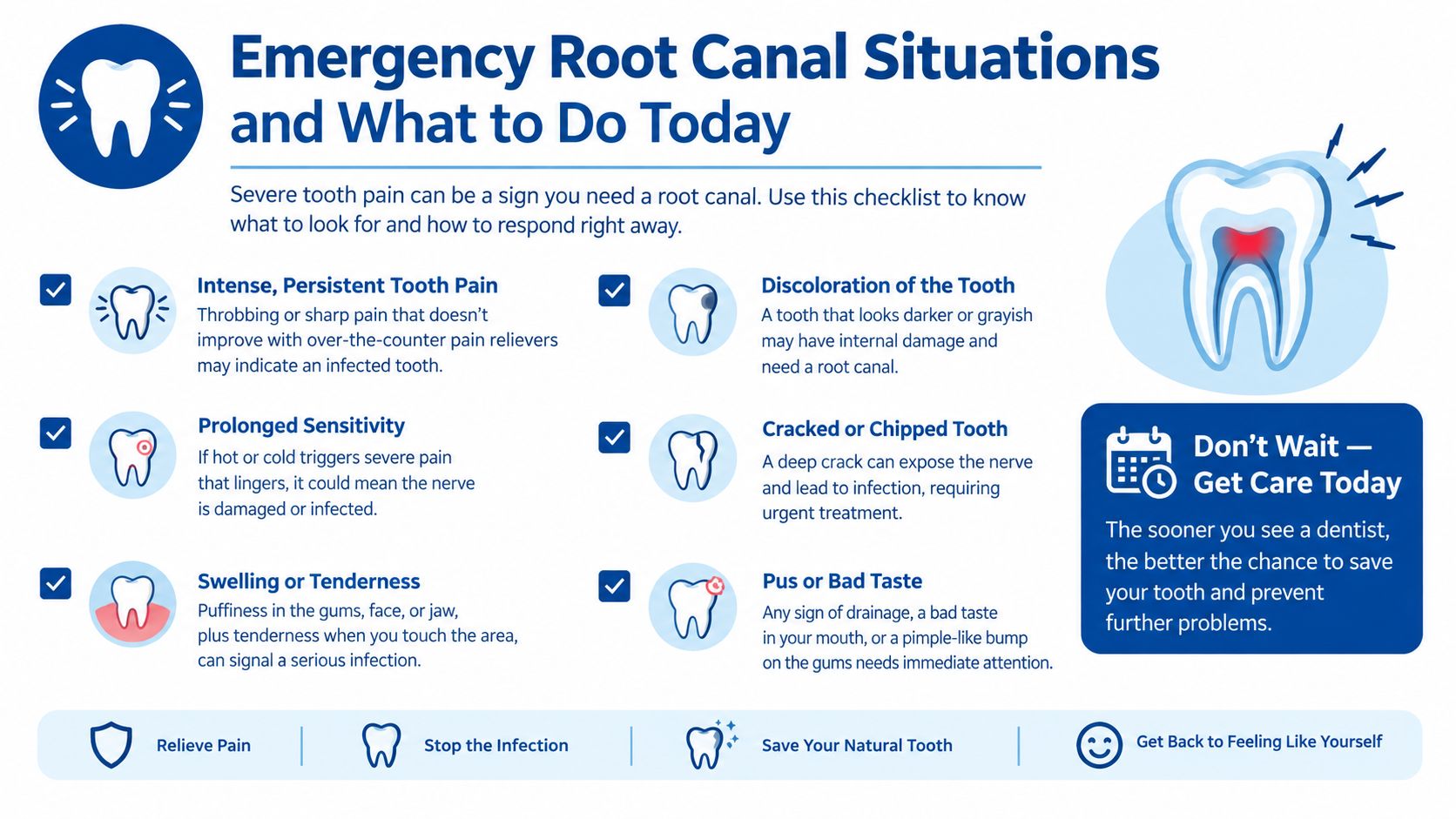
Severe tooth pain isn't always an emergency, but certain signs require immediate triage. Swelling that spreads toward the eye or neck, fever, difficulty swallowing, difficulty opening the mouth, or uncontrolled bleeding from the pulp chamber warrants urgent medical or dental evaluation. If breathing or swallowing is affected, emergency care may be necessary to protect the airway.
Severe spontaneous pain that prevents sleep, facial swelling, or a lost crown exposing a vital pulp should prompt a same-day call to an endodontic office. Pain medication may provide temporary relief, but it doesn't remove infected pulp or seal an exposed tooth. Patients shouldn't place aspirin directly on the gum, apply household chemicals, or postpone assessment because symptoms briefly improve.
Responding to dental trauma
A knocked-out permanent tooth needs especially fast attention. For the best prognosis, replantation should occur within 30 to 60 minutes. The tooth should be handled by the crown, not the root, and stored in Hank's Balanced Salt Solution, milk, or saliva if immediate replantation isn't possible. The root shouldn't be scrubbed.
Patients with an avulsed tooth should contact an emergency dentist or endodontist while arranging urgent care. A child may need a pediatric dentist or kids dentist for age-appropriate assessment, while the endodontist evaluates the injured permanent tooth and its pulp.
Continuity for difficult emergencies
A multi-specialty practice can reduce handoffs after urgent pulp therapy. The endodontist manages the immediate internal tooth problem, while a restorative or prosthodontic colleague plans a crown, bridge, implant, or other definitive solution. If surgery, bone grafting, or a tooth extraction becomes necessary, oral surgery and periodontic support can be coordinated as part of the same overall plan.
Patients can review the emergency root canal care page for guidance on requesting urgent evaluation.
Key Takeaways and How to Take the Next Step
An endodontist treats problems inside the tooth, including primary root canal cases, retreatment, cracked teeth, traumatic injuries, and microsurgical problems. A general dentist may be well suited to a straightforward case, but a referral is sensible when symptoms persist, previous treatment has failed, or imaging suggests unusual anatomy.
A practical shortlist should include:
- Clinical qualifications: Look for specialty training and relevant experience with the diagnosed problem.
- Appropriate equipment: Ask about magnification and three-dimensional imaging when it may affect treatment planning.
- Transparent planning: Confirm that prognosis, alternatives, visit requirements, and expected costs are discussed before treatment.
- Access coordination: Verify insurance participation, referral requirements, and urgent appointment options.
- Restorative continuity: Ask who will protect the tooth after root canal treatment or plan an implant if extraction is required.
A consultation doesn't commit a patient to treatment. It gives the clinician an opportunity to identify the source of pain, explain the images, compare tooth-saving and replacement options, and create a realistic sequence of care.
For Manhattan residents, Prosth & Co.’s Upper East Side office offers weekday appointments, urgent care availability, on-site specialists, and insurance coordination. Patients in acute pain should request emergency triage on the same day they call rather than waiting for a routine cleaning or new patient exam.
Patients searching for an endodontic dentist near me can visit Prosth & Co. for endodontic evaluation, root canal treatment, retreatment, and coordinated restorative planning on Manhattan's Upper East Side. The practice can also connect related needs, including tooth extraction, dental implants, cosmetic dentistry, prosthodontic care, and pediatric dental services, within one treatment plan.

Founder and lead prosthodontist of Prosth & Co. on Manhattan's Upper East Side. DDS, Columbia University; Prosthodontics certificate and MMSc in Oral Biology, Harvard School of Dental Medicine; Implantology fellowship, Columbia University.
Meet Victoria →