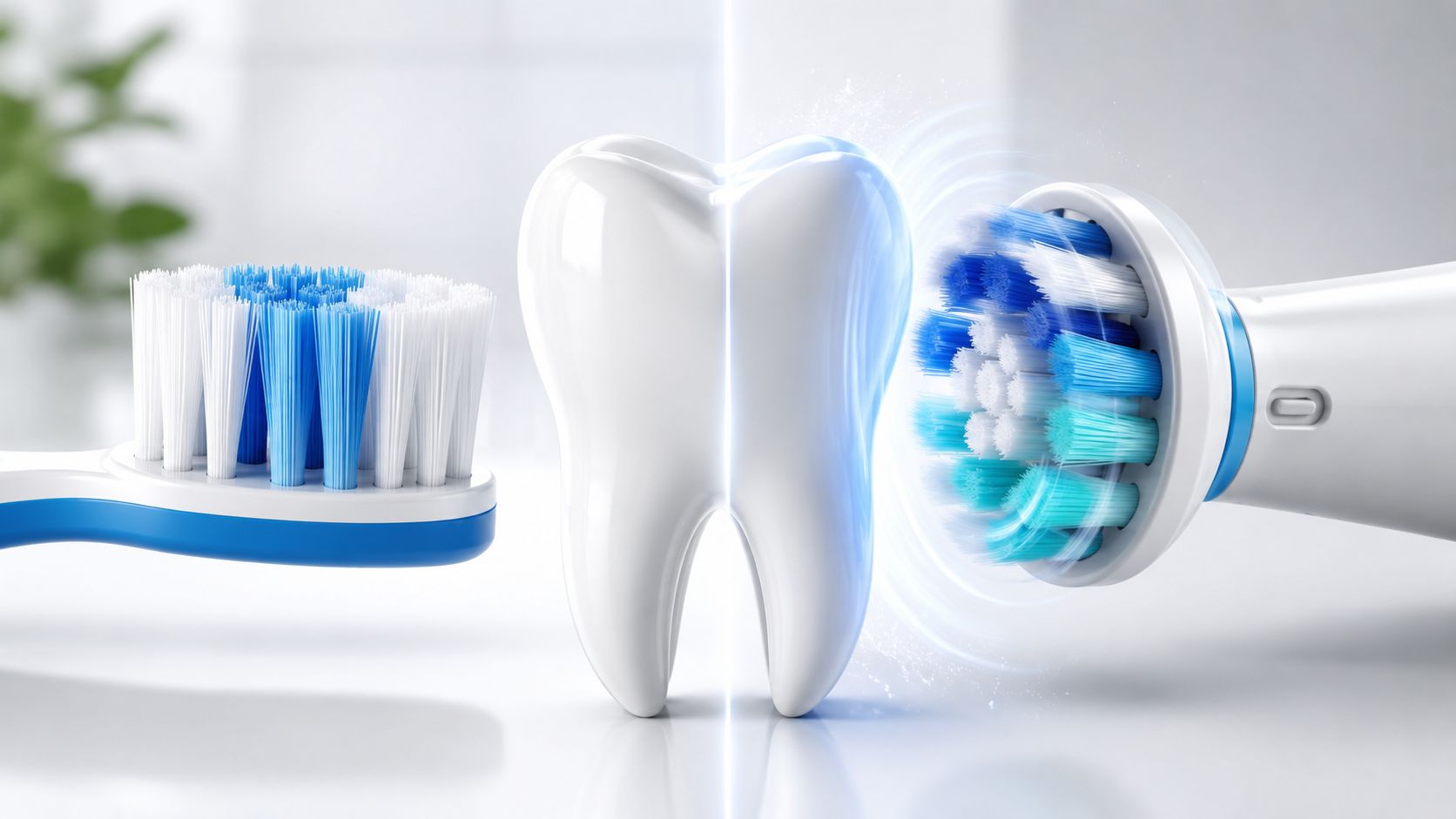
Electric toothbrushes do tend to clean better than manual brushes. The strongest evidence shows up to 21% less plaque and 11% less gingivitis after three months with powered brushing, but that's only part of the answer because technique, brushing time, and the condition of your teeth and gums still matter.
A lot of patients on the Upper East Side ask this question while standing in the oral care aisle, looking at rows of brushes that all promise a better clean. For adults with healthy teeth, the choice can feel annoying. For adults with crowns, bridges, veneers, or dental implants, it can feel more important because daily brushing isn't just about freshness. It's about protecting dental work, keeping the gumline calm, and avoiding the plaque buildup that starts small and becomes a bigger restorative problem later.
That's where a practical answer helps. A powered brush can give many people an edge, especially if they brush too fast, press too hard, or miss the back teeth. But “better” doesn't mean every electric brush is right for every mouth, and it doesn't mean a manual brush can't work well in skilled hands.
At a prosthodontic practice on Manhattan's Upper East Side, this question comes up often because restorations change the brushing conversation. A patient with a single crown has different needs than someone with implant crowns, a bridge, worn enamel, gum recession, or full-mouth rehabilitation. The goal isn't to buy the flashiest toothbrush. The goal is to keep the teeth, gums, and restorations clean consistently and gently.
Table of Contents
- Your Dentist on the Upper East Side Answers Your Top Question
- The Clinical Evidence on Electric vs Manual Toothbrushes
- How Electric Toothbrushes Improve Your Brushing Technique
- A Prosthodontist's Guide to Choosing an Electric Brush
- Why Electric is Better for Dental Implants Crowns and Veneers
- Schedule Your Dental Cleaning and Exam in Manhattan
Your Dentist on the Upper East Side Answers Your Top Question
If someone searches does an electric toothbrush clean better, the short clinical answer is yes, for many people. The more useful answer is that it depends on how that person brushes now, how much plaque tends to collect around the gumline, and whether there's restorative work that needs careful daily maintenance.
On the Upper East Side, many adults are balancing fast mornings, late workdays, coffee, takeout, and stress. That usually means brushing becomes rushed. Even patients who care about their teeth often miss the inside surfaces of lower front teeth, the very back molars, or the area where a crown meets the gumline. That's where a powered brush can help by making good brushing more repeatable.
Here's the practical difference between the two choices most patients are really making:
| Question | Manual Toothbrush | Electric Toothbrush |
|---|---|---|
| How much does technique matter | A lot | Still important, but the brush helps |
| Easy to brush for a full session | Not always | Usually easier with a timer |
| Risk of brushing too hard | Higher if pressure isn't controlled | Often lower when a pressure sensor is present |
| Useful around crowns or implants | Can work well with careful technique | Often easier for consistent cleaning |
| Best for every patient | No | No |
What patients usually get wrong
Most toothbrush decisions are framed as power versus simplicity. That's too basic. The critical issues are consistency, access, and pressure.
A manual brush can clean well if someone uses soft bristles, reaches every surface, and brushes gently for the full recommended time. Many people don't do all three every day. An electric brush doesn't replace judgment, but it can reduce common errors.
Practical rule: The best toothbrush is the one that helps a patient clean thoroughly, every day, without scrubbing the gums or skipping difficult areas.
For patients looking for a dentist near me or a dentist in New York, NY, this matters because toothbrush choice is part of preventive care. It also affects the longevity of cosmetic dentistry and restorative dentistry. A rushed routine can contribute to irritation around veneers, staining at margins, or plaque retention around implant restorations.
Why this question matters more in prosthodontic care
Patients who have invested in crowns, bridges, implant crowns, or full-mouth rehabilitation need a brush that supports precision. Restorations don't decay the way natural enamel does, but the surrounding tooth structure and gums still need protection. Plaque at the margins can still lead to inflammation, odor, discomfort, and more complex treatment needs.
That's why this isn't just a product question. It's a maintenance question. And for many adults, powered brushing is the more forgiving system.
The Clinical Evidence on Electric vs Manual Toothbrushes
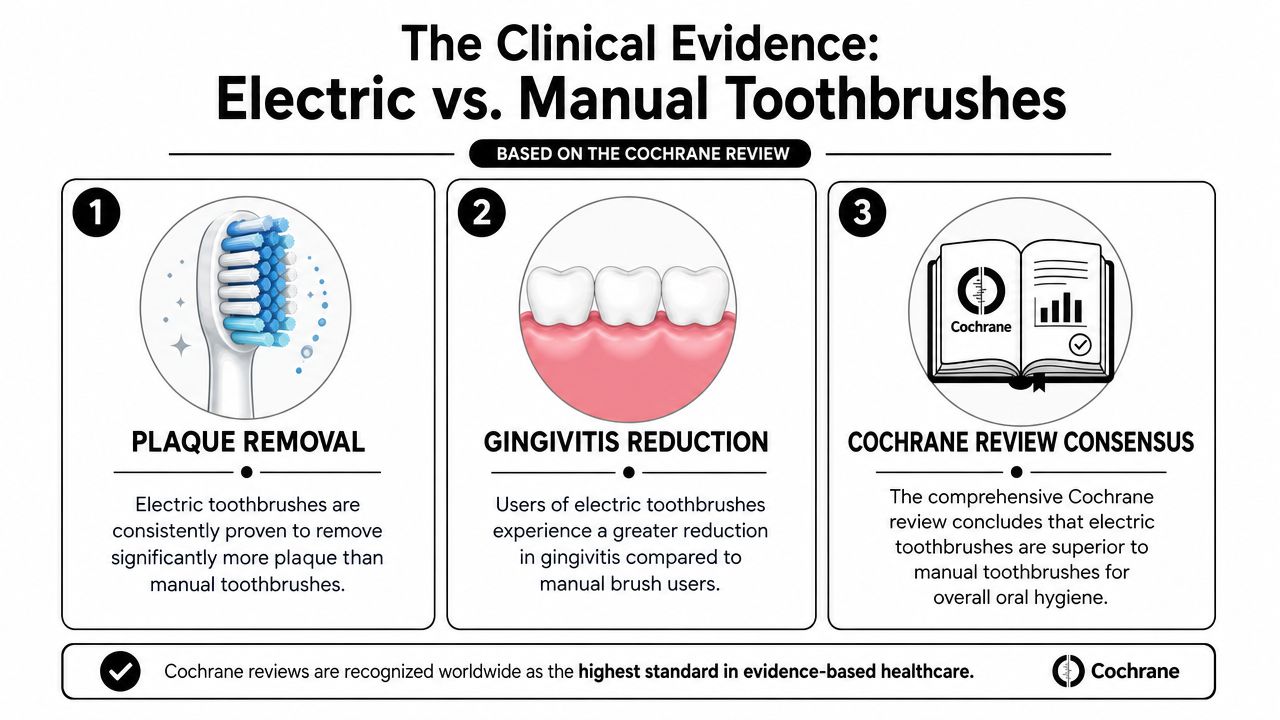
The strongest foundational evidence comes from a major Cochrane review. It found that powered toothbrushes reduced plaque by 11% after 1 to 3 months and by 21% after 3 months, compared with manual toothbrushes. The same review found 6% and 11% reductions in gingivitis over those timeframes. It included 40 trials (n = 2,871) for short-term plaque outcomes and 44 trials (n = 3,345) for short-term gingivitis outcomes, and the evidence for plaque and gingivitis was rated moderate quality. The review also noted that the clinical importance of the difference remains unclear. Those findings appear in the Cochrane review on powered toothbrushes compared with manual toothbrushes.
What those numbers mean in plain English
Plaque is the sticky bacterial film that collects on teeth, restorations, and along the gumline. Gingivitis is early gum inflammation. Less plaque usually means a cleaner gum margin. Less gingivitis usually means fewer puffy, irritated, or bleeding gums.
That doesn't mean an electric toothbrush is a magic fix. It means that, across many studies, powered brushing gave users a measurable advantage. For a patient with healthy teeth, that may mean easier daily maintenance. For a patient with restorative work, it can mean cleaner margins and more dependable home care.
A better brush doesn't erase a rushed routine. It helps more patients perform a good routine more consistently.
What the evidence does and does not say
The data support a modest but measurable cleaning advantage for powered brushes. That is different from saying every electric brush transforms oral health overnight. The review itself was careful. The difference was real, but the clinical importance wasn't always clear for every user.
That nuance matters. Some patients with excellent manual technique do very well with a traditional brush. Others see a clear improvement when the brush does more of the motion for them. A patient with arthritis, posterior crowns, bridgework, or a history of missing the gumline often falls into that second group.
For patients who want a product-focused overview after understanding the evidence, the Oral B Pro Health toothbrush guide is a useful consumer resource for reviewing common powered brush features and formats.
How Electric Toothbrushes Improve Your Brushing Technique
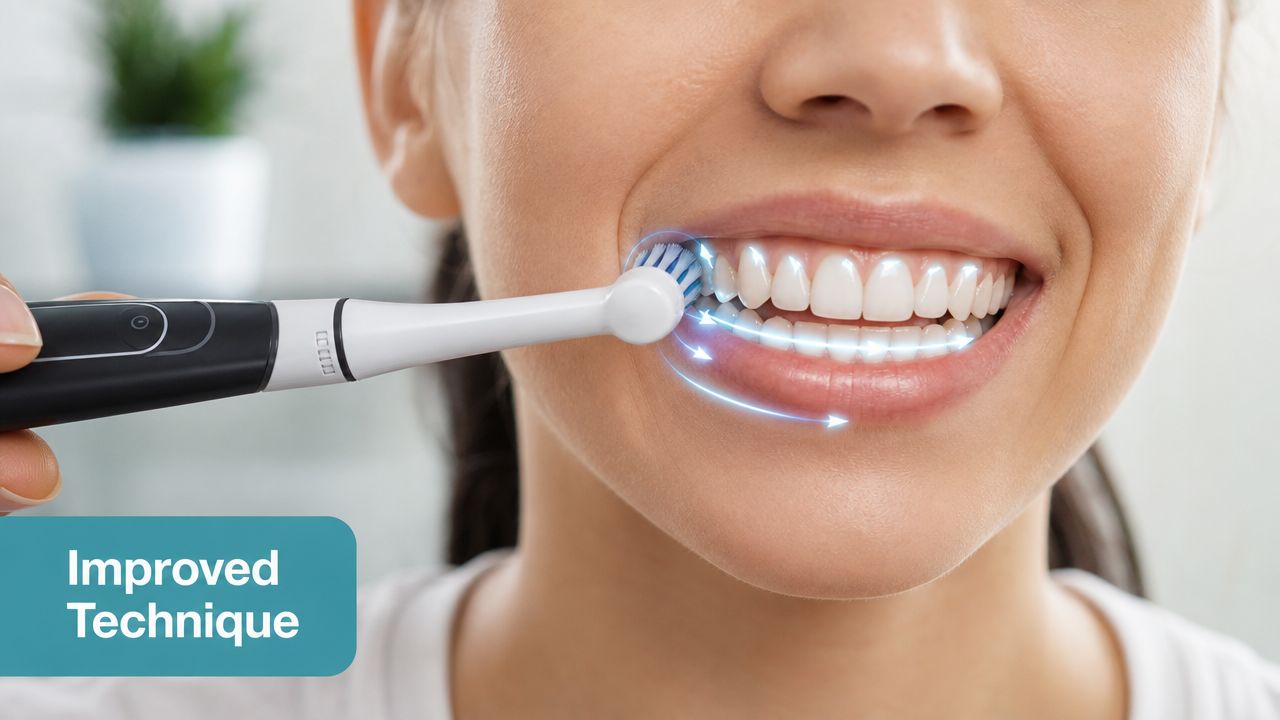
The biggest real-world advantage of an electric toothbrush may not be raw power. It may be that it makes better habits easier to repeat. A University of Iowa summary of ADA-linked research explains that proper technique and brushing for the full recommended time remain decisive, and that powered brushes may help because they make better technique easier to achieve. That point is discussed in the University of Iowa overview of electric vs manual toothbrushes.
Why technique changes everything
Individuals don't usually fail because they own the wrong brush. They fail because daily brushing gets shortened, uneven, or too aggressive.
A common pattern looks like this:
- Too little time means the front teeth get attention and the molars get a quick pass.
- Too much pressure means the person feels productive while irritating the gumline.
- Inconsistent motion means some surfaces are polished while others are barely touched.
With a manual toothbrush, the user has to create all of the movement and pacing. With a powered brush, the head supplies the motion, so the user can focus more on positioning.
The features that actually help
The most useful electric toothbrush features are usually simple.
- Built-in timer: This helps patients stay with the routine long enough to cover all four quadrants instead of stopping early.
- Pressure sensor: This matters for people who scrub hard, especially those with gum recession, tenderness, veneers, or exposed root surfaces.
- Consistent brush-head movement: The repetitive motion helps clean more evenly, especially for people whose manual strokes are rushed or irregular.
For many adults, those features correct the exact problems that lead to disappointing brushing.
A short visual explanation can help if someone isn't sure how to position the brush:
Keep the brush moving tooth by tooth along the gumline. Don't scrub. Let the head do the work.
That advice is especially relevant for adults who have had cosmetic dentistry, restorative dentistry, or recurring gum irritation. They often don't need “more force.” They need cleaner technique.
A Prosthodontist's Guide to Choosing an Electric Brush
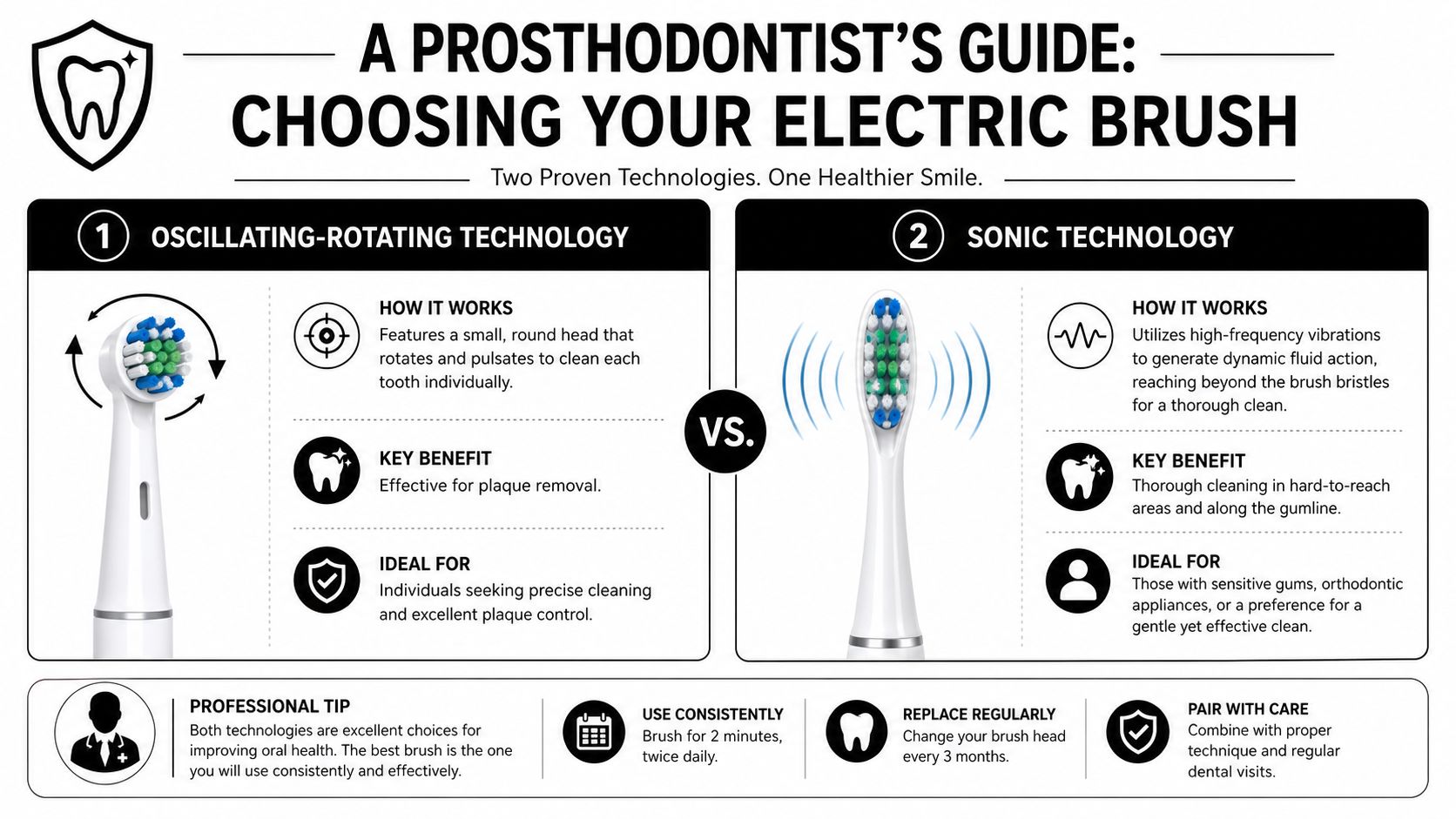
Not all electric toothbrushes work the same way, and patients often get lost in marketing language that doesn't affect day-to-day results. The more useful comparison is between oscillating-rotating brushes and sonic brushes.
A 2024 systematic review found that oscillating-rotating electric toothbrushes removed more interproximal plaque than sonic toothbrushes, with the largest pooled difference at 8 weeks. The reported mean difference was 0.09 on the Rustogi Modified Naval Plaque Index in favor of oscillating-rotating brushes at that point, while the advantage was smaller or not statistically significant at longer follow-up such as 6 months. At the same time, broader review coverage has concluded that there isn't a single mode of action that should be preferred overall for every patient. That balance is reflected in the 2024 review on oscillating-rotating versus sonic toothbrushes.
What the brush technologies mean in real life
Patients usually notice the difference in feel before they notice the difference in plaque control.
| Feature | Oscillating-Rotating | Sonic |
|---|---|---|
| Brush head shape | Usually smaller and rounder | Usually longer, more like a manual head |
| How it moves | Rotates or oscillates around each tooth | Vibrates at high frequency |
| Best fit for some patients | Helpful for targeted tooth-by-tooth cleaning | Helpful for patients who prefer a familiar head shape |
| Overall winner for everyone | No | No |
A smaller round head can be helpful around crowded teeth, back molars, and detailed restorative margins. A sonic-style head can feel more familiar to people moving from a manual toothbrush. Comfort matters because a brush that feels awkward often gets used poorly.
Which features are worth paying for
Patients don't need every premium add-on. They do need features that improve brushing behavior.
What tends to matter most:
- Pressure control for people who scrub.
- A timer for people who rush.
- Head availability so replacement heads are easy to keep using.
- Comfort in the hand for adults with dexterity challenges.
What often matters less:
- App-based extras if the patient already brushes reliably.
- Complex tracking tools that become easy to ignore.
- Multiple cleaning modes that don't change daily habits.
For patients who want a simple how-to after choosing a powered brush, Mouthology oral care advice offers a practical overview of proper use.
The right electric brush isn't the one with the longest feature list. It's the one a patient will use correctly, twice a day, without overbrushing.
Why Electric is Better for Dental Implants Crowns and Veneers
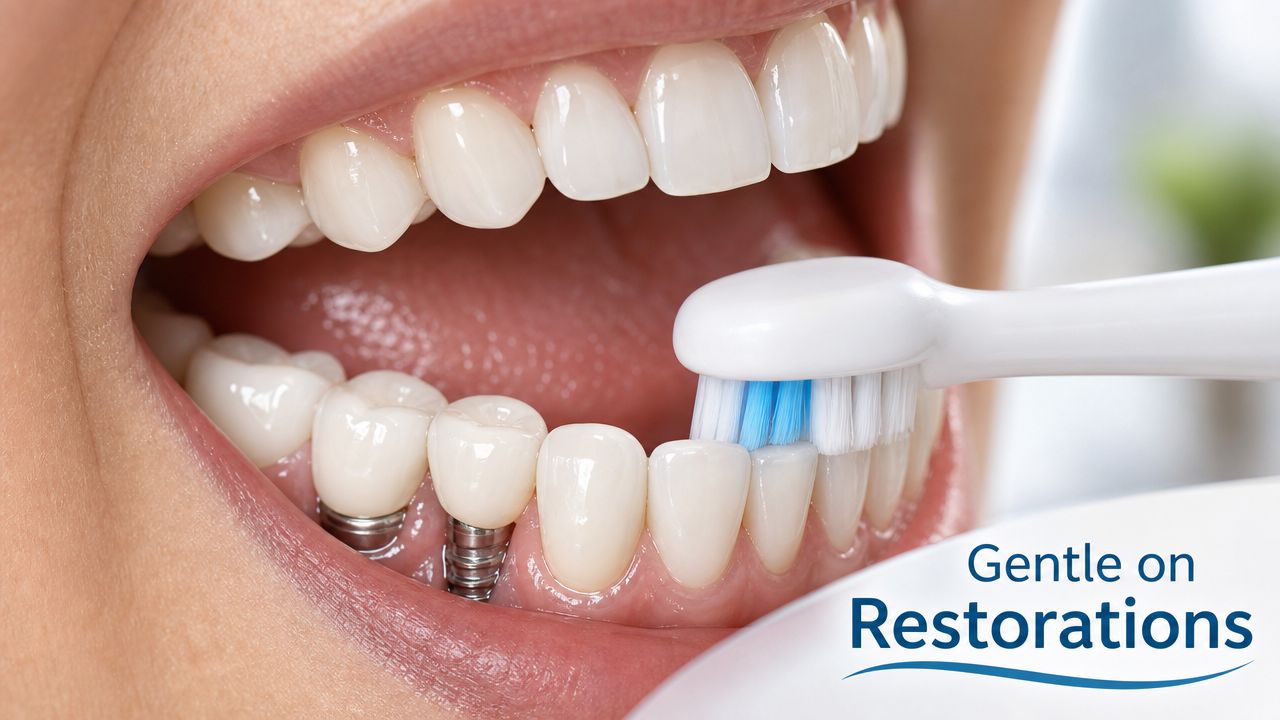
For patients with restorative work, toothbrush choice becomes more than a convenience issue. It becomes part of long-term maintenance. The area where a crown meets the tooth, where a veneer meets the enamel, or where an implant crown meets the gumline can collect plaque in ways patients don't always notice.
Why restorative margins need extra attention
Restorations create edges, contours, and contact points that need careful cleaning. A bridge has connectors. An implant crown has a tissue interface. A full-mouth rehabilitation often includes multiple surfaces that trap plaque if brushing is quick or uneven.
That's why powered brushing is often a better fit in prosthodontic care. A review on powered toothbrushes and oral hygiene approaches notes that usability features such as timers and pressure sensors are especially important for people with dexterity limits or complex restorative work who need thorough cleaning without causing gum trauma around crowns or implants. That point appears in the review of powered brush designs and oral hygiene considerations.
Patients who want to understand how implant-supported restorations are maintained can also review information on implant crowns.
Who benefits most from powered brushing
A powered brush is often especially helpful for patients who:
- Have one or more implant crowns and want to keep the surrounding gums clean and calm.
- Wear multiple crowns or bridges and need more consistent plaque removal at the margins.
- Have veneers or cosmetic dentistry and want a gentle routine that avoids aggressive scrubbing.
- Live with limited dexterity from arthritis, hand fatigue, or injury.
- Have had extensive restorative dentistry and need a repeatable system, not a technique-dependent one.
This doesn't mean a manual toothbrush can't be used safely around restorations. It can. But it usually asks more from the patient every single day. A powered brush lowers that burden.
For adults searching dental implants near me, cosmetic dentist near me, or a restorative dentist in New York, this is one of the most overlooked parts of treatment planning. Protecting the work matters as much as placing it.
Schedule Your Dental Cleaning and Exam in Manhattan
Even the right toothbrush doesn't replace professional care. Plaque that isn't removed can harden, and once that happens, home brushing won't solve it. That's why daily brushing and regular preventive visits work together.
At a Manhattan dental office, a cleaning and exam should do more than polish the teeth. It should identify where plaque is collecting, whether the gums are inflamed, whether restorations are being cleaned effectively, and whether bite forces or grinding are affecting crowns, veneers, or implants. Patients who come in asking about toothbrushes often leave with more useful answers about technique, home tools, and areas they've been missing.
What patients can expect at a visit
A thorough visit on the Upper East Side may include:
- A close review of existing dental work such as crowns, bridges, veneers, and implant restorations.
- Cleaning and exams to remove buildup that brushing can't handle at home.
- Dental x-rays or other imaging when needed to evaluate areas that aren't visible clinically.
- New patient exams that look at gum health, bite function, and long-term restorative needs.
- Guidance on preventive and restorative options if there are signs of wear, leakage, inflammation, or damage.
Patients looking for routine preventive care can learn more about teeth cleanings.
When to book an exam instead of changing products
A new toothbrush won't fix every problem. It's smarter to schedule an appointment if there's:
- Bleeding that keeps coming back
- Bad breath that doesn't improve
- Sensitivity near a crown or bridge
- Tenderness around an implant
- A chipped tooth, loose restoration, or possible emergency dentist concern
At that point, the issue may involve gum inflammation, a restoration margin, grinding, or a bite problem. Some patients need preventive care. Others may need restorative dentistry, cosmetic dentistry, a tooth extraction evaluation, or treatment planning for worn or missing teeth.
For busy adults on the Upper East Side, the best next step is often simple. Get the brushing routine right at home, then have it checked professionally so small issues don't turn into bigger ones.
If you're looking for a dentist near me on the Upper East Side, Prosth & Co. provides preventive, restorative, implant, and cosmetic dental care at 47 E 77th St, Suite 207, New York, NY 10075. Patients who want help choosing the right toothbrush, protecting crowns or implants, or scheduling a cleaning and exam in Manhattan can reach out to arrange a visit with Dr. Victoria Park and the team.

Founder and lead prosthodontist of Prosth & Co. on Manhattan's Upper East Side. DDS, Columbia University; Prosthodontics certificate and MMSc in Oral Biology, Harvard School of Dental Medicine; Implantology fellowship, Columbia University.
Meet Victoria →