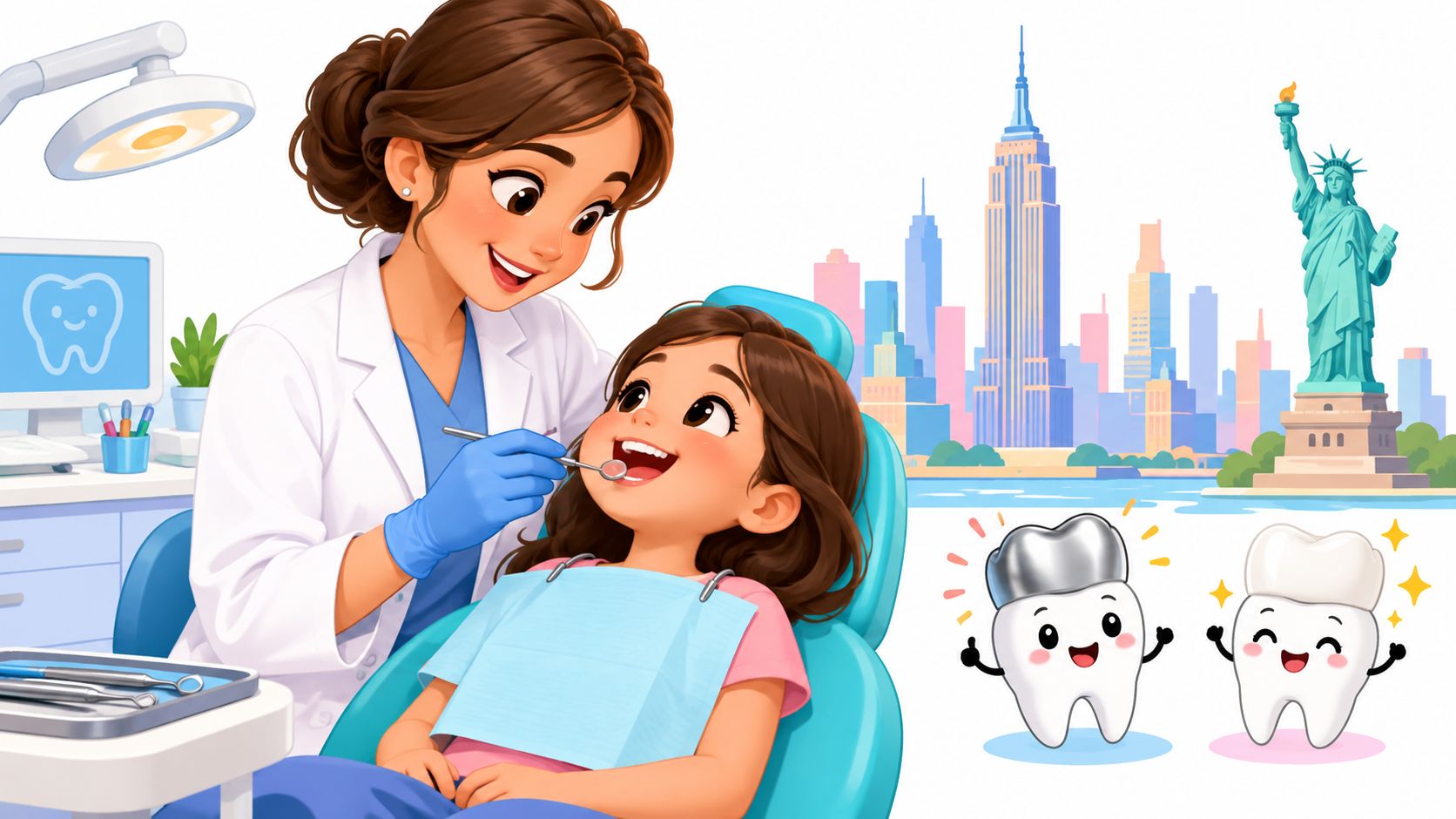
A child's first dental exam should happen when the first tooth erupts, or by age one, whichever comes first. The American Academy of Pediatric Dentistry also says those exams should repeat every 6 months, or sooner based on the child's risk for disease.
For many Manhattan parents, that timing lands right in the middle of real life, between daycare drop-off, work calls, and a toddler who just got one small tooth and a very big schedule. A calm first visit now can prevent a much harder visit later, especially in a city where preventive access matters and childhood cavities are still common among children.
Table of Contents
- When to Start Pediatric Dental Care in NYC
- What to Expect at a First Pediatric Dental Visit
- Understanding Children's Crowns and Preventive Options
- Pediatric Sedation and Emergency Care Options
- Navigating Insurance, Costs, and NYC Dental Access
- Why Prosth & Co. Can Be a Strong Pediatric Choice on the Upper East Side
- Next Steps for Parents Seeking a Pediatric Dentist in NYC
When to Start Pediatric Dental Care in NYC
A parent on the Upper East Side often notices the first tooth during a week that already feels full. That is usually the moment the question comes up, wait and see, or call a Pediatric Dentist NYC office now. The clear answer is to book the first dental exam when the first tooth appears, or by 12 months of age at the latest.
That first visit is more than a formality. It starts a dental home, an ongoing relationship with a primary dental care provider that the American Academy of Pediatric Dentistry and the American Dental Association support, with care beginning by age one AAPD dental home guidance.
Why timing matters in a city like New York
New York City's oral-health report shows why early care matters. Among children ages 2 to 13, 32% had experienced dental caries in 2019, and among children ages 2 to 12, caries prevalence rose from 25% in 2015 to 31% in 2019 NYC oral health report. Even with better preventive use, tooth decay remained common.
The same report also found that almost 9 in 10 children ages 2 to 12 had a preventive dental visit in 2019, up from 77% in 2009, and sealant applications among children ages 6 to 12 increased from 35% in 2009 to 42% in 2019. That is encouraging, but it does not replace early, steady care.
Early visits work best before pain starts. A child who sees the dentist when the first tooth comes in usually has an easier path into brushing, exams, and prevention.
What parents should do this week
Book the first visit before symptoms show up. A new-patient appointment gives the dentist a chance to check eruption pattern, catch early decay, and show brushing in a way that fits the child's age.
The American Academy of Pediatric Dentistry recommends repeating exams every 6 months, or adjusting that schedule if the child has higher risk for disease AAPD parent FAQ. For busy NYC families, that rhythm creates structure, and it keeps care predictable before school, sports, and after-school routines take over.
What to Expect at a First Pediatric Dental Visit

A first visit should feel familiar, not rushed. The child is usually greeted first, then the dentist or hygienist asks a few simple questions about feeding, brushing, habits, and any pain or sensitivity. That history helps the team decide whether the appointment should stay light and preventive or move toward more detailed care.
For many families, the biggest surprise is how much of the visit is about trust. The dentist may show a mirror, count teeth slowly, and let the child get comfortable before doing anything else. That gentle pace matters more than speed.
The flow of the appointment
A typical first visit often includes:
- A brief conversation with the parent, so the dentist can learn about brushing, eating, thumb-sucking, or nighttime habits.
- A gentle oral exam, which checks teeth, gums, bite, and the way the teeth are coming in.
- Cleaning and prevention planning, when appropriate, with guidance on fluoride, sealants, or home care.
- A clear next-step plan, so the family knows when to return and what to watch for.
Some children need x-rays, and some don't. That depends on age, risk, and what the exam shows. A good children's dentist explains why a picture is useful instead of treating it as routine paperwork.
A calm first visit isn't about getting everything done in one day. It's about showing the child that dental care is safe, predictable, and not something to fear.
A resource that helps some families prepare
Parents of children who need repetition, visual reminders, or a structured schedule sometimes benefit from outside tools. For example, autism-friendly dental appointment reminders can help build a steadier routine before the visit and reduce last-minute stress.
The same idea applies after the appointment. Families leave with simple home instructions, not a pile of jargon. The goal is to make brushing, flossing, and follow-up feel manageable in real life, especially when school mornings and bedtime routines are already full.
Understanding Children's Crowns and Preventive Options
A child may come in for a small filling and still leave with a bigger decision on the table. If decay is wide, a tooth is cracked, or too much enamel is already gone, a filling may not hold up well. That is usually when parents start hearing about stainless steel crowns and zirconia crowns. The better choice depends on where the tooth sits, how much chewing force it takes, how visible it is, and how much healthy tooth is left.
Stainless steel and zirconia, side by side
| Option | Durability | Appearance | Typical Use Case |
|---|---|---|---|
| Stainless Steel Crown | Reliable for protecting back teeth and larger restorations | Metallic look | Often used when strength and efficiency matter most |
| Zirconia Crown | Strong restorative option with a tooth-colored look | More natural appearance | Often chosen when esthetics matter, especially in visible areas |
Stainless steel crowns are often the workhorse for back teeth with large decay or repeated breakdown. Zirconia crowns give a tooth-colored result and are often chosen when appearance matters more, especially on teeth that show when a child smiles. Both can work well. The right call comes from the tooth itself, the child's cooperation, and the long-term plan for that mouth.
Prevention should stay in the conversation, because the best crown is the one a child never needs. The American Academy of Pediatric Dentistry reports that sealants help prevent and stop occlusal carious lesions in children and adolescents, and its evidence review found that, compared with fluoride varnish, sealants may reduce occlusal caries incidence in permanent molars by 73% after 2 to 3 years AAPD sealant evidence review.
Parents managing nighttime routines while new molars erupt often juggle prevention with sleep. Guidance on sleep training with teething can help families keep brushing, comfort, and bedtime habits moving in the same direction.
Clinical takeaway: when new molars come in, early prevention is easier than fixing decay later. Once a cavity is visible, the tooth has usually already lost ground.
Families also ask why zirconia comes up so often now. A recent pediatric dentistry review notes that zirconia use is expected to keep growing as families and clinicians weigh appearance, durability, and fit for the child's needs Pediatric dentistry review. That does not mean every child needs zirconia. It means the option is discussed more often when esthetics and function both matter.
A simple way to sort it out is this. Stainless steel is usually the practical choice for strength and coverage. Zirconia is usually the tooth-colored choice when appearance matters. A careful pediatric dentist explains both without pressure and chooses the material for the tooth, not for a sales pitch.
For families comparing treatment details, the restorative overview at stainless zirconia crowns can help frame the discussion before the appointment.
Navigating Insurance & Costs in NYC
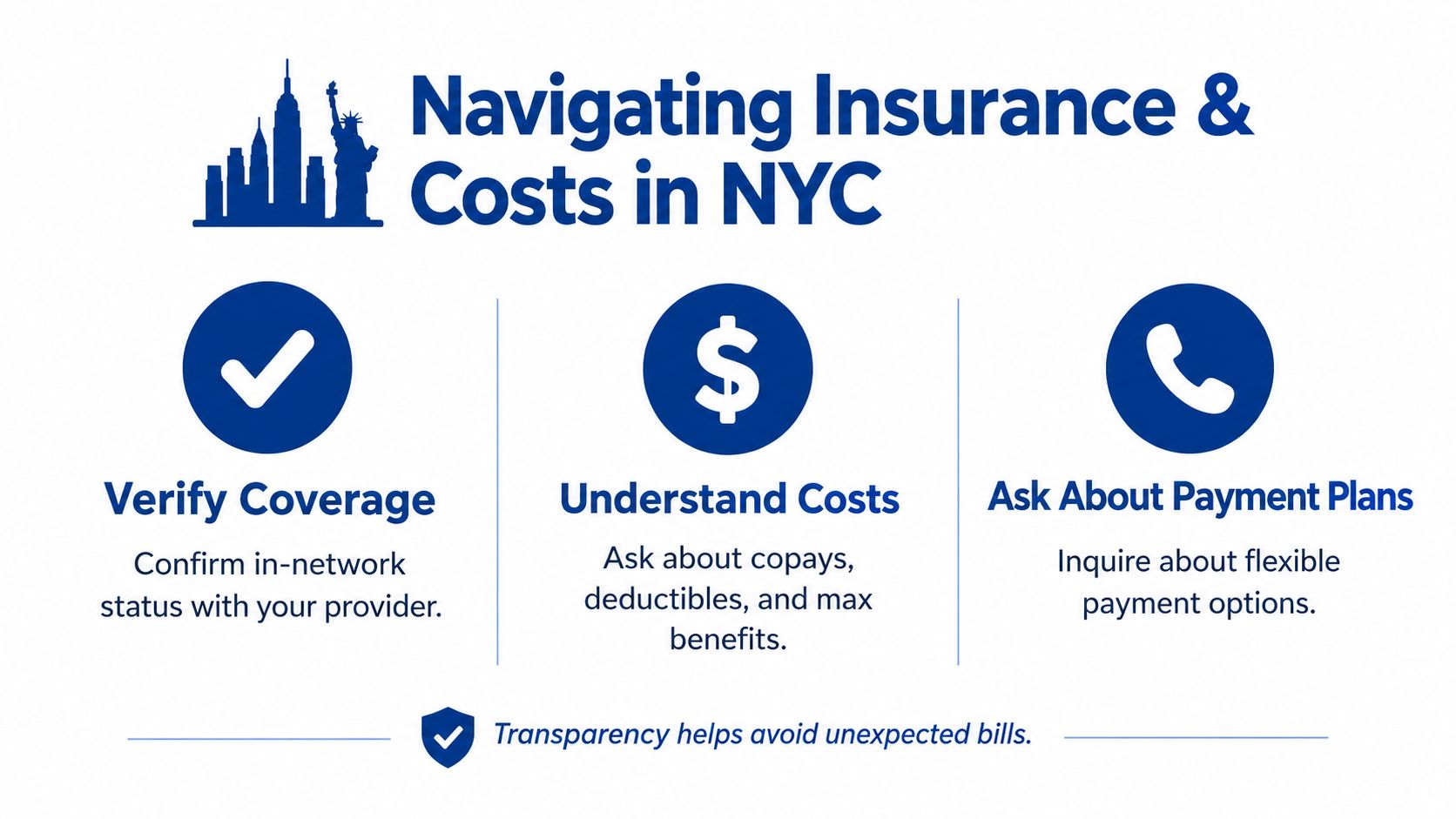
| Point | Icon | Label | Brief description |
|---|---|---|---|
| 1 | ✓ | Verify Coverage | Confirm in-network status with your provider |
| 2 | $ | Understand Costs | Ask about copays, deductibles, and max benefits |
| 3 | ☎ | Ask About Payment Plans | Inquire about flexible payment options |
Transparency helps avoid unexpected bills.
Pediatric Sedation and Emergency Care Options
Sedation in pediatric dentistry is really about safety, access, and completing care without pushing a child past their limits. In New York, Mount Sinai's pediatric dentistry service lists a stepwise spectrum that includes laughing gas, oral sedation, intravenous sedation, and general anesthesia Mount Sinai pediatric dentistry. That range matters because not every child needs the same level of support.
Nitrous oxide, often called laughing gas, is commonly used for anxiety reduction and minor procedures. Oral sedation can help a child who needs a little more help staying relaxed. IV sedation and general anesthesia are usually reserved for children who can't safely tolerate treatment another way, need extensive restorative work, or have special health care needs.
Matching the sedation level to the child
A child who only needs a cleaning and is nervous may do well with the lightest option. A child with several decayed teeth, or one who has trouble cooperating because of age or developmental needs, may need a deeper approach so care can be completed in fewer visits.
That isn't about making dentistry “easier” for the office. It's about protecting the airway, limiting distress, and reducing the chance that treatment has to stop halfway through. Families should ask how the practice decides between options and who supervises the process.
Emergency care in a busy city
NYC children stay active, and active children sometimes chip teeth, knock teeth loose, or come in with pain that starts suddenly. In those moments, the most useful plan is a practice that can triage urgency, coordinate restorative care, and decide whether a tooth needs monitoring, repair, or extraction.
When a child has pain, swelling, or trauma, speed matters more than guesswork. A practice that can evaluate the child quickly can often keep a small problem from becoming a larger one.
The right emergency visit should feel organized. The team should explain what's happening, what can wait, and what needs immediate attention. For families, that kind of structure lowers panic and makes the next step clear.
Navigating Insurance, Costs, and NYC Dental Access
Many parents can find an appointment slot. Fewer can find an appointment that fits their insurance, commute, and child's schedule. That's where good planning matters, especially for families using Medicaid or other low-income coverage. New York State notes that Medicaid dental benefits exist for children under 21, but coverage does not guarantee that preventive care is received New York State oral health workforce assessment.
The practical issue is not just eligibility. It's availability, coordination, and whether the office can make the visit easy enough to keep. In underserved neighborhoods, access still varies, which means parents often need to ask direct questions before booking.
Questions that save time
A quick call can answer a lot:
- Is the office accepting my child's plan?
- Will preventive care and restorative care be handled under the same insurance workflow?
- How are urgent visits scheduled?
- What should a parent bring from the child's previous dentist?
Parents on the Upper East Side also tend to care about logistics that aren't on the insurance card. Proximity to transit, weekday hours, and the ability to fit an appointment between school and work can be the difference between delayed care and on-time care. Those details matter because children do better when treatment happens before pain, not after it.
What to look for in the neighborhood
A well-run office should make it easy to ask about prior records, benefits, and next steps. It should also explain whether a cleaning today might lead to sealants, a crown, or a follow-up visit later. That transparency is what helps a family choose a dentist in Manhattan or dentist in New York with less stress.
In practice, the right emergency dentist or routine pediatric provider is the one that answers clearly, confirms coverage accurately, and keeps the child moving through care without confusion.
Why Prosth & Co. Can Be a Strong Pediatric Choice on the Upper East Side

Parents often assume pediatric care has to happen in a separate, narrow setting. A multi-specialty practice changes that experience. At Prosth & Co., pediatric dentistry sits alongside restorative, prosthodontic, orthodontic, endodontic, periodontic, and oral surgery care, which means a child who needs more than prevention can be managed in a more coordinated way.
That matters when the decision is not simple. A child may need a crown instead of a filling, follow-up after trauma, or a treatment plan that considers both appearance and function as the teeth grow. A prosthodontist-led team can evaluate those trade-offs with the bigger picture in mind, especially when an in-house dental laboratory supports custom restorations under direct clinical oversight.
Why that structure helps families
A child's care often benefits from fewer handoffs. When the team can plan, restore, and adjust within one practice, parents spend less time coordinating between offices and more time following a clear plan. That also helps when treatment needs to change as a child grows.
The Upper East Side location near the 77th Street subway and weekday hours from Monday through Friday make it easier for many families to schedule around school and work. Clear communication matters too, especially when parents are deciding between preventive care, restorative work, or sedation planning.
For families who want a direct, local option, Prosth & Co. offers pediatric dentistry with exams, cleanings, sealants, fluoride, and cavity care in the same practice that handles complex restorative needs. That combination can be useful when a child needs both prevention and a more advanced treatment path.
Good pediatric dentistry should feel coordinated, calm, and clear. The office should explain what the child needs now, what can wait, and how the plan fits the next stage of growth.
Next Steps for Parents Seeking a Pediatric Dentist in NYC
Start with the basics. Confirm that the office sees children, ask whether it accepts your insurance, and request a new-patient visit before symptoms start. If your child already has records from another office, ask for them ahead of time so the new dentist can review past x-rays, treatment notes, and any sedation history.
Then ask the questions that matter most to your family. A good first call should clarify how the practice handles crowns, sealants, fluoride, emergency visits, and children who are anxious or hard to treat. If your child has special health care needs, mention that early so the office can plan the appointment properly.
Look for a practice that gives straight answers, not vague promises. The right Pediatric Dentist should help you understand timing, comfort, and follow-up without making the process feel heavy.
When a child gets care early, visits tend to stay simpler. That means fewer surprises, fewer emergencies, and a calmer relationship with dentistry as the child grows.
If you're looking for a Pediatric Dentist NYC families can trust on the Upper East Side, Prosth & Co. offers preventive visits, restorative options, and coordinated care for children in one place. Visit Prosth & Co. to schedule a consultation and get a clear plan for your child's dental health.

Founder and lead prosthodontist of Prosth & Co. on Manhattan's Upper East Side. DDS, Columbia University; Prosthodontics certificate and MMSc in Oral Biology, Harvard School of Dental Medicine; Implantology fellowship, Columbia University.
Meet Victoria →