
A throbbing tooth can turn an ordinary morning into a frantic search for a dentist near me, especially when pain spreads across the jaw and makes it hard to identify the source. A cracked tooth, lingering sensitivity, swelling, or pain that keeps returning may require an emergency root canal, not another night of waiting.
For patients looking for an emergency dentist in Manhattan or New York, the first priority is a prompt diagnosis. Prosth & Co. on Manhattan's Upper East Side provides urgent dental care alongside endodontic, prosthodontic, restorative, implant, cosmetic, pediatric, and oral surgery services. The right treatment depends on whether the pulp is inflamed, infected, injured, or no longer salvageable.
Table of Contents
- What Triggers an Emergency Root Canal
- Understanding Your Symptoms and Pain Level
- Triage Criteria for Urgent Versus Same-Day Care
- Immediate Self-Care and Pain Control Steps
- What to Expect During an Emergency Root Canal Visit
- Aftercare, Pain Management, and Outcomes
- Finding Local Urgent Endodontic Care
What Triggers an Emergency Root Canal
A patient may wake before work with a deep ache that worsens when the tooth touches a pillow or when coffee reaches the mouth. Another may notice a sharp jolt while biting into breakfast, followed by swelling near a tooth that looked normal the night before. These situations can reflect damage inside the tooth, where the pulp contains nerves and blood vessels.
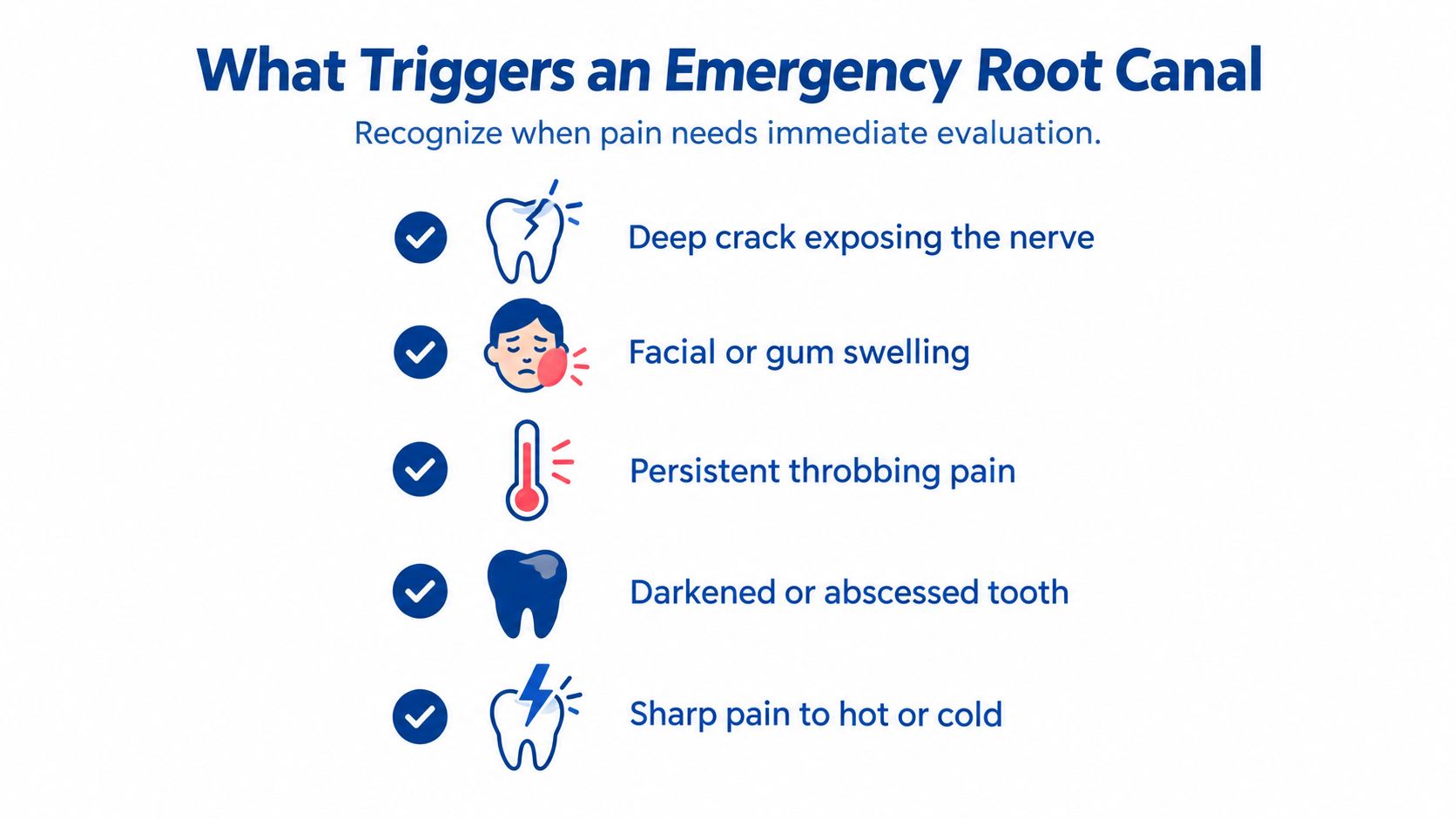
Deep decay, a crack, repeated dental treatment, or trauma can expose or injure the pulp. If the tissue becomes severely inflamed or infected, the tooth may hurt spontaneously, react strongly to hot or cold, or become painful when chewing. A darkened tooth, gum swelling, drainage, or a persistent bad taste also deserves professional assessment.
Common causes of urgent pulp damage
- Deep decay: Bacteria can progress through the tooth until the pulp can no longer recover.
- Cracked or broken teeth: A crack can allow irritants to reach the nerve, particularly when chewing creates movement.
- Dental trauma: A blow can damage the pulp even if the visible chip seems small.
- Repeated procedures: A tooth that has undergone extensive treatment may become vulnerable to inflammation or reinfection.
- Acute infection: Swelling around the gum or face can indicate that infection has moved beyond the pulp space.
The American Association of Endodontists identifies debilitating pain, painful swelling around the mouth, infected gums, abscesses, and knocked-out teeth as dental emergencies, while persistent pain lasting days or weeks may indicate the need for root canal treatment. The AAE emergency guidance can help patients recognize when a dental problem needs urgent attention.
A mild, brief sensitivity episode isn't automatically a root canal emergency. Pain that lingers, intensifies, interrupts sleep, or appears with swelling should not be managed indefinitely with home remedies. An emergency dentist can determine whether the tooth needs a root canal, a filling, a crown, drainage, tooth extraction, or another form of care.
Understanding Your Symptoms and Pain Level
Severe dental pain doesn't always point neatly to one tooth. In a 2024 study of endodontic emergency patients, pain was the predominant complaint in 98.5% of patients, yet only 57.4% could localize it to a specific tooth. The same paper cites a Danish study in which endodontic-related infection accounted for dental pain in 66% of patients seeking treatment. The 2024 endodontic emergency study also notes that evidence for the exact incidence of endodontic emergencies in everyday general practice remains limited.
Read the pattern, not just the intensity
Pain that lingers after hot or cold exposure suggests a different clinical picture from a brief sensitivity that disappears immediately. Pain on biting can arise from inflamed tissues around the root, a crack, or a bite that has become uneven. Swelling, drainage, or a bad taste raises concern for infection and warrants prompt evaluation.
A patient doesn't need to diagnose the tooth at home. Instead, noting when the pain began, what triggers it, whether it wakes the patient, and whether swelling or fever is present gives the dental team useful information. Patients seeking more detail about symptoms of tooth nerve damage can use that resource before calling.
For readers comparing understanding root canal urgency, the practical question is whether symptoms are stable, worsening, or accompanied by signs beyond the tooth. A painful tooth without systemic symptoms may still need urgent care, but facial swelling, fever, malaise, or difficulty swallowing changes the level of concern.
Practical rule: Pain intensity matters, but progression and associated symptoms matter just as much.
A tooth that suddenly feels better isn't necessarily healed. The pulp can lose vitality while infection continues around the root. That is why professional testing and dental X-rays are more reliable than symptom relief alone.
Triage Criteria for Urgent Versus Same-Day Care
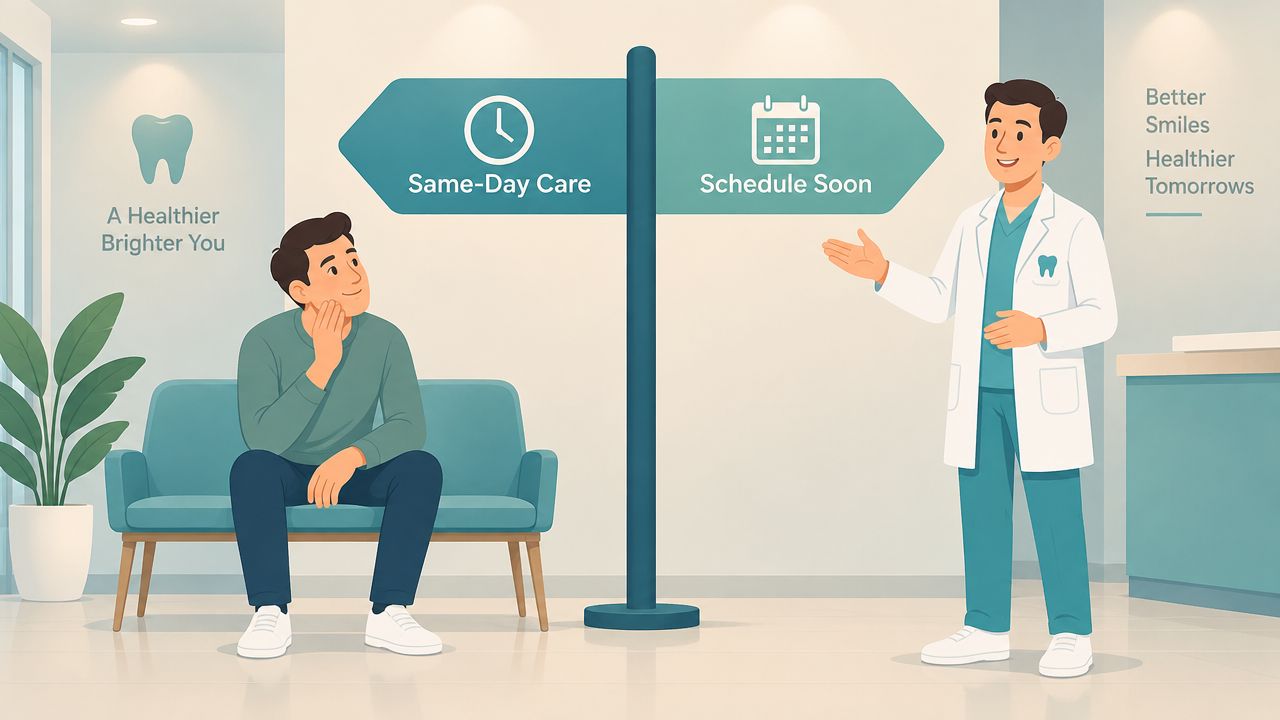
Patients can make the first triage decision by asking three questions. Is the pain uncontrolled? Is swelling increasing or affecting the face? Are there systemic or airway symptoms? The answers help the dental office decide whether the patient needs immediate same-day attention, an urgent appointment, or a scheduled diagnostic visit.
Seek immediate help when
- Breathing or swallowing is affected: Swelling that threatens the airway requires emergency medical attention.
- Facial swelling is spreading: Expanding swelling can signal an infection that needs rapid source control.
- Fever or malaise is present: These systemic symptoms may indicate that infection isn't confined to the tooth.
- Trauma has displaced or knocked out a tooth: A dental team should assess the injury promptly.
- Bleeding won't stop: Uncontrolled bleeding requires urgent evaluation.
A severe but localized toothache, with no fever, facial swelling, breathing concern, or uncontrolled bleeding, still deserves prompt dental care. The office may arrange an urgent visit rather than direct the patient to a hospital. Calling early is useful because the team can ask focused questions and identify whether a root canal, drainage, restoration, or tooth extraction is most appropriate.
While arranging care, patients should avoid chewing on the affected side and should tell the office about pregnancy, allergies, current medicines, and medical conditions. Those details influence safe pain-control advice and treatment planning.
The American Dental Association recommends definitive dental treatment for most immunocompetent adults with pulpitis, apical periodontitis, or a localized acute apical abscess, rather than routine systemic antibiotics. Antibiotics are generally reserved for systemic involvement such as fever or malaise. The ADA antibiotic stewardship guidance explains why removing the source of infection is usually more important than relying on medication alone.
Immediate Self-Care and Pain Control Steps
A patient waiting for an appointment often tries to protect the tooth while making the next few hours manageable. The safest approach is temporary support, not an attempt to seal, drain, or medicate the tooth at home.
Over-the-counter pain relievers can help when taken exactly as directed on the label and when they're medically appropriate for the patient. A dental office should be told about stomach ulcers, kidney disease, blood thinners, allergies, pregnancy, or other reasons a medicine may not be suitable.
Keep the area calm
- Use a cold compress: Apply it externally for short intervals if swelling is present. Avoid placing heat on facial swelling.
- Choose soft foods: Chew on the opposite side and avoid very hot, cold, sticky, or hard foods that provoke the tooth.
- Clean gently: Brush carefully around the area and continue normal oral hygiene without forcing floss into a painful opening.
- Protect a broken tooth: Keep the fragment if one has separated, and avoid testing the tooth by repeatedly biting down.
- Avoid aspirin on the gum: Direct application can irritate or burn soft tissue and won't treat the underlying pulp problem.
When a patient calls an emergency dentist, a clear description helps the team prioritize the visit. Useful details include the exact start of symptoms, triggers, swelling, drainage, fever, trauma, medication taken, and whether pain interrupts sleep or normal eating.
The clinician may first confirm the tooth with cold testing, percussion, visual inspection, and dental X-rays. If the pulp is irreversibly inflamed or infected, treatment may begin during that visit. If swelling is fluctuant, drainage may be needed, while a damaged tooth may require stabilization before definitive restoration.
Home care can reduce irritation, but it can't remove infected pulp or disinfect the canal. Delaying evaluation because pain temporarily subsides can leave the underlying problem untreated.
What to Expect During an Emergency Root Canal Visit
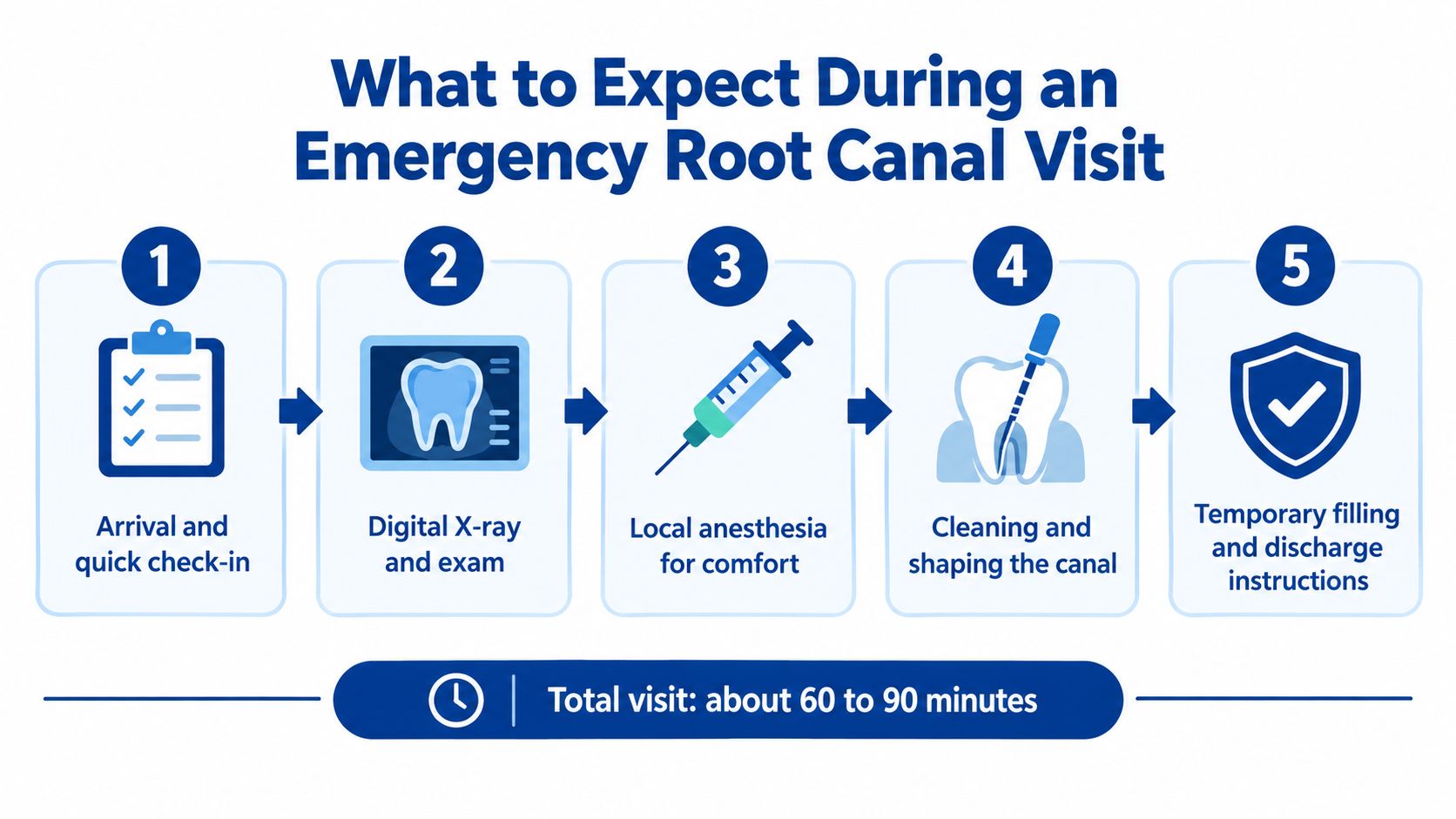
An emergency visit usually starts with focused questions, an examination, and imaging. The clinician needs to distinguish pulp inflammation from a crack, periodontal abscess, trauma, a failing restoration, or pain referred from another tooth.
The clinical sequence
- Diagnosis and isolation: The team confirms the tooth and uses a rubber dam to keep the working area clean and controlled.
- Access: Caries, defective restorations, or compromised tooth structure are addressed before the pulp chamber is opened.
- Canal treatment: The clinician negotiates the canal, determines working length, and removes inflamed or infected tissue.
- Cleaning and medication: Irrigants such as sodium hypochlorite and EDTA support chemomechanical debridement. If final filling is deferred, calcium hydroxide or CS-AB paste may be placed as an intracanal medicament.
- Temporary protection: The tooth is dried and temporized, with instructions for definitive filling, crown treatment, or other restoration.
Expert guidance describes initial hand-file glide-path creation, enlargement to at least a 20/.02 to 30/.02 file in many cases, and a modified crown-down approach. In trauma cases, full canal preparation and filling may not be required during the emergency visit, but access and medication should be followed by definitive treatment soon after stabilization. If fluctuant swelling is present, incision and drainage may form part of emergency management. The endodontic emergency guidance outlines this stepwise approach.
Modern anesthesia is effective, and Cleveland Clinic states that root canals are usually no more painful than fillings because of contemporary local anesthesia. Cleveland Clinic's patient guidance provides a plain-language explanation of comfort expectations.
The choice isn't always root canal versus antibiotics. Root canal treatment addresses the diseased pulp and preserves a restorable tooth, while extraction removes the tooth but creates a need for replacement planning. For practical root canal recovery tips, patients should also ask when the temporary filling will be replaced and whether a crown or other restoration is needed.
Aftercare, Pain Management, and Outcomes
After an emergency root canal, the tooth may feel tender when biting, especially if the tissues around the root were inflamed before treatment. Patients should follow the prescribed or label-directed medication instructions, avoid chewing hard foods on the temporary restoration, and keep brushing and flossing as advised.
The first appointment may relieve the pressure and remove the inflamed pulp, but it may not complete the final restoration. A tooth with significant loss of structure often needs a crown or another protective restoration to restore function. A prosthodontist can coordinate that next step with endodontic treatment, particularly when the tooth has a crack, extensive decay, or an altered bite.
What the evidence says about pain
Pain control is generally favorable, but it isn't immediate for everyone. In one study of 374 single-visit cases, post-endodontic pain was significantly lower in non-molar teeth, teeth with periapical radiolucencies, teeth without prior pain or emergency endodontic treatment, and teeth without occlusal contact. The AAE pain-control evidence reports that mean worst pain intensity after treatment fell to 3.0±3.2, while 19% still reported severe pain. Mean pain days were 2.1±2.4, with pain-interference days at 0.4±1.1.
The same source reports postoperative pain incidence ranging from 3% to 69.3% during the first 24 to 48 hours and persistent pain six months after treatment in 3% to 12% of cases. These ranges reflect differences among studies, patient groups, teeth, and definitions of pain, so a patient with increasing swelling or worsening symptoms should contact the dental office rather than wait.
Long-term tooth preservation
A large study of more than 1.6 million patients found that 97% retained their teeth eight years after root canal therapy. Most failures involving retreatment, apical surgery, or extraction occurred within the first three years. The American Association of Endodontists' history of endodontics places modern treatment in the context of a long clinical history, with evidence of treatment inside a tooth around 200 B.C., organized canal irrigation by 1859, and endodontics recognized as a dental specialty in the United States by the mid-1940s.
Before treatment, patients should ask about insurance benefits, deductibles, the emergency diagnostic fee, the cost of the root canal, and the restoration that follows. A transparent estimate helps compare the complete tooth-saving plan with extraction and replacement options such as dental implants near me.
Finding Local Urgent Endodontic Care
Searching for an endodontist in New York, an emergency dentist, or a dentist in Manhattan is only the first step. The office must be able to assess pain promptly, provide appropriate imaging, explain whether same-day treatment is possible, and coordinate the restoration that protects the tooth afterward.
Ask these questions when calling
- Can the office evaluate acute tooth pain today? Explain whether swelling, fever, trauma, or drainage is present.
- Will diagnostic imaging be available? A clinical exam and dental X-rays often help identify the source.
- Can treatment begin during the emergency visit? Some cases need immediate pulpal treatment, drainage, or stabilization.
- What happens if the tooth can't be saved? Ask whether the practice can discuss tooth extraction, bridges, or dental implants.
- How are fees and insurance handled? Request an explanation of the examination, treatment, temporary restoration, and follow-up care.
Prosth & Co. is a multi-specialty dental practice at 47 E 77th St #207, New York, NY 10075, near the 77th Street 6 train. The practice lists weekday hours from Monday through Friday, 9:00 AM to 6:00 PM, with urgent care availability, and offers endodontic, restorative, prosthodontic, implant, cosmetic, pediatric, periodontic, orthodontic, and oral surgery services.
That range can matter when emergency treatment reveals a broader problem. The same coordinated setting may support a crown, bite adjustment, implant consultation, cosmetic dentist near me services, or a referral within the practice. Families can also access a Pediatric Dentist, Kids Dentist, cleaning and exams, fluoride, sealants, and restorative care, while adults may seek a prosthodontist for complex reconstruction or a dentist near me for ongoing maintenance.
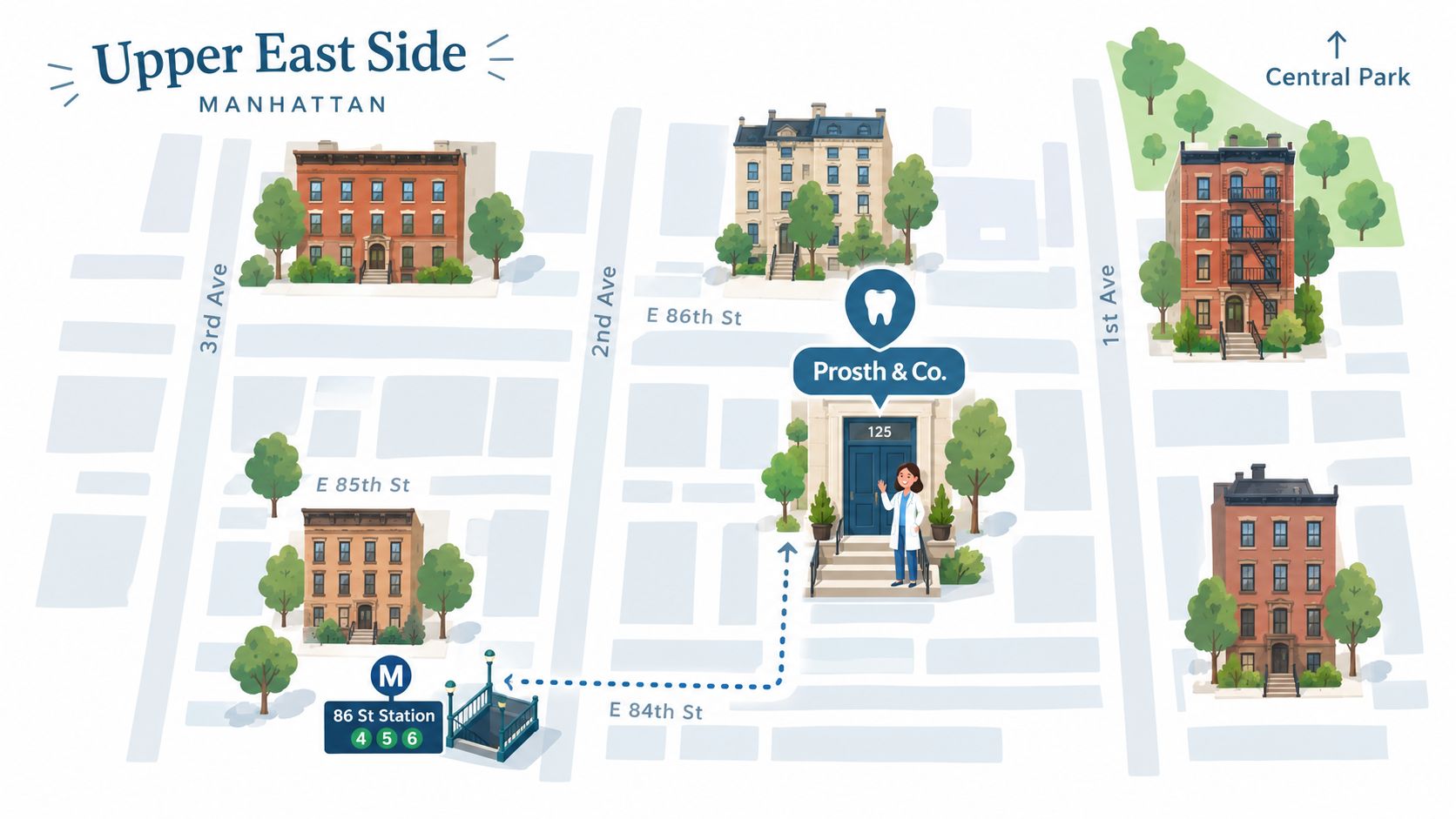
Patients should call before traveling, describe the symptoms, and confirm appointment availability, accessibility, payment expectations, and whether a support person is needed. Severe swelling affecting breathing or swallowing requires emergency medical attention rather than waiting for a routine dental slot.
Prosth & Co. provides urgent evaluation and emergency root canal care on Manhattan's Upper East Side, with restorative and prosthodontic planning available when the tooth needs protection afterward. Patients with severe pain, swelling, a crack, or trauma can visit Prosth & Co. to request an appointment and discuss the next safe step.

Founder and lead prosthodontist of Prosth & Co. on Manhattan's Upper East Side. DDS, Columbia University; Prosthodontics certificate and MMSc in Oral Biology, Harvard School of Dental Medicine; Implantology fellowship, Columbia University.
Meet Victoria →