A Manhattan patient often notices the problem at the worst time. Coffee suddenly triggers a sharp jolt. A tooth that felt mildly sore yesterday now throbs while chewing lunch. A strange tenderness near the gumline starts to feel harder to ignore on the subway ride home.
That kind of pain creates two worries at once. First, there's the physical discomfort. Second, there's the uncertainty. Patients often don't know whether they're dealing with normal sensitivity, an irritated nerve, or something that needs urgent treatment.
For adults searching for a dentist near me or an emergency dentist on the Upper East Side, the most helpful first step is understanding the pattern of symptoms. Tooth nerve problems usually don't announce themselves with one perfect sign. They tend to show up as a group of changes that become more noticeable over time.
Table of Contents
- Your Upper East Side Dentist for Tooth Nerve Pain Relief
- Recognizing the Most Common Symptoms of Tooth Nerve Damage
- What Your Symptoms Reveal About Your Tooth's Health
- How We Diagnose Nerve Damage at Our NYC Dental Office
- Advanced Treatment Options for Nerve Damage in Manhattan
- When to Seek Emergency Dental Care for Nerve Pain
- Your Questions About Tooth Nerve Damage Answered
Your Upper East Side Dentist for Tooth Nerve Pain Relief
On the Upper East Side, many patients try to reason with tooth pain before they call. They switch sides when chewing. They avoid cold drinks. They hope a night of sleep will settle things down. That approach is understandable, especially for busy New Yorkers balancing work, family, and a full calendar.
The problem is that tooth nerve pain can be deceptive. A tooth may ache dully for days, then suddenly become sharp and hard to localize. Some patients feel pain in a lower molar but also sense it in the jaw or near the ear. Others notice that the tooth doesn't hurt constantly, but it reacts in a way that feels different from ordinary sensitivity.
At a prosthodontic and restorative office on the Upper East Side, the first job is to slow that moment down. Patients usually need someone to explain what they're feeling in plain language, not just tell them that they “need treatment.” They want to know whether the tooth is irritated, infected, cracked, overloaded from biting, or no longer healthy inside.
A worried patient usually benefits most from clarity. The pain feels less overwhelming when the pattern starts to make sense.
That's why a careful dental visit in Manhattan should focus on the whole picture. The timing of the pain matters. What triggers it matters. Whether it lingers, radiates, or comes with swelling matters. Those details help separate a routine issue from a nerve problem that needs prompt attention.
For patients looking for a dentist in New York, NY, especially one who handles restorative dentistry, tooth extraction, dental X-rays, and urgent visits, a calm diagnostic process can make all the difference. The goal isn't just to stop pain. The goal is to understand what the tooth is communicating, preserve it when possible, and restore function when saving it isn't realistic.
Recognizing the Most Common Symptoms of Tooth Nerve Damage
A damaged tooth nerve rarely announces itself with just one clear signal. It usually shows up as a pattern. Patients often describe a tooth that starts acting differently from the others. It may hurt longer, react more strongly, or create a sense of pressure that is hard to ignore.
That pattern matters because nerve pain is different from ordinary sensitivity. A worn edge or small cavity may cause a quick, sharp response. An unhealthy nerve often keeps reacting after the trigger is gone, or begins hurting without any trigger at all. That difference helps a dentist judge whether the pulp inside the tooth is irritated, inflamed, infected, or no longer healthy.
The symptom cluster that matters most
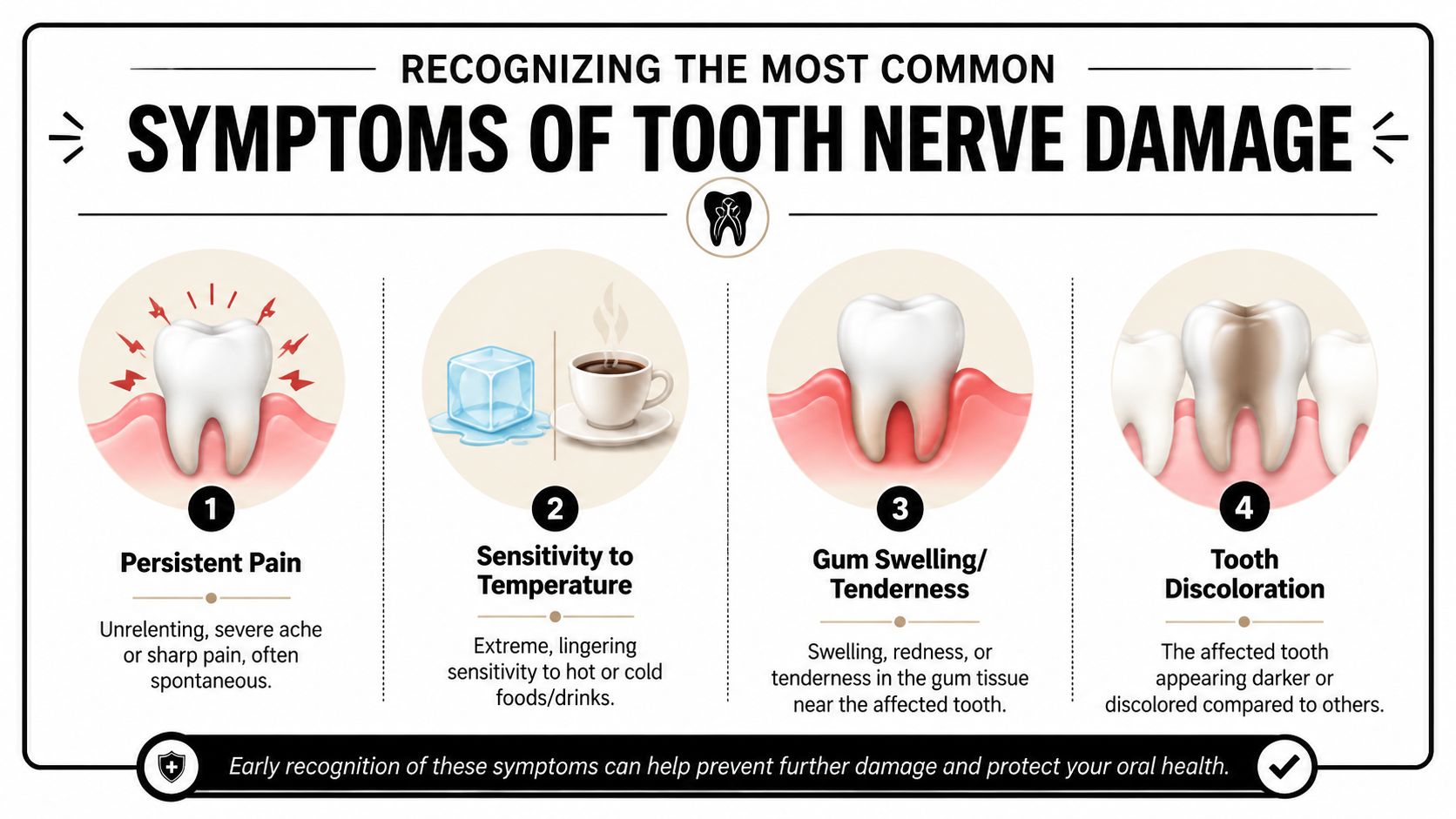
The symptoms that deserve the closest attention usually fall into four groups:
- Persistent or spontaneous pain. This pain may throb, pulse, ache intensely, or arrive without chewing or touching the tooth. That often suggests the nerve is irritated beyond the level of routine sensitivity.
- Lingering hot or cold sensitivity. If cold water, coffee, or dessert triggers pain that stays with you after the sip or bite is over, the response is more concerning than a brief zing. The nerve is behaving like an alarm that keeps ringing after the event has passed.
- Pain with biting or release of pressure. Some patients notice the tooth feels high, sore, or strangely bruised when chewing. That can happen when inflammation inside the tooth begins affecting the tissues around the root, or when a crack is involved.
- Swelling or gum tenderness near one tooth. Puffiness, soreness, or a small bump on the gum can mean the problem is no longer confined to the inside of the tooth.
Some patients worry that any facial pain must be a tooth nerve. That is not always true. Dental nerve pain often follows a trigger pattern, such as temperature, biting, or a specific tooth. Neuropathic pain conditions and sinus-related pain can behave differently, which is one reason a careful exam at Prosth & Co. matters.
Other warning signs patients may notice
A damaged nerve can also change how a tooth looks or tastes.
A tooth may appear darker than its neighbors. There may be a bad taste, unpleasant odor, or drainage if infection is present. In some cases, the tooth can feel slightly loose or oddly heavy. Those signs can indicate that the pulp has been badly compromised and that the surrounding bone and ligament may also be reacting.
Numbness causes a different kind of confusion. Temporary numbness after dental treatment can be part of normal recovery. Numbness that does not wear off as expected, pain that intensifies instead of easing, or symptoms that spread deserve prompt follow-up. A healing tooth generally becomes quieter. A worsening tooth becomes harder to ignore.
Practical rule: a symptom that settles quickly is less concerning than one that lingers, intensifies, wakes you at night, or comes with swelling.
For patients in Manhattan, the reassuring part is that these symptoms are not random. They are clues. At Prosth & Co., we use those clues to separate reversible irritation from deeper nerve injury, distinguish tooth pain from other facial pain conditions, and match each finding to the right treatment path as calmly and precisely as possible.
What Your Symptoms Reveal About Your Tooth's Health
A symptom isn't just a discomfort. It's also a clue.
Dentists often think about nerve irritation on a spectrum. On one end, the pulp inside the tooth is inflamed but may still recover if the source of irritation is removed. On the other end, the inflammation has progressed to the point that the nerve is no longer likely to heal normally. Patients don't need the technical vocabulary first. They need to understand what the pain pattern suggests.

Brief pain versus lingering pain
A tooth that reacts only when triggered, then settles quickly, may be dealing with a more limited irritation. That could happen with early decay, a worn surface, a leaky filling, or bite-related stress. The pain is real, but it behaves in a more contained way.
A tooth that starts hurting on its own, wakes a patient up, or stays painful long after the trigger is gone is sending a stronger signal. Clinical descriptions of irreversible pulp inflammation emphasize thermal lingering, spontaneous pain, referred pain, and even discomfort from gentle tapping. That pattern suggests the nerve is more inflamed and less likely to return to normal.
A short comparison helps:
| Pain pattern | What a patient may notice | What it can suggest |
|---|---|---|
| Brief, triggered pain | Cold or sweets bother the tooth, then the feeling passes quickly | A milder irritation |
| Lingering, spontaneous pain | Pain starts without warning or remains after hot or cold exposure | More advanced nerve inflammation |
| Pain on biting or tapping | The tooth feels sore when chewing or lightly touched | Inflammation affecting surrounding support tissues |
Why a dying nerve can feel more sensitive first
One detail often surprises patients. A tooth with a dying nerve does not always become numb right away. In fact, guidance on dead or dying tooth signs notes that the pattern often begins with a dull ache that can become sharp or shooting, and that a dying tooth may become more sensitive before sensation fades.
That seems backward, but it fits how inflamed tissue behaves. As pressure and inflammation build inside the tooth, the nerve can become hyper-reactive. Only later, as the nerve loses vitality, the tooth may stop responding in a normal way.
When a patient says, “It used to be a dull ache, but now it's sharp and strange,” that change in quality matters.
This is one reason dentists rely on symptom patterns over time instead of one isolated complaint. The way the pain evolves helps identify whether the tooth may need monitoring, protective restoration, root canal therapy, or another form of restorative care.
How We Diagnose Nerve Damage at Our NYC Dental Office
Patients are often more nervous about the unknown than the actual exam. A dental appointment for nerve pain is usually straightforward, and each step has a clear purpose.
The diagnostic process starts with conversation. The dentist asks where the pain is felt, what brings it on, how long it lasts, and whether there has been recent dental work, trauma, or a change in bite. Those details matter because nerve pain can be referred. The patient may point to one tooth while the source is nearby.
What happens during the exam
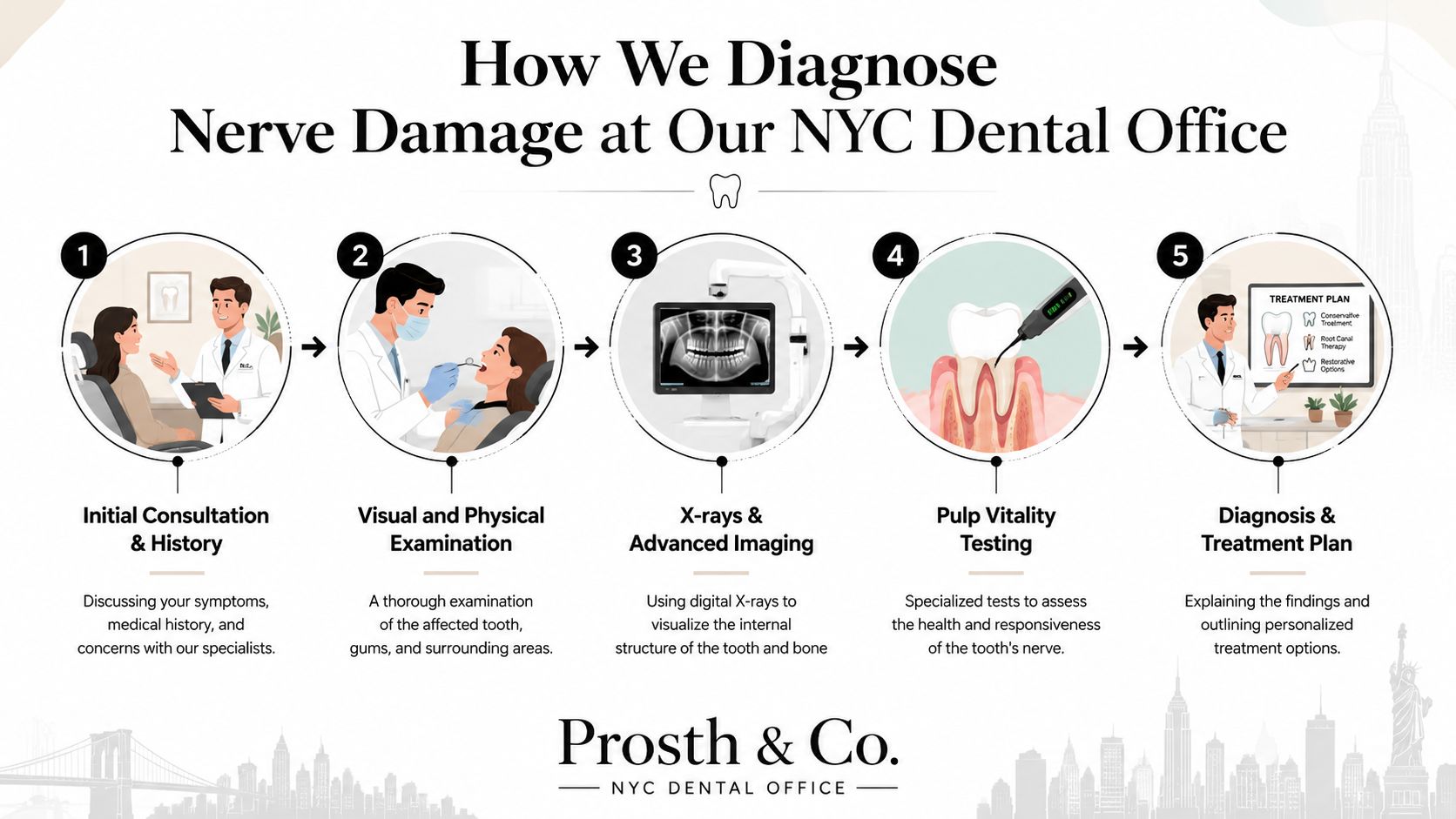
A careful appointment commonly includes several parts:
History and symptom review
The dentist listens for patterns. Is the pain spontaneous or only triggered? Is it brief or lingering? Did symptoms start after a filling, trauma, or chewing on something hard?Visual exam of the tooth and gums
This looks for decay, cracks, discoloration, swelling, drainage, and changes in the surrounding gum tissue.Gentle tapping and bite evaluation
This checks whether a tooth is tender to percussion or biting pressure. That can indicate irritation in the ligament and tissues around the root.Thermal or vitality testing
Cold or other stimuli help evaluate whether the nerve responds normally, overreacts, or fails to respond.Dental X-rays or imaging
These help identify decay depth, prior dental work, root changes, and problems around the tip of the root.
Why each test helps
Clinical diagnosis often looks for thermal lingering, meaning pain from hot or cold that does not stop right away after the stimulus is removed. Dentists also check for referred pain into the jaw or neck and for allodynia, where gentle tapping causes notable discomfort. Those findings are important markers of significant nerve inflammation.
One test never tells the whole story. A tooth might respond strongly to cold but look only mildly changed on the surface. Another might appear intact yet hurt on biting because the inflammation has already spread beyond the pulp.
A good diagnosis doesn't come from guessing which tooth “looks bad.” It comes from matching symptoms, exam findings, and imaging.
For patients who need prompt treatment, that process supports clear next steps. In a Manhattan office that provides new patient exams, dental X-rays, restorative care, and urgent visits, the goal is precision first, treatment second.
Advanced Treatment Options for Nerve Damage in Manhattan
Treatment depends on a simple question. Is the tooth still restorable, or has the damage gone too far?
When the tooth can be preserved, treatment focuses on removing diseased tissue, stopping pain, and protecting the remaining tooth structure. When the tooth can't be predictably saved, treatment shifts to removal and replacement so function and appearance aren't lost.
When the tooth can be saved
A root canal is often the most direct way to relieve pain caused by an unhealthy nerve while keeping the natural tooth in place. During this treatment, the diseased pulp is removed, the internal space is cleaned, and the tooth is sealed so it can function again. In many cases, the tooth is then reinforced with a restoration such as a crown or onlay.
Patients often fear the phrase more than the procedure. In practical terms, root canal treatment is a tooth-saving treatment, not a punishment. For those comparing options, root canal treatment in New York is used to address infected or irreversibly inflamed nerve tissue and preserve the tooth when the structure is still worth restoring.
When removal and replacement make more sense
Some teeth are too compromised to hold a reliable restoration. That may happen when decay extends too far, a fracture makes the tooth non-restorable, or the remaining structure won't support long-term function.
In those situations, extraction may be the healthier choice. The important part is what comes next. Leaving a missing tooth untreated can affect chewing, neighboring teeth, and the way the bite functions over time.
A prosthodontic treatment plan may include:
- Tooth extraction when the tooth can't be predictably saved
- Dental implant planning when a fixed replacement is appropriate
- Crown and bridgework to restore chewing function and appearance
- Restorative dentistry to protect adjacent teeth and stabilize the bite
For Manhattan patients searching for dental implants near me, this is where long-term planning matters. A removed tooth doesn't end the conversation. It starts a restoration plan that should account for bone support, esthetics, bite force, and the patient's overall oral health.
The right treatment isn't always the most aggressive one. It's the one that matches the actual condition of the tooth and gives the patient the clearest path back to comfort and daily function.
When to Seek Emergency Dental Care for Nerve Pain
A common scenario goes like this. A patient wakes up with a tooth that hurt yesterday, but today the pain is stronger, the gum looks puffy, and the face feels different on one side. At that point, the question is no longer whether the tooth is irritated. The question is whether the body is signaling infection, pressure, or nerve involvement that needs prompt care.
Tooth nerve pain can change quickly. Mild sensitivity after something cold may settle. Pain that becomes intense, spreads into the jaw or face, wakes you from sleep, or comes with visible swelling deserves faster attention because it can point to infection inside the tooth or around the root.
Persistent sensory changes also need attention. Numbness, tingling, burning, or an altered feeling in the lip, tongue, chin, or gums after trauma or dental treatment can mean more than ordinary soreness. Those symptoms can reflect irritation or injury involving the nerves that carry sensation, and timing matters because early evaluation gives your dentist a clearer picture of what is happening.
Signs that shouldn't wait
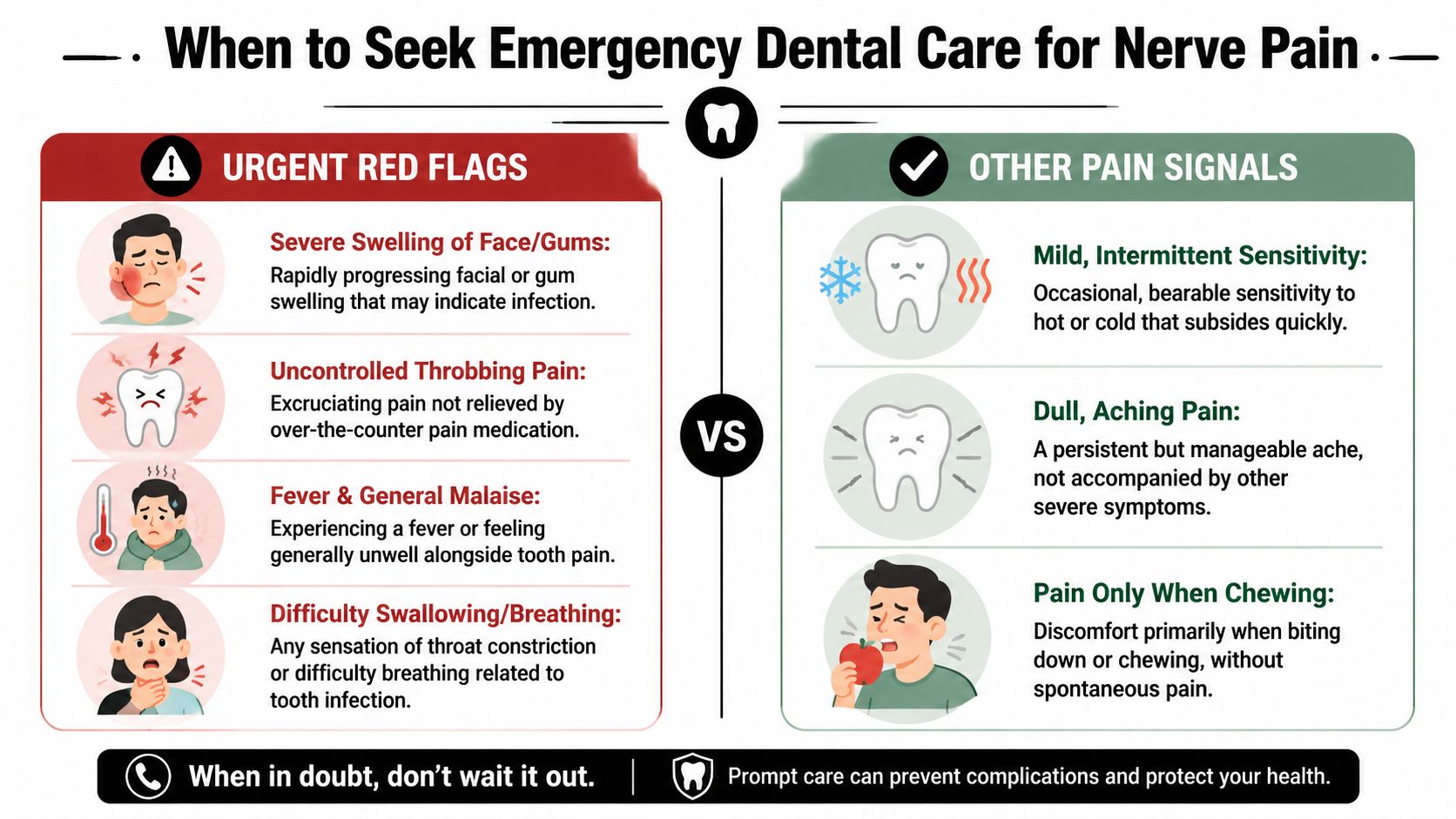
Call for urgent dental care if you notice:
- Rapid swelling in the gum, cheek, or jaw
- Severe throbbing pain that is hard to control
- Fever or feeling sick along with dental pain
- Difficulty swallowing or breathing
- Ongoing numbness or altered sensation after treatment or injury
Each of these symptoms points to a different level of concern. Swelling and fever can suggest infection is spreading beyond the tooth. Trouble swallowing or breathing is more urgent because swelling in the wrong area can affect the airway. Persistent numbness raises a different question. It may involve the sensory nerves rather than the tooth pulp alone.
Patients looking for an emergency dentist near the Upper East Side should treat those changes as reasons to call promptly, not as something to watch for another few days.
When the pain may not be coming from the tooth
Some pain feels dental but does not start inside a tooth. That can be confusing, especially when the discomfort is sharp, electric, burning, or hard to match to one specific tooth.
Dental nerve pain usually follows a pattern. It is often triggered by biting, temperature, or pressure, and your dentist can often connect it to a tooth with decay, a crack, a deep filling, or infection on the exam and X-rays. Neuropathic facial pain follows a different pattern. It may feel shock-like, travel along part of the face, or appear without a clear dental finding.
That distinction matters because the treatment path changes. A tooth with an infected pulp may need root canal treatment or removal. A pain pattern that does not line up with the tooth itself may call for broader evaluation so the patient does not go through treatment on the wrong tooth.
Pain is still real, even when the source is not a cavity or abscess.
At Prosth & Co., the goal in an urgent visit is to sort out which category your symptoms fit into, how serious the problem is, and what needs to happen first to protect your comfort and health.
Your Questions About Tooth Nerve Damage Answered
Can a tooth nerve calm down on its own
Sometimes a mildly irritated nerve can settle if the cause is addressed early. For example, a bite adjustment, a new restoration, or protection from grinding may reduce stress on the tooth. But a nerve that is severely inflamed, infected, or no longer healthy inside usually won't return to normal without treatment.
Are root canals painful
Patients often expect a root canal to feel worse than the toothache that brought them in. In reality, the treatment is designed to remove the source of nerve pain. The appointment itself is usually less stressful when the diagnosis has been explained clearly and the tooth is properly numbed.
How can patients lower the risk of future nerve problems
The best prevention is boring in the best way. Routine cleanings and exams, timely treatment of cavities or cracks, protection against grinding, and prompt attention to unusual sensitivity all help reduce the chance that irritation reaches the nerve.
Patients should also remember that not every symptom around the teeth is strictly dental. As noted earlier, atypical patterns such as numbness, tingling, or unusual facial pain may need broader evaluation so the right condition is treated from the start.
Patients dealing with lingering tooth pain, swelling, numbness, or sudden sensitivity can schedule an evaluation with Prosth & Co.. The Upper East Side office at 47 E 77th St, Suite 207, New York, NY 10075 provides restorative care, emergency dental care, dental X-rays, root canal treatment, extractions, and long-term tooth replacement planning for Manhattan patients who want clear answers and a practical path to relief.