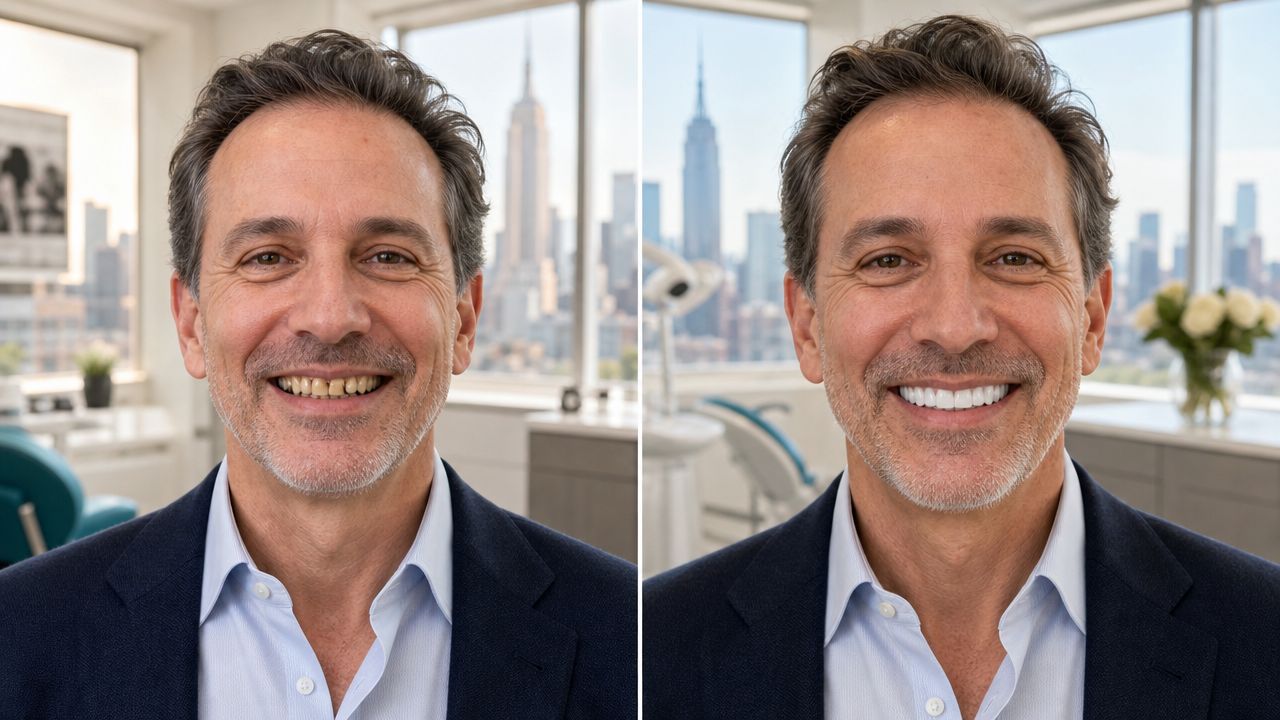
A Manhattan patient often starts this search privately. Work meetings feel awkward because smiling is uncomfortable. Dinner plans get complicated because chewing on one side has become a habit. Photos are tolerated, not enjoyed. Sometimes there's pain. Sometimes there isn't. But there's often a growing sense that the mouth no longer feels stable, healthy, or reliable.
For patients managing several worn, damaged, or missing teeth, learn how full mouth rehabilitation in NYC can coordinate function, bite, and appearance.
That's usually when searches for a dentist near me, a cosmetic dentist near me, or dental implants near me become more urgent. The person searching may not be looking for a cosmetic touch-up at all. They may be trying to understand whether years of tooth wear, multiple broken teeth, missing teeth, old dental work, or a changing bite now call for something more extensive.
In New York City, that question deserves a careful answer. Before-and-after photos can be inspiring, but they don't always show the full story. They rarely explain why treatment was recommended, how long it took, what happened between the first exam and the final smile, or how the patient got from discomfort to function again. For readers who want a more grounded sense of what this journey looks like, Testimonial's customer showcase is a useful example of how real patient experiences can be presented with more context than a single final image.
A full mouth reconstruction before and after story makes the most sense when the middle is explained. That's where confidence comes from.
Table of Contents
- A New Smile and a New Beginning in New York City
- What Is Full Mouth Reconstruction
- Your Treatment Journey A Step by Step Timeline
- How to Read Before and After Photos Like a Prosthodontist
- Is Full Mouth Reconstruction Right for You
- Expert Care and Comfort at Our Upper East Side Practice
- Common Questions About Your Smile Transformation
A New Smile and a New Beginning in New York City
A patient on the Upper East Side may look fine from across the room. Up close, the story is different. Front teeth are shorter than they used to be. Back teeth don't meet evenly. One side chews better than the other. Old crowns may be failing. A missing tooth that once seemed manageable has started to affect speech, eating, and confidence.
That kind of situation rarely comes from one single problem. It's usually a pileup. Years of grinding. A cracked tooth that was patched more than once. Gum problems that made teeth feel weaker. A tooth extraction that was delayed because life got busy. Gradually, the bite changes and the mouth begins to compensate.
Daily life usually changes before patients ask for help
A person with severe wear or multiple missing teeth often makes small adjustments all day long:
- Eating habits shift: crunchy foods, steak, bagels, and salads may be avoided.
- Smiling becomes guarded: lips stay closed in professional photos and social settings.
- Discomfort becomes normalized: pressure, soreness, and jaw fatigue start to feel routine.
- Dental visits feel overdue: many patients worry they'll be told everything is wrong.
That last concern is common in New York. Busy people often want clear answers, not lectures. They want to know whether they need a filling, a crown, a bridge, dental implants, or a much broader reconstruction.
A good full mouth reconstruction plan doesn't begin with selling procedures. It begins with understanding why the mouth became unstable in the first place.
For many Manhattan adults, the emotional “before” matters as much as the clinical one. They're not only looking for straighter-looking teeth. They want to chew normally, stop managing pain around meals, and feel like their smile matches the rest of their life again.
That's why full mouth reconstruction before and after should be understood as a journey toward health, structure, and confidence. The visible result matters. But the ultimate transformation is that the mouth works again.
What Is Full Mouth Reconstruction
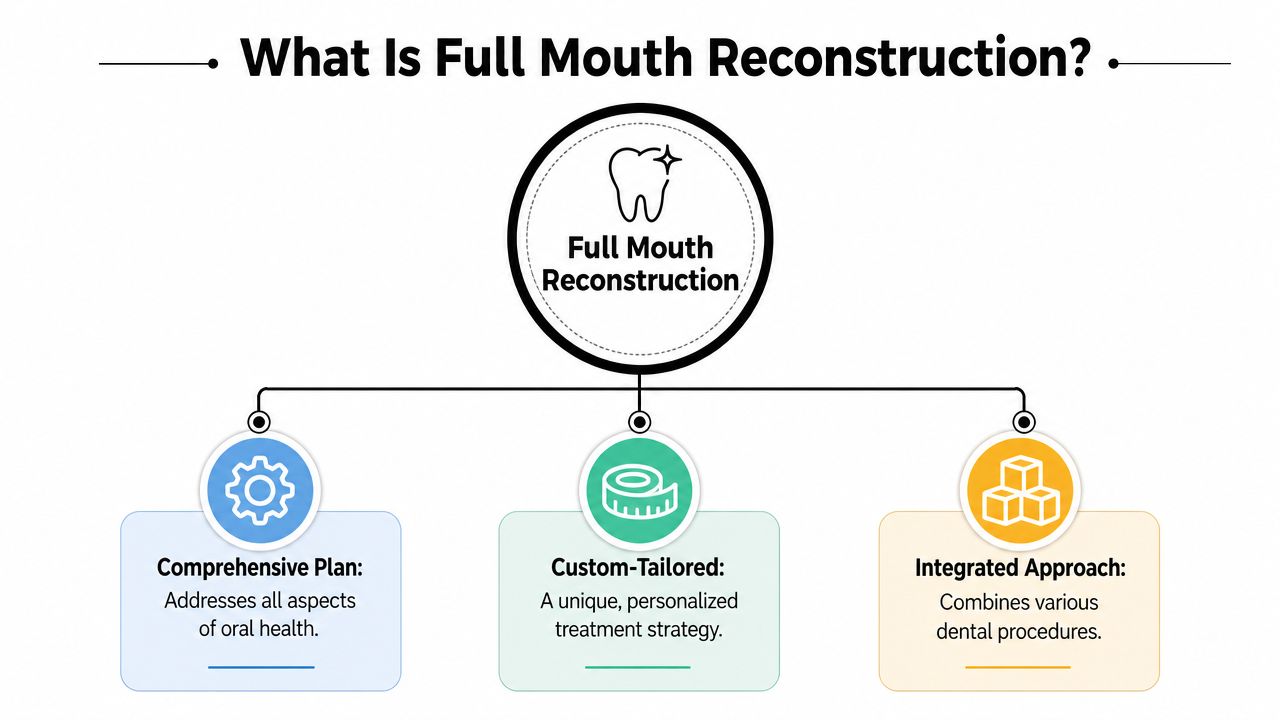
Full mouth reconstruction is a plan to restore a mouth that has lost stability. Instead of fixing one tooth at a time, the dentist studies how the teeth, bite, gums, jaw joints, and existing dental work function together, then rebuilds that system in the right order. If you want a clearer overview of what full mouth restoration involves, the key idea is simple. The goal is to create a smile that looks natural and also works comfortably every day.
More than a cosmetic upgrade
A smile makeover usually centers on appearance. Full mouth reconstruction starts with function.
That difference matters. Teeth are part of a load-bearing system, much like the foundation and framing of a building. If the support is off, beautiful surfaces alone do not solve the problem for long. A patient may want whiter, straighter, more even teeth, but if the bite is unstable or several teeth are carrying too much force, the treatment plan has to correct the cause first.
Here is a simple way to tell them apart:
| Situation | Usually points toward |
|---|---|
| Healthy bite, stable teeth, mostly cosmetic concerns | Cosmetic treatment |
| Widespread wear, multiple missing teeth, unstable bite, failing dental work | Full mouth reconstruction |
When a larger plan becomes necessary
Many patients ask a reasonable question. Why not just repair the teeth that hurt or look damaged?
Sometimes that is the right choice. Sometimes it is not. If one crown breaks, one tooth chips, or one implant is missing in an otherwise stable mouth, a local repair may work well. But if the bite has changed over time, several teeth are worn down, old dental work is failing in different areas, or missing teeth have shifted the workload onto the remaining ones, isolated fixes can become short-term patchwork.
Common signs that a full reconstruction may be the better path include:
- Severe tooth wear: teeth look shorter, flatter, or more translucent at the edges.
- Several missing teeth: chewing pressure is no longer distributed evenly.
- A collapsed or drifting bite: the jaws do not meet in a stable, repeatable position.
- Compromised gum or bone support: a tooth may be repairable on the surface but weak underneath.
- Widespread failing dental work: crowns, fillings, bridges, or veneers are breaking in a pattern, not as a one-time event.
Practical rule: if smaller repairs keep failing because the bite is unstable, the mouth usually needs a bigger plan, not another patch.
Prosthodontic training holds significant practical importance. A prosthodontist does not start by listing procedures. The job is to diagnose the sequence of problems, decide what can be preserved, and determine which treatments will work together over time. That may mean crowns, bridges, veneers, onlays, implants, dentures, or orthodontic movement. It may also mean phasing treatment carefully so the final result is healthy, durable, and believable in photos and in real life.
For patients reviewing full mouth reconstruction before and after cases, this point is easy to miss. The "after" photo is only the last chapter. The essence of the treatment lies in the decision-making that came first. Which teeth were saved, which were replaced, how the bite was rebuilt, and why the plan was staged that way. Those details are what separate a temporary improvement from a lasting rehabilitation.
Your Treatment Journey A Step by Step Timeline
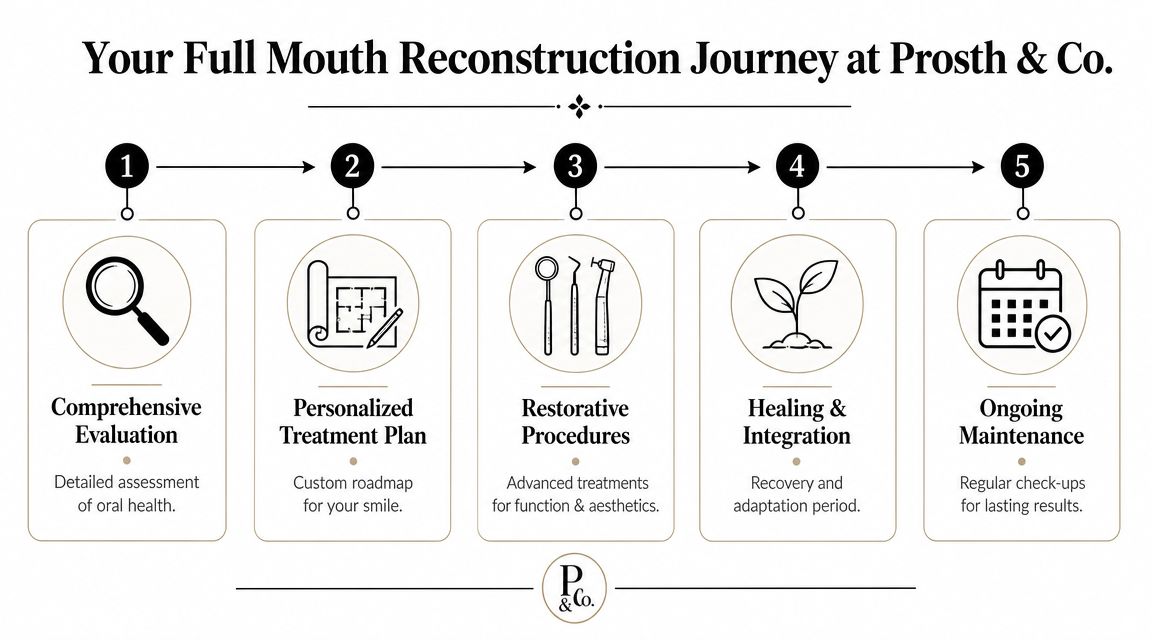
A full mouth reconstruction rarely changes everything in a single visit. It usually progresses in planned stages, with time for diagnosis, healing, testing, and refinement. For many patients, that is the most reassuring part. The process is structured.
A useful way to picture it is like rebuilding a home with foundation problems. New paint would photograph well, but it would not fix unstable support underneath. Your smile works the same way. Teeth, gums, bone, muscles, jaw joints, and bite all have to work together before the final restorations are placed.
Phase one starts with diagnosis
The first phase is information gathering and planning. The goal is to understand why the current problems developed, which teeth and restorations can be saved, and what order of treatment will create a stable result.
This phase may include:
- A thorough exam with a discussion of symptoms, concerns, and goals.
- Dental x-rays and imaging to check roots, bone, teeth, and surrounding structures.
- Photographs and bite records to document wear, tooth position, smile line, and jaw relationship.
- Treatment sequencing so each step has a clear purpose and timeline.
Many patients feel a shift here. What seemed like a collection of unrelated problems starts to make sense as one connected pattern.
The following video gives a helpful overview of how this kind of treatment is approached:
Middle phases build health, support, and confidence
Once the diagnosis is clear, treatment usually moves into stabilization. Any active disease or damage has to be addressed first. That can include gum treatment, decay removal, treatment of infection, or teeth that need extraction because they cannot support long-term function.
This part can feel slower than patients expect. It is often the stage that determines whether the final result lasts.
Temporary restorations often play a major role here. They work like a trial version of the final plan. They let you test the bite, speech, tooth length, and appearance in daily life before the definitive ceramics or implant restorations are made. That step is especially helpful for patients who have worn, broken, or missing teeth and have not seen a balanced smile in years. If you want to compare how staged esthetic changes can look over time, these smile makeover before and after examples can help put that process into context.
A practical sequence often looks like this:
| Phase | What's happening | Why it matters |
|---|---|---|
| Stabilization | Decay, gum issues, infection, extractions | Removes active problems and creates a healthier starting point |
| Structural rebuilding | Implants, foundational restorations, provisional teeth | Restores support for chewing, appearance, and bite position |
| Refinement | Bite adjustments, esthetic review, lab coordination | Fine-tunes comfort, function, and natural-looking detail |
The final phase depends on the earlier ones
Final restorations are placed only after the mouth is healthy and the bite has been tested. Depending on the plan, that may include crowns, bridges, implant crowns, veneers, dentures, or a combination of treatments. By this stage, the visible transformation is finally taking shape, but the core work began much earlier.
Patients are sometimes surprised by that. The final smile is the last chapter, not the whole story.
For busy New Yorkers, the timeline can feel long. In prosthodontic care, time usually reflects careful sequencing, healing, and adjustment, not delay. Bone and gum tissue need time to respond. Muscles need time to adapt to a corrected bite. Temporary teeth may need small changes before the final version is made.
An in-house lab can make that process more efficient because the dentist and lab team can adjust shape, fit, and esthetics more directly. At Prosth & Co., that close coordination helps reduce back-and-forth and gives patients a clearer path from diagnosis to final delivery.
How to Read Before and After Photos Like a Prosthodontist
Most online galleries are designed to catch the eye quickly. Teeth look whiter. The smile looks fuller. The result seems dramatic. But a prosthodontist doesn't judge a reconstruction by brightness alone.
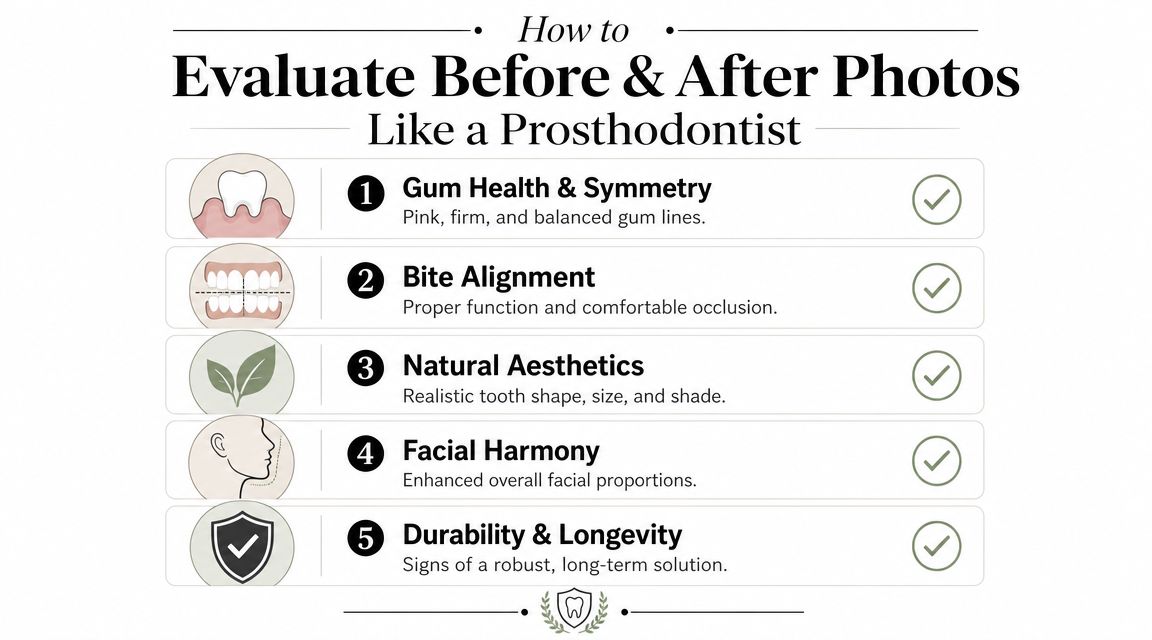
A strong full mouth reconstruction before and after comparison shows whether the new teeth look believable, whether the gums appear healthy, and whether the smile seems supported by a stable bite rather than reshaped for the camera.
What trained eyes look for first
Readers comparing cases should look beyond the shade of the teeth. A more useful checklist is available in these smile makeover before and after examples, where the important question isn't “Are the teeth white?” but “Does the whole result look healthy and proportionate?”
Key signs of quality include:
- Gum symmetry: the gumline should look balanced, not irritated or uneven without explanation.
- Tooth proportion: front teeth shouldn't appear bulky, flat, or identical like copy-paste shapes.
- Facial fit: the smile should suit the lips and face, not overpower them.
- Bite support: back teeth matter, even if they aren't featured in the photo.
- Natural character: slight individuality often looks better than a too-perfect row of opaque teeth.
Good dentistry in photos should still look good when the patient is talking, chewing, and viewed from the side.
Red flags in photo galleries
Before-and-after photos can also mislead. Different lighting, different camera angles, and different lip positions can exaggerate change. That doesn't mean the dentistry is poor. It means the photos should be interpreted carefully.
A few caution signs are worth noting:
- Only front views are shown: reconstruction is also about side teeth and bite function.
- No gum detail appears: healthy tissue is part of the result.
- The “after” looks oversized: larger teeth aren't always better teeth.
- There's no sense of the patient's starting condition: it becomes hard to judge how complex the case really was.
Patients looking for a cosmetic dentist near me often start with appearance. That's understandable. But the smartest comparison includes both appearance and engineering. The most successful cases usually look calm, balanced, and natural rather than flashy.
Is Full Mouth Reconstruction Right for You
Not every patient with damaged teeth needs full rehabilitation. Some need a few crowns. Some need selective implants. Some need orthodontics first. But there are clear patterns that make a detailed plan more likely.
A patient may be a candidate if the mouth feels like it is failing in multiple places at once. One tooth breaks, then another. Chewing gets harder. Old dental work starts to loosen or crack. The bite feels off. The front teeth are wearing down, but the deeper issue is what's happening in the back.
Common situations that point to full rehabilitation
The following profiles often raise the question of reconstruction:
- Multiple missing teeth: especially when nearby teeth have drifted or overworked teeth are breaking down.
- Advanced wear from grinding: the smile may look shorter and the bite may feel compressed.
- Extensive decay or repeated failures: localized treatment may not hold if the overall system is unstable.
- Trauma history: fractured or heavily restored teeth sometimes need coordinated rebuilding.
- A mix of problems at once: worn enamel, missing teeth, gum concerns, and bite changes together.
Consequently, terms like restorative dentistry, cosmetic dentistry, emergency dentist, and dental implants near me begin to overlap. A patient who first comes in because of one painful tooth may ultimately learn that the entire bite needs support.
Why implants changed modern reconstruction
Implant-supported rehabilitation is one of the biggest reasons modern full-arch and full-mouth treatment can be more stable and predictable. A 2024 case report described a full-arch rehabilitation using six endosseous implants in each arch, for a total of 12 implants, and broader literature cited in that review reported overall implant success rates exceeding 95% in studies published in 2021. The same review also discusses the recognizable All-on-6 approach, in which six implants support a full arch, as seen in this implant-supported rehabilitation review.
For patients, that matters because implants can replace missing support in a way that helps restore bite stability and function. They're often the foundation that allows a reconstruction to move from “patched together” to “structurally reliable.”
When teeth are missing or have poor long-term prognosis, implants can give the rest of the plan something solid to work from.
That doesn't mean every patient needs implants. Some reconstructions rely more on natural teeth, bridges, crowns, or removable prosthetics. The right answer depends on what is healthy, what is restorable, and what will still make sense years from now.
Expert Care and Comfort at Our Upper East Side Practice
A full mouth reconstruction can feel like walking into a room full of moving parts. You may hear about bite position, worn teeth, implants, temporaries, healing periods, and final restorations all in one visit. The right office experience helps turn that complexity into a sequence you can understand.

What patients notice at the first visit
At the Upper East Side office, the goal is clarity first. Intraoral photos and a close review of the bite help patients see what the doctor sees, whether that means cracked enamel, flattened chewing surfaces, gum changes, or older dental work that is no longer protecting the teeth well.
That matters because reconstruction is not only about getting new teeth. It is about rebuilding a system. Your teeth, gums, jaw joints, muscles, and bite all have to work together, much like the parts of a well-fitted machine. If one part is off, the others often carry extra strain.
Patients also notice the pace. Complex care should not feel rushed, but it also should not feel disorganized. For people balancing work, family, and New York schedules, a well-planned visit helps reduce stress before treatment even begins. The office at 47 E 77th St, Suite 207, New York, NY 10075 is set up to support that kind of organized care.
Why communication matters in complex care
In prosthodontics, good communication is part of treatment. A patient needs to understand which problems are urgent, which choices are optional, and what each phase is meant to accomplish. That is how fear starts to shrink. People usually feel calmer when they know whether a visit is for records, preparation, provisional teeth, healing, or final delivery.
Dr. Victoria Park's prosthodontic training, including education at Columbia University and the Harvard School of Dental Medicine, is especially relevant when function and appearance need to be rebuilt together. That background supports a diagnosis-first approach. It helps patients understand not only what can look better, but what will chew better, feel more stable, and hold up more predictably over time.
Prosth & Co. provides prosthodontic, restorative, preventive, and cosmetic care in one Manhattan practice, with an in-house lab that supports faster adjustments and closer control over how restorations are refined. For a patient in treatment, that can make a real difference. If a temporary needs to be adjusted, or a final restoration needs a small change in shape or bite, communication between clinic and lab stays direct.
Comfort also comes from knowing the team has a plan for the details that patients worry about most. How many visits will this take. What happens between phases. Will I be able to function while healing. Those questions deserve plain answers.
For readers who want a broader view of how thoughtful communication improves the care experience, this practical guide for healthcare practices offers useful perspective.
Patients searching for a dentist in New York, NY are often looking for more than technical skill. They want care that is organized, clearly explained, and calm enough to make a long treatment process feel manageable.
Common Questions About Your Smile Transformation
The final decision usually comes down to practical concerns. Patients want to know what treatment will cost, whether it will hurt, how long it will last, and why the process can't be done faster.
What does full mouth reconstruction cost in NYC
There isn't one flat price. Cost depends on the condition of the teeth and gums, how many areas need treatment, whether implants are involved, what type of restorations are planned, and whether care needs to happen in phases.
A patient who needs a few crowns and limited restorative work will have a very different plan from a patient who needs extractions, implant placement, provisional teeth, and final full-arch restorations. The most useful consultation is one where the patient receives a sequenced plan with options and priorities, not a one-size-fits-all quote.
Is the process painful
Most patients are relieved to learn that treatment is usually more manageable than they expected. Complex dentistry sounds intimidating because it involves many steps, but those steps are planned to keep the mouth stable and the patient comfortable throughout care.
Temporary restorations often help during treatment because they protect prepared teeth and let the patient function while healing or testing the new bite. Open communication also matters. Patients do better when they know what will happen at each visit and what sensations are normal afterward.
How long will a new smile last
Longevity depends on diagnosis, daily home care, professional maintenance, bite forces, and whether the patient follows protective recommendations such as wearing a night guard if grinding is part of the original problem.
A well-planned reconstruction is meant to restore function and structure for the long term. But no dental work should be treated as indestructible. Even excellent restorations need maintenance, cleanings and exams, and periodic review.
Why does treatment take so long
The timeline is often dictated by biology, not by scheduling convenience. In implant-based cases, osseointegration, the process where bone fuses to the implant, commonly takes about 3 to 6 months before final permanent teeth can be attached, as explained by the American College of Prosthodontists in this full mouth reconstruction guidance.
That healing period is one reason full reconstruction can't always be compressed into a fast cosmetic timeline. The mouth has to become healthy, stable, and biologically ready before the final work is placed.
Patients who understand that usually feel less frustrated by the pace. The waiting isn't wasted time. It's part of building an outcome that can function comfortably and predictably.
Patients in Manhattan who are ready to understand their options can schedule a consultation with Prosth & Co. to discuss worn teeth, missing teeth, bite changes, implant treatment, or a full mouth reconstruction before and after plan built around long-term health and function.
Related topic: Learn more about Proof And Case Evidence.

Founder and lead prosthodontist of Prosth & Co. on Manhattan's Upper East Side. DDS, Columbia University; Prosthodontics certificate and MMSc in Oral Biology, Harvard School of Dental Medicine; Implantology fellowship, Columbia University.
Meet Victoria →